
 Workplace Management
24 September 2026
Best Workplace Management Software in 2026: 6 Tools Compared
Compare six workplace management platforms. See what each is suited for and how to choose the right fit in 2026.

Deesha
|
4 Min Read
Read More

Key Takeaways
Hybrid work makes traditional assigned parking inefficient because spaces remain empty while demand fluctuates based on office schedules
Smart parking management uses booking systems and workplace data to match parking availability with actual employee attendance patterns
Technology platforms like WorkInSync can automate parking allocation and integrate with desk booking to streamline the entire hybrid workplace experience
The shift to hybrid work has created a parking problem that most organizations didn’t anticipate. When employees split their time between remote working and the office, traditional assigned parking spots sit empty while others scramble to find a space on busy days. Effective parking management in hybrid workplaces requires real-time booking systems, data-driven space allocation, and flexible policies that match actual office attendance patterns.
Without a strategic approach, your parking becomes a daily frustration for employees and a waste of resources for your organization. Managing parking with a hybrid workforce demands new tools and strategies that traditional fixed parking models simply cannot support.
This guide walks you through the core challenges of hybrid parking and provides practical solutions to optimize your parking resources. You’ll learn how to use workplace data to allocate spaces efficiently and keep your team satisfied as they navigate flexible work schedules.
Traditional workplace parking operates on a fixed assignment model that no longer matches how employees actually work. You allocate spots based on full-time office presence, but your hybrid teams now rotate schedules unpredictably.
Poor corporate parking management creates daily uncertainty for your employees. When some spots sit empty while workers circle looking for parking, you’re experiencing the core problem: mismatched supply and demand.
Your parking availability fluctuates wildly based on who decides to come in each day. Tuesday to Thursday often see overcrowding, while Monday and Friday leave spaces unused.
Key parking problems in hybrid environments:
Fixed assignments waste spaces when employees work remotely
No real-time visibility into parking availability
Employees compete for spots on busy days
Administrative burden of managing requests manually
Inability to track actual usage patterns
Hybrid workforce parking requires flexibility that outdated systems cannot provide. You need employee parking solutions that adapt to changing schedules, not static assignments designed for a 9-to-5 world that no longer exists.
Without proper parking management, your organization faces frustrated employees, wasted real estate costs, and operational inefficiencies that undermine the benefits of hybrid work itself.
When your organization adopts a three-day office schedule, parking demand becomes unpredictable. You face the challenge of accommodating fluctuating attendance patterns as employees concentrate their office visits mid-week, creating peak demand on Tuesdays, Wednesdays, and Thursdays.
Common issues include:
Insufficient spaces during peak days while lots sit empty on Mondays and Fridays
Confusion over parking allocation between full-time and hybrid workers
Visitor parking conflicts with employee spots when attendance spikes
Fairness concerns about who receives reserved parking privileges
Traditional reserved parking models no longer work effectively. Without a parking reservation system, you cannot predict daily occupancy or prevent overcrowding. Flexible parking arrangements require coordination tools to match available spaces with actual attendance patterns. The shift toward workplace administration needs has increased as employees avoid office days when parking availability seems uncertain.
Managing parking with a hybrid workforce requires a shift from traditional fixed allocation to dynamic systems. You need to embrace flexibility as your core principle since employees no longer follow predictable schedules.
Key Principles:
Demand-Based Allocation: Match parking availability to actual office attendance rather than maintaining fixed assignments
Real-Time Visibility: Provide employees with live updates on space availability
Fair Access: Implement booking systems that ensure equitable parking opportunities for all staff
Data-Driven Decisions: Track usage patterns to optimize your parking resources
Waitlists: Implement waitlist so employees without parking spots can track availability and get slots in case of cancellations and no-shows
Your parking system should integrate with workplace tools to optimize parking usage and streamline the booking process. This creates transparency and reduces frustration among your hybrid workforce.
Technology enables you to automate reservations and monitor occupancy in real time. This eliminates guesswork and prevents conflicts over spaces. You can adjust capacity based on attendance forecasts and seasonal patterns.
Parking management systems collect real-time data that reveals actual parking utilization patterns. You can analyze occupancy rates across different days and times to identify when spaces sit empty or when demand exceeds supply.
This data-driven approach helps you make informed decisions about your parking allocation system. Instead of guessing how many spots you need, you examine concrete metrics showing peak usage, average daily occupancy, and seasonal trends.
Key metrics to track include:
Daily occupancy percentages
Peak demand times and days
No-show rates for reserved spots
Average duration of parking sessions
Smart parking technology enables you to link parking data with desk-sharing tools for a complete view of office resource usage. You can identify whether your parking supply matches actual workplace attendance patterns.
When data shows consistent underutilization, you gain opportunities to reconfigure spaces or reduce your parking footprint. Conversely, if parking access becomes a bottleneck, the numbers justify expansion or implementing shared parking arrangements.
Your parking data should inform policies around accessible parking placement and allocation. Analytics reveal whether designated spots meet demand and if their locations optimize convenience for those who need them most.
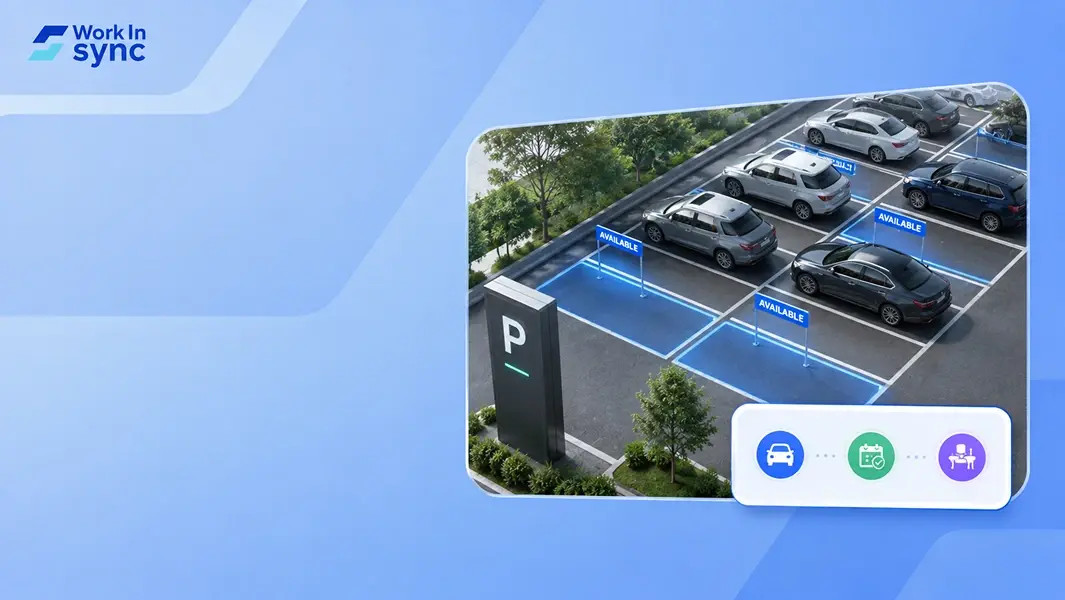
WorkInSync provides parking management software that automates space allocation, booking, and monitoring for organizations with hybrid work models. You can reserve parking spots in advance and receive real-time visibility into available spaces across your office locations.
Key features include:
Real-time occupancy tracking and availability updates
Advance booking system for guaranteed parking spots
Intelligent space allocation based on office schedules
Comprehensive analytics and reporting for facility management teams
Waitlist for employees who don’t get parking spots
Your facility management team gains access to data-driven insights about parking utilization patterns. This helps optimize space allocation and identify opportunities to reduce real estate costs.
The enterprise workplace management platform addresses common challenges like fairness in space distribution and coordination between remote and in-office schedules. You can configure rules to ensure equitable access across departments and teams.
WorkInSync eliminates manual tracking spreadsheets and reduces conflicts over limited parking resources. Your organization benefits from improved employee experience and better utilization of existing parking infrastructure.
Workplace Management24 September 2026
Compare six workplace management platforms. See what each is suited for and how to choose the right fit in 2026.
Deesha
|
4 Min Read
Read More
 Announcement
13 August 2026
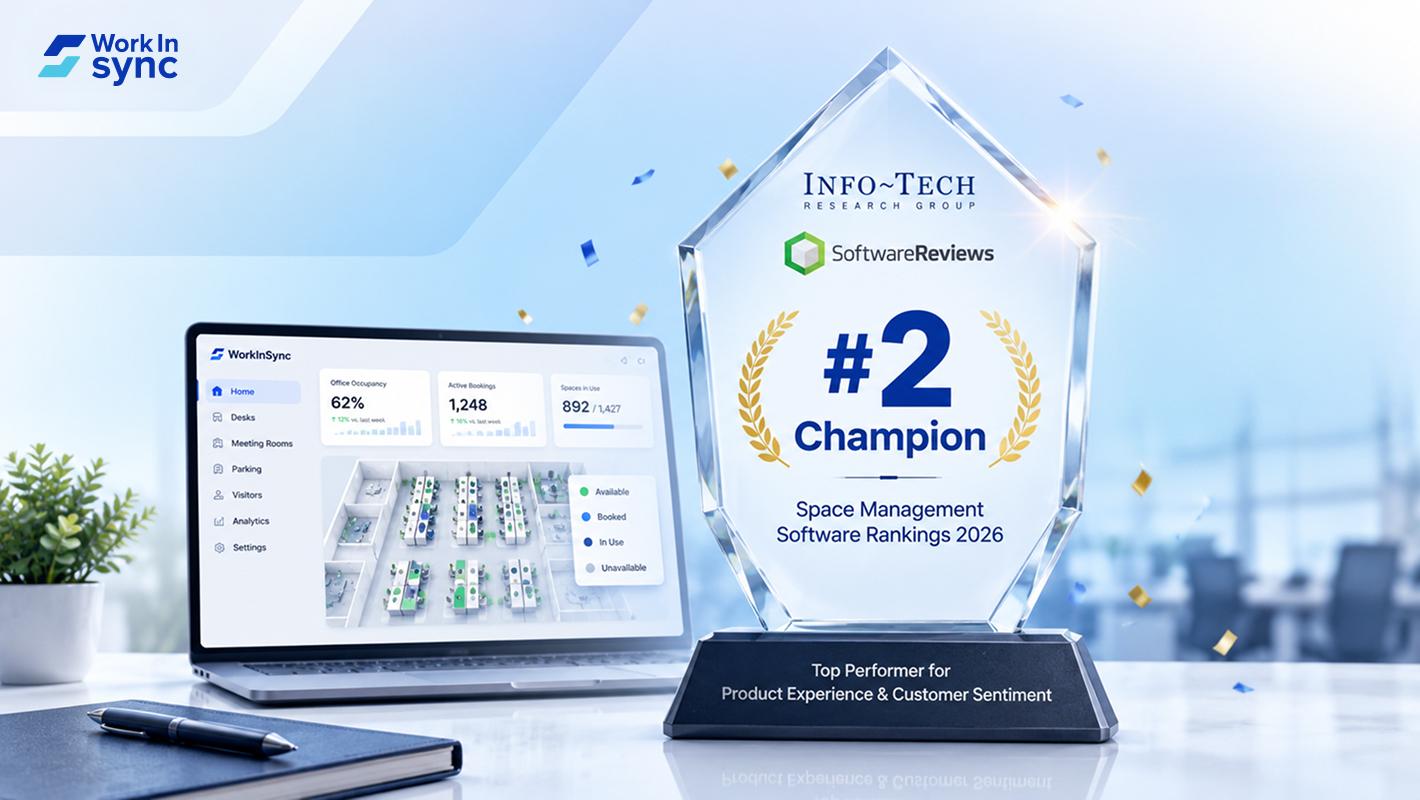
WorkInSync has been recognized by Info-Tech Research Group as a Champion in the 2026 Data Quadrant for Space Management, ranking #2, and as a Champion in the Emotional Footprint, ranking #2. Both awards are published on SoftwareReviews, Info-Tech's ratings platform, where rankings are built entirely from user feedback.

Sai Riddi
|
2 Min Read
Read More
 Desk Booking Software
5 June 2026
Let’s not pretend otherwise. Somewhere in your organization, a well-meaning IT or facilities team rolled out a desk booking system. There was a demo. Someone said “seamless.” There may have been a slide with the word “frictionless” on it. Leadership nodded. Procurement signed off. And then employees quietly went back to texting each other on […]

Ujjwal Trivedi
|
6 Min Read
Read More