
 Workplace Management
24 September 2026
Best Workplace Management Software in 2026: 6 Tools Compared
Compare six workplace management platforms. See what each is suited for and how to choose the right fit in 2026.

Deesha
|
4 Min Read
Read More

Key Takeaways
Pandemic accelerated workplace digitization by seven years, reshaping how meetings are conducted.
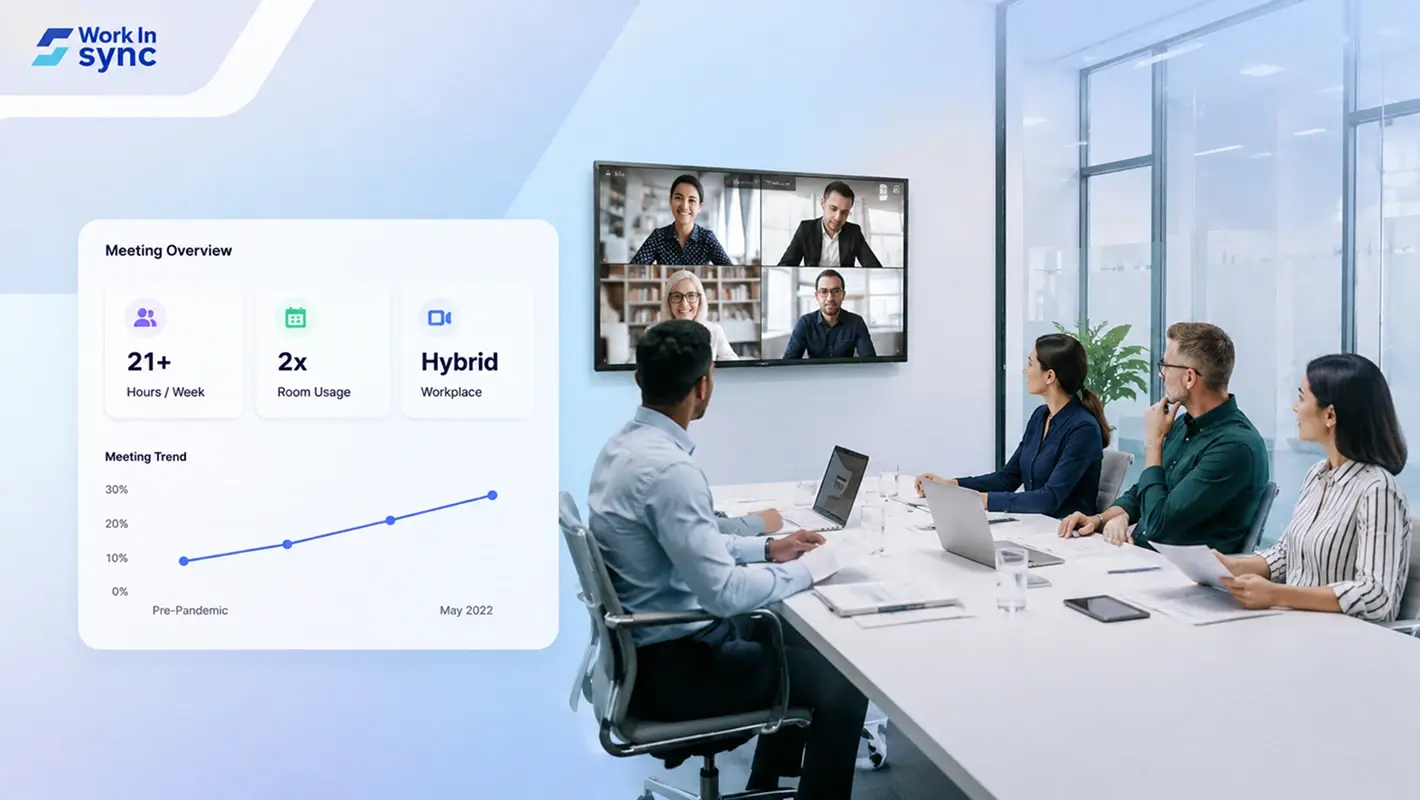
Hybrid model increased meeting time, average professionals now spend 21+ hours weekly vs. 11 pre-pandemic.
Meeting room usage doubled from 10% pre-pandemic to 21% by May 2022.
Hybrid meetings cater to both remote and in-office attendees, removing location constraints.
Meetings are shorter, more frequent, and focused to align with split work setups.
Meeting formats now vary by goal, relationship-driven meetings in-person, task-driven meetings online.
Inclusivity is critical, remote participants often feel sidelined; device-based participation helps level the field.
Interactive tools like polls, live chat, and equal screen presence foster engagement.
Post-meeting briefings and recordings ensure absent employees remain informed.
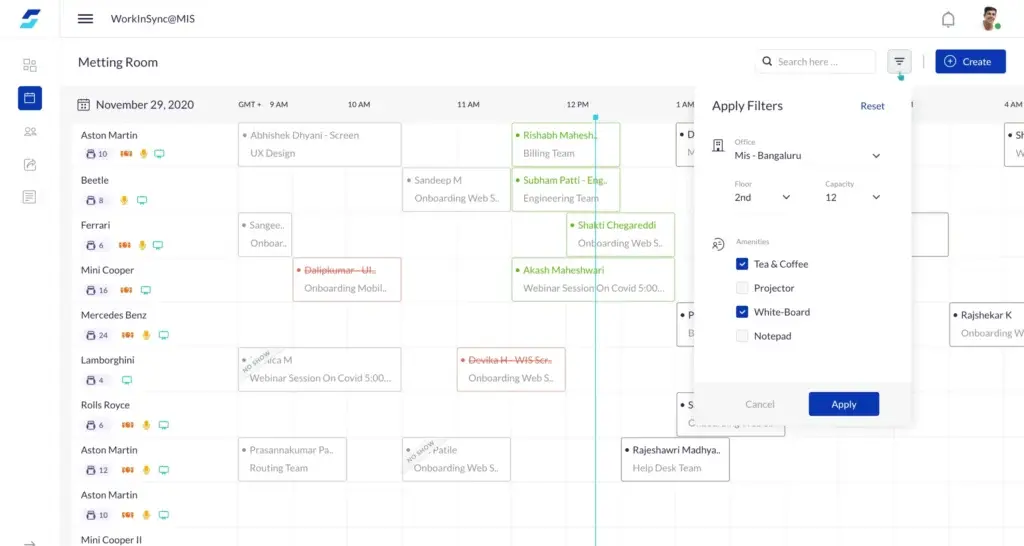
WorkInSync’s Meeting Room Booking System streamlines scheduling, room allocation, and usage tracking.
As more organizations implement the hybrid workplace, the way meetings are conducted has changed. This fundamental shift is characterized by digital acceleration. WorkInSync’s meeting room booking software might be the answer to this change.
The last 60 years have been all about digital improvements. And then the pandemic accelerated digital possibilities in organizations by seven years, said a study. There is no doubt that meetings have evolved in a hybrid workplace.
The traditional meetings have lost their significance, with employees scattered across different locations. But does that undermine the role of meetings? No, it does not. If anything, the importance of meetings has increased.
An average professional spends more than 21 hours in meetings compared to 11 hours pre-pandemic. A mid-level employee attends 15 meetings every week on average. Meeting room usage pre-pandemic was 10%. As of May 2022, meeting room usage has increased to 21%.
Meetings as an effective communication and collaboration medium have gained significance in a hybrid workplace. With our workplaces changing, our meetings have evolved as well.
But what does a meeting in a hybrid workplace model entail? How is it different from a traditional conference? And why are they changing now?
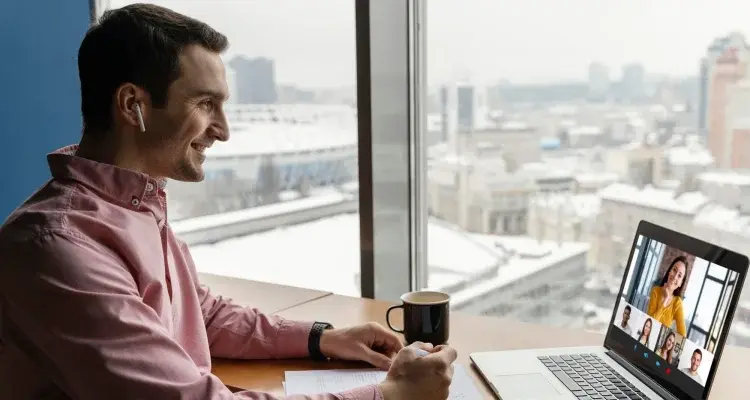
The hybrid workplace has changed the distribution of people dramatically. Employees can now choose their work location. This means that managers need to ensure both in-office and remote employees have the convenience of joining a conference from anywhere. That is the demand of a hybrid work setting.
Research shows that hybrid meetings have opened up to bigger monsters like inequality amongst employees. Remote workers complain that their on-site contemporaries are given more attention. Here, managers have to ensure that such issues can be answered effectively.
A Bank of England policymaker stated that hybrid meetings have slowed the progress of women and marginal groups.
Again, managers have to step up here and ensure that equal opportunities are presented to everyone.
While experts agree that it is the future of work, managers and policymakers must address the challenges of a hybrid workplace. They will need to accept that there are discrepancies in a hybrid setting and effectively counteract them.
With all that said, what sets a hybrid meeting apart from a traditional one?
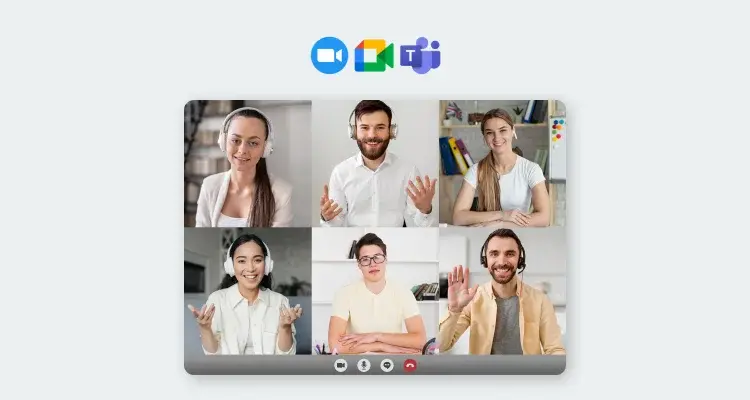
Hybrid meetings have a unique trait. They are not bound by location. For instance, in a team of ten, two can join remotely. The rest eight can be in the office to attend the meeting.
While physical meeting rooms are still important, remote workers are relying on video conferencing tools to join meetings. This has been made easier with video conferencing software like Zoom, Google Meets, or Microsoft Teams.
To sum it up, meetings are no longer bound by the walls of a room. It is all about the convenience of the attendees.
Did you know employees spend three hours attending meetings in their pre-pandemic workplaces? But in a hybrid workplace, each meeting is short, to-the-point, and trackable for future use.
Since employees are split over in-office and remote setups, meetings must be precise. This will ensure they are on the same page, irrespective of their location. And that’s a good goal to aspire for in today’s “time is value” economy.
In a conventional office setup, all meetings happen in-person irrespective of their objectives. And they make complete sense if all employees are already present in the office. But such reasoning doesn’t work in a hybrid workplace setup.
Since a hybrid workplace offers a dynamic and flexible environment, employees can choose whether or not to come into the office. This means meetings will need to account for every type of worker accordingly. Typically meetings with relationship-based goals like employee interaction, feedback reviews, employee felicitation, etc., are best held in person.
So, employees can be called in specifically for those. While meetings with task-focused goals like project allotments, briefings, etc., could be conducted virtually as effectively.
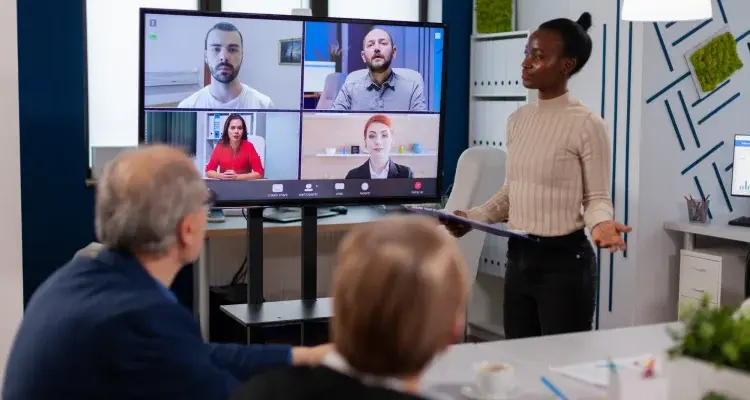
Hybrid meetings can quickly become exclusive spaces. This is because office employees have the unique advantage of physical presence over people working remotely. So, they can build a rapport with meeting conductors, participate in discussions, make their presence felt, and quickly dominate a conversation.
This is not only a pet peeve of over 64% of meeting attendees but also a concern of remote employees. This is why inclusivity must be the cornerstone of hybrid meetings.
To give a fair chance to everyone, asking all employees to connect using their devices is a smart move.
This removes the ‘advantage’ of physical presence entirely. Once this is done, meeting attenders can enable polls, live chat, and other features to drive interactions. This can be done instead of only enabling voice conversations. Every worker on the call participates, so no one is left out of the discussion.
In an ideal corporate world, every hybrid workplace employee would join the meeting at the allotted time. But that is not the case.
In the case of on-site meetings, this would mean the loss of transfer of critical information. However, in a hybrid workplace, managers can avoid such a situation. They can simply record meetings or give detailed briefings to employees who weren’t present. Doing this ensures all employees stay in the loop regarding company-wide plans.
Looking for easy management of meeting rooms? Check out WorkInSync’s Meeting Room Booking System
Meetings will continue to evolve along with our workplaces. Although the hybrid setting is new and is slowly gaining ground, meetings will keep changing.
You need to have the right tools to better manage your meetings and rooms at large. WorkInSync’s conference room scheduling software helps you manage your workplace.
While employees can schedule their meetings and reserve rooms, managers can get holistic views of the rooms. Usage data can also be derived from the central dashboard. You can opt for a free demo with us to learn more about the product.
Subscribe to our blogs and get bi-monthly updates on the latest developments in our workplaces.
 Workplace Management
24 September 2026
Compare six workplace management platforms. See what each is suited for and how to choose the right fit in 2026.
Deesha
|
4 Min Read
Read More
 Announcement
13 August 2026
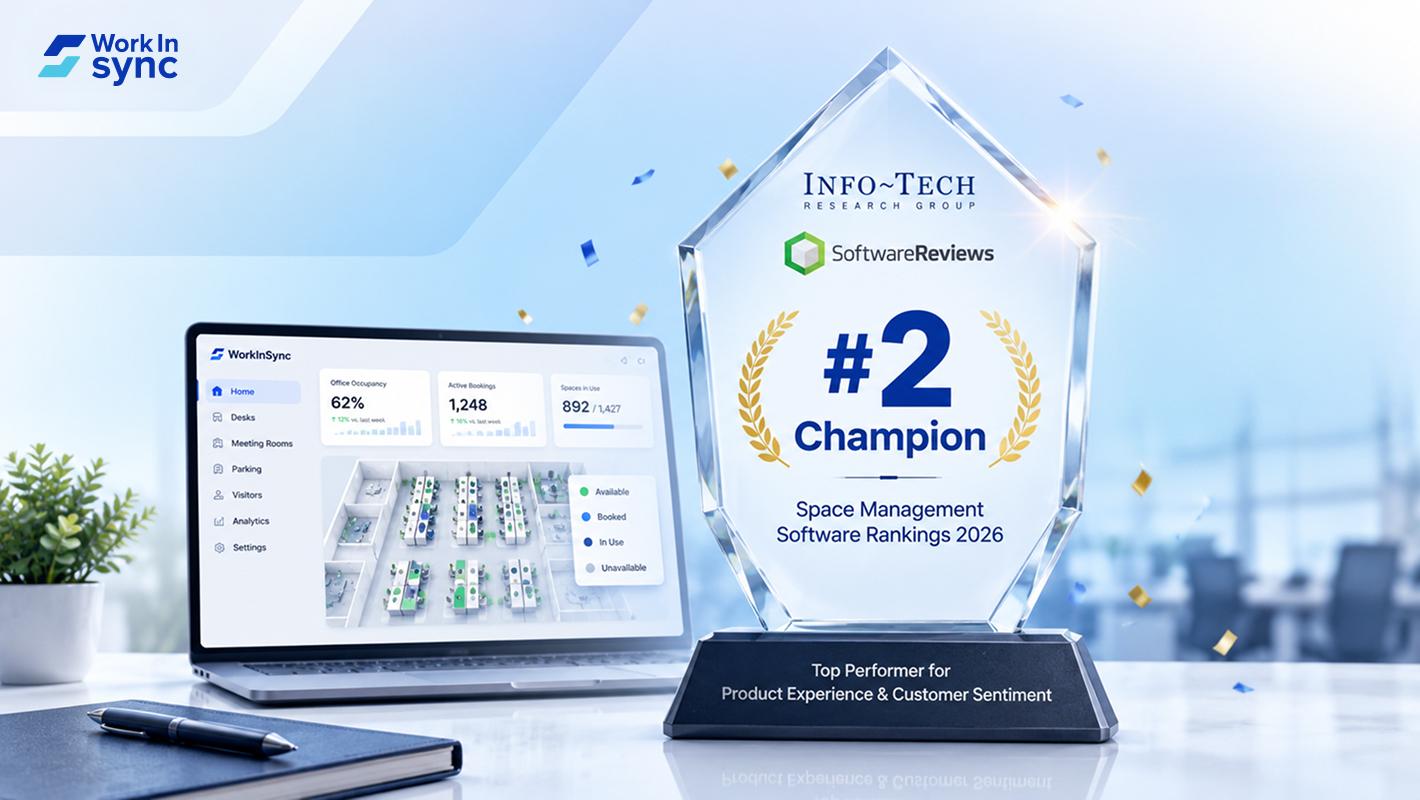
WorkInSync has been recognized by Info-Tech Research Group as a Champion in the 2026 Data Quadrant for Space Management, ranking #2, and as a Champion in the Emotional Footprint, ranking #2. Both awards are published on SoftwareReviews, Info-Tech's ratings platform, where rankings are built entirely from user feedback.

Sai Riddi
|
2 Min Read
Read More
 Desk Booking Software
5 June 2026
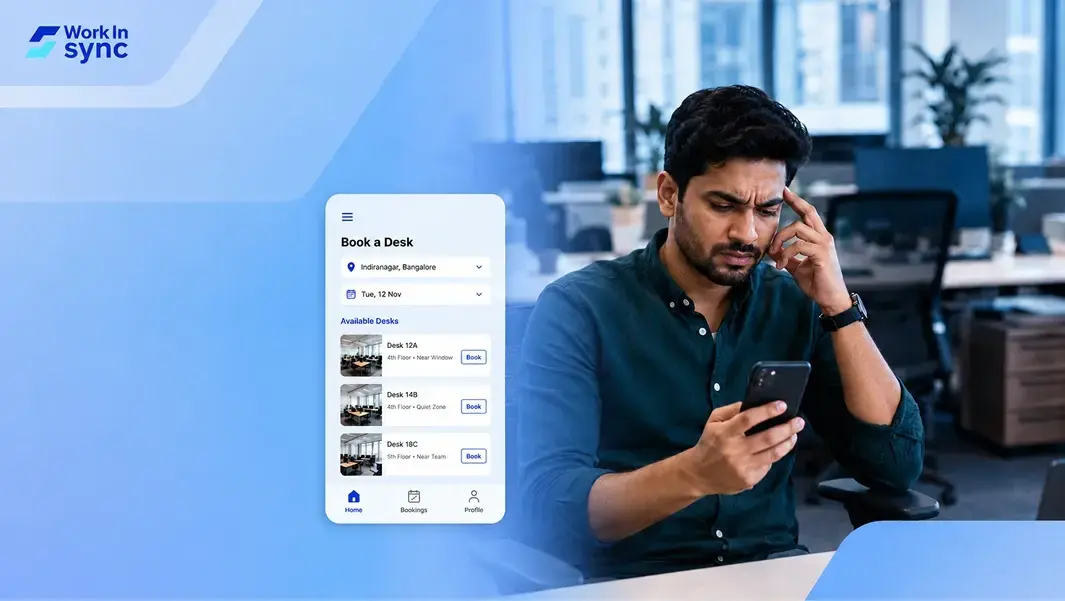
Let’s not pretend otherwise. Somewhere in your organization, a well-meaning IT or facilities team rolled out a desk booking system. There was a demo. Someone said “seamless.” There may have been a slide with the word “frictionless” on it. Leadership nodded. Procurement signed off. And then employees quietly went back to texting each other on […]

Ujjwal Trivedi
|
6 Min Read
Read More