
 Workplace Management
24 September 2026
Best Workplace Management Software in 2026: 6 Tools Compared
Compare six workplace management platforms. See what each is suited for and how to choose the right fit in 2026.

Deesha
|
4 Min Read
Read More

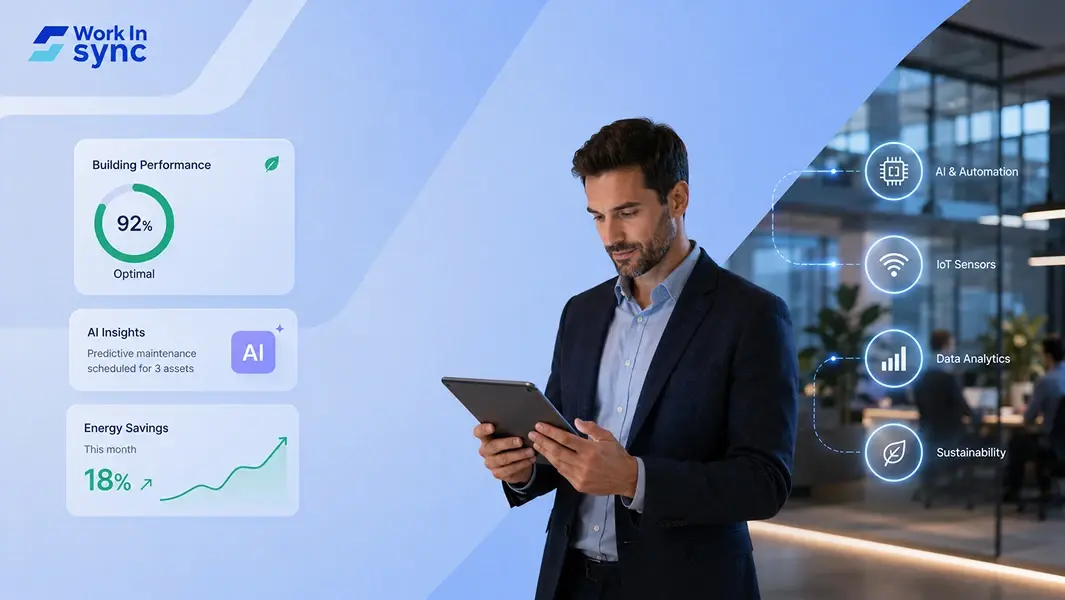
The Facility Manager of 2030 won’t just manage maintenance, they’ll manage intelligence.
They’ll carry a dashboard powered by data, sensors, and AI.
The world of Facility Management (FM) is being reshaped by technology at an astonishing pace. What was once about lights, lifts, and maintenance logs is now about algorithms, automation, and analytics.
As organizations race toward smart, sustainable workplaces, FM is shifting from an operational role to a strategic powerhouse that keeps the modern workplace running efficiently, safely, and sustainably.
For decades, Facility Management has been reactive. A system fails, a ticket is raised, and a fix follows.
By 2030, that sequence will reverse.
AI-powered predictive intelligence will allow facility managers to anticipate issues before they disrupt operations. Sensors embedded in HVAC units, elevators, and energy systems will continuously monitor performance and flag anomalies long before breakdowns occur.
For facility managers, this changes the job fundamentally. Instead of managing breakdowns, they’ll manage risk, resilience, and continuity. Their role will increasingly involve interpreting data dashboards, prioritizing preventive actions, and aligning maintenance strategies with business-critical outcomes.
The FM of 2030 won’t just ask, “What’s broken?”
They’ll ask, “What’s likely to fail next and how do we prevent it?”
Automation in Facility Management isn’t about replacing teams; it’s about redefining how work gets done.
By the end of the decade automation is expected to become a standard part of daily facility operations. This shift will allow facility managers to move away from constant supervision of manual tasks and focus instead on vendor coordination, service quality, sustainability initiatives, and occupant experience. Managing facilities will increasingly mean managing systems and outcomes, not just people and processes.
In practice, the FM team of the future will be hybrid human expertise supported by automated execution, enabling higher efficiency without losing operational control.
By the end of this decade, buildings won’t just respond, they’ll think.
IoT sensors embedded across every system, HVAC, lighting, air quality, and occupancy will feed continuous data into central platforms. Facility managers will have the ability to monitor and optimize every square foot in real time. This will ensure fewer wasted watts, cleaner air, and smarter space utilization.
The next generation of buildings won’t just shelter employees, they’ll interact with them.
By 2030, “green” won’t be a buzzword; it’ll be a baseline.
FM teams will be key drivers in achieving carbon-neutral goals, managing renewable energy adoption, and ensuring regulatory compliance.
Sustainability dashboards will become as vital as security cameras, monitoring everything from energy use to waste generation.
The facility manager’s success will soon be measured not just in uptime, but in impact.
As technology takes over the mechanical, FM professionals must master the meaningful.
The next-generation FM leader will be part technologist, part sustainability strategist, and part workplace designer.
They’ll need to understand AI algorithms as easily as they understand air filters. But more importantly, they’ll design experiences that balance efficiency with empathy, ensuring that every employee feels safe, comfortable, and connected.
A study calls this the “human-centric workplace revolution,” where FM becomes the backbone of employee wellbeing.
By 2030, Facility Management will be a blend of science, sustainability, and service.
AI will predict, automation will perform, buildings will respond, and humans will lead.
The FM role is evolving from managing space to designing intelligent ecosystems where every workspace, workflow, and watt has a purpose.
Those who embrace data literacy, automation, and sustainability will not just stay relevant; they’ll define the future of work itself.
The future of Facility Management isn’t about machines replacing humans; it’s about humans using machines to create smarter, safer, and more sustainable workplaces.
And as tools like WorkInSync continue to bridge occupancy insights, space planning, and hybrid workplace management, facility leaders can unlock the visibility and agility needed to thrive in the decade ahead.
 Workplace Management
24 September 2026
Compare six workplace management platforms. See what each is suited for and how to choose the right fit in 2026.
Deesha
|
4 Min Read
Read More
 Announcement
13 August 2026
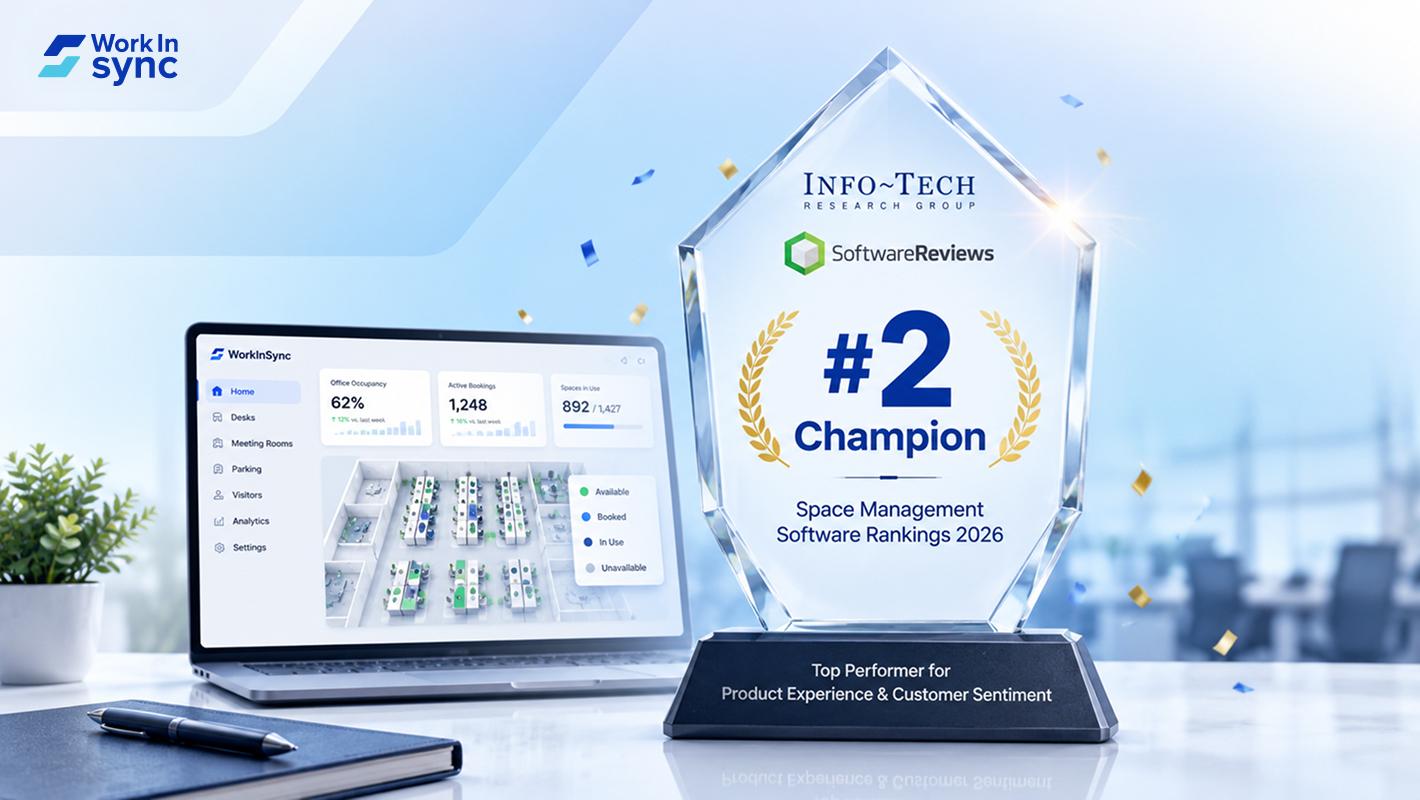
WorkInSync has been recognized by Info-Tech Research Group as a Champion in the 2026 Data Quadrant for Space Management, ranking #2, and as a Champion in the Emotional Footprint, ranking #2. Both awards are published on SoftwareReviews, Info-Tech's ratings platform, where rankings are built entirely from user feedback.

Sai Riddi
|
2 Min Read
Read More
 Desk Booking Software
5 June 2026
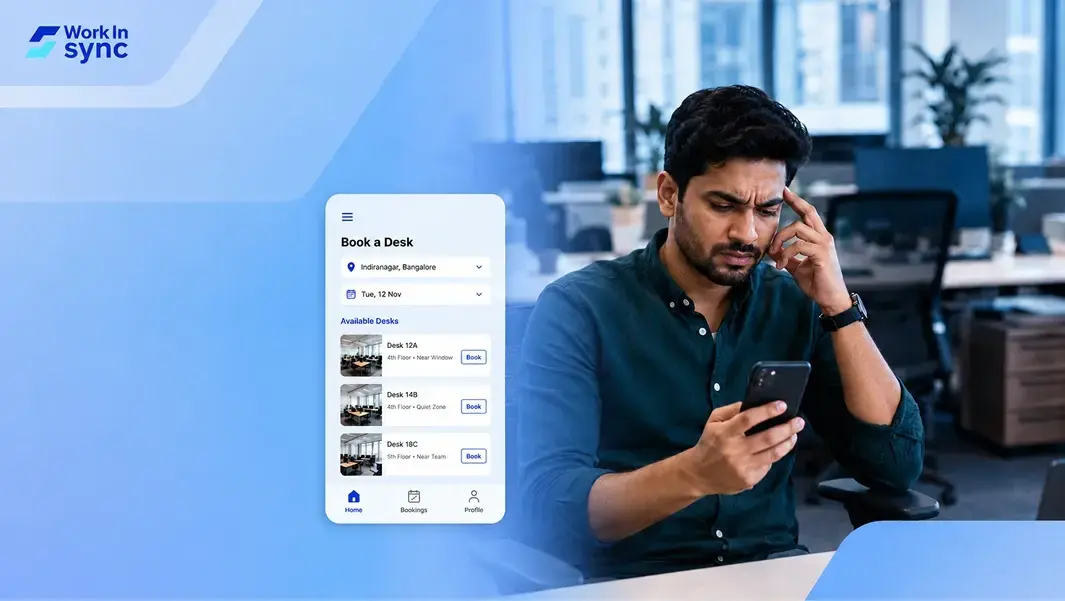
Let’s not pretend otherwise. Somewhere in your organization, a well-meaning IT or facilities team rolled out a desk booking system. There was a demo. Someone said “seamless.” There may have been a slide with the word “frictionless” on it. Leadership nodded. Procurement signed off. And then employees quietly went back to texting each other on […]

Ujjwal Trivedi
|
6 Min Read
Read More