
 Workplace Management
24 September 2026
Best Workplace Management Software in 2026: 6 Tools Compared
Compare six workplace management platforms. See what each is suited for and how to choose the right fit in 2026.

Deesha
|
4 Min Read
Read More

Key Takeaways
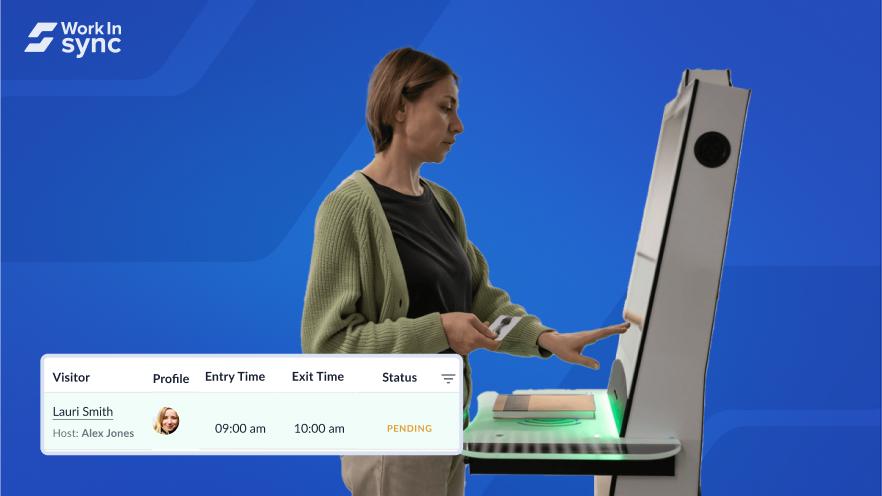
A visitor check-in kiosk is a self-service digital terminal that automates the process of registering and admitting guests into the workplace.
It supports contactless entry, ID verification, badge printing, and health screening—crucial in maintaining safety and efficiency post-COVID.
Deploying kiosks reduces wait times, eliminates manual errors, and frees up front-desk personnel for high-value tasks.
These kiosks improve compliance with workplace security standards and enhance first impressions for clients, vendors, or interviewees.
When integrated with facility management systems, they offer real-time insights into footfall and visitor patterns.
A visitor check-in kiosk is an automated system that handles the registration process when visitors enter a building or business. This self-service kiosk consists of a touchscreen display or tablet, typically positioned at entrances or reception areas.
The primary purpose of these kiosks is to streamline the visitor registration process, enhance security, and create a professional first impression. When visitors arrive, they can quickly check themselves in without staff assistance. This automation saves time for both visitors and employees while maintaining accurate visitor logs.
Modern visitor management systems offer several advanced features that enhance functionality and user experience:
Digital Registration Forms: Visitors can enter their information directly on the touchscreen, eliminating paper forms.
Photo Capture: Many kiosks take visitor photos for enhanced security and badge creation.
Badge Printing: Automatically prints visitor badges with names, photos, and visit details.
Host Notifications: Instantly alerts employees when their guests arrive via email, SMS, or other communication channels.
Touchless Check-In Options: QR code scanning or text-to-check-in features allow visitors to complete the process on their own smartphones.
Pre-registration: Allows hosts to register visitors in advance, creating a smoother arrival experience.
Document Signing: Electronic signing of NDAs, safety policies, or other required documents.
Visitor Analytics: Provides valuable data about visitor traffic patterns and peak times.

Visitor check-in kiosks streamline the entry process through automation and technology. These systems handle everything from initial registration to host notification while integrating with your existing security infrastructure.
When visitors arrive, they approach the touchscreen kiosk to begin the check-in process. They can either enter their information directly or scan a QR code if your system offers touchless check-in options.
For touchless options, visitors can use their smartphones to complete registration without touching shared surfaces. This method has become increasingly popular for health and safety reasons.
Many systems support pre-registration, allowing hosts to enter visitor information before arrival. Pre-registered visitors simply need to confirm their identity when they arrive, making the process much faster.
During check-in, the kiosk typically collects:
Visitor name and contact information
Host name or department
Reason for visit
Photo for ID badge
Digital signature for agreements or NDAs
Once check-in is complete, the system automatically notifies the host of their visitor’s arrival via email or text message.
Modern visitor management kiosks don’t operate in isolation. They connect with your existing systems to create a comprehensive security solution. For maximum effectiveness, choose a system that can connect to your existing building management, security, and communication platforms.
When visitors arrive, the kiosk requires proper identification and automatically checks against watchlists for potential security risks. This screening happens within seconds, alerting your security team to possible concerns.
The system maintains a real-time log of who is in your building at all times. In emergency situations, this information proves invaluable for accountability.
Touchless visitor check-in creates a professional first impression while streamlining the arrival process. Guests can pre-register through their mobile devices before arriving, reducing wait times significantly. When they walk in, a simple QR code scan completes their check-in.
Your professional brand image is reinforced with:
Customized welcome screens with your company logo
Personalized greetings for returning visitors
Clear wayfinding information
Streamlined badge printing
Visitor management kiosks automatically store visitor information in secure, searchable databases. This digital record-keeping eliminates the need for error-prone paper logs while creating complete audit trails for compliance requirements.
During audits or investigations, you can instantly generate comprehensive reports with complete visitor histories. The digital nature of these records means they cannot be altered or lost.
For regulated industries, these systems help maintain compliance with GDPR, HIPAA, and other privacy regulations by securely managing personal data with proper retention policies.
Automating visitor registration frees your reception staff from manual check-in tasks, allowing them to focus on more valuable activities. The self-service nature of kiosks means multiple visitors can check in simultaneously during busy periods without creating bottlenecks.
The system provides valuable analytics on visitor patterns, including:
Peak visit times
Average visit durations
Most frequent visitors
Department visitation rates
Setting up an effective visitor check-in system requires careful selection of both hardware components and software solutions. The right combination ensures smooth operation and positive user experiences for your visitors and staff.
To build a functional visitor check-in kiosk, you’ll need several key hardware components:
Tablet or Touchscreen Display: A 10-inch tablet or larger touchscreen serves as the main interface. iPads and Android tablets are popular choices for their reliability and user-friendly interfaces

Kiosk Stand/Enclosure: A secure, professional-looking stand keeps your tablet protected and properly positioned. Look for stands that draw visitor attention and match your office aesthetic.
Badge Printer: If your organization requires visitor badges, a dedicated badge printer is essential. Thermal printers are faster and more cost-effective than inkjet options.
Camera: A built-in or external camera allows for visitor photo capture and ID scanning capabilities.
Network Connection: Reliable Wi-Fi or ethernet connectivity ensures your system can communicate with your visitor management software.
The right visitor management system should include these important features:
User-Friendly Interface: Look for software with an intuitive check-in process that guides visitors through providing their name, purpose of visit, and contact information.
Host Notification System: Your software should automatically alert employees when their visitors arrive via email, SMS, or internal messaging.
Customization Options: Choose a solution that allows branding with your company logo and color scheme to maintain professional consistency.
Data Security: Ensure your visitor management system includes proper data encryption and compliance with privacy regulations.
Touchless Check-In Options: Modern systems include QR code scanning capabilities or mobile pre-registration for contactless check-in procedures.
Reporting Tools: Look for software that provides analytics on visitor traffic patterns, peak times, and frequency statistics to help optimize your front desk operations.
Setting up an effective visitor management system requires strategic planning and attention to detail.
The placement of your visitor kiosk is crucial for successful implementation. Position your kiosk in a highly visible area near the main entrance where visitors naturally enter. This ensures guests won’t miss it or become confused about check-in procedures.
Consider these placement factors:
Ensure adequate lighting for screen visibility
Provide enough space for multiple visitors during peak times
Make it accessible for people with disabilities (proper height and approach space)
Avoid locations with high glare from windows or lighting
Your visitor check-in kiosk should reflect your organization’s brand while remaining simple to use. Customize the interface with your logo, colors, and welcome message to create a cohesive brand experience.Include only necessary fields to collect information. Requesting too much data slows down the process and frustrates visitors. Consider adding custom notifications that alert the host when their visitors arrive.
Even the most intuitive system requires proper staff training. Ensure your team understands how to assist visitors and troubleshoot common issues with the kiosk.
Designate specific staff members as system administrators who can:
Reset the system if it freezes
Help visitors who struggle with technology
Process special cases that require exceptions
Generate visitor reports for security purposes
Include regular refresher training when software updates occur. Make sure reception staff know how to quickly switch to manual check-in procedures during system outages or emergencies.
The visitor management landscape is evolving rapidly with innovative technologies that prioritize security, efficiency, and user experience.
The demand for touchless check-in technologies has accelerated dramatically. These systems allow visitors to complete the registration process with minimal physical contact.
QR code scanning has become a standard feature, enabling visitors to pre-register and simply scan a code upon arrival. This significantly reduces wait times and eliminates the need for shared devices.
Mobile check-in options let guests use their own devices, further enhancing the contactless experience. You can now complete forms, sign documents, and receive visitor badges all through your smartphone.
Voice-activated interfaces are gaining traction, allowing completely hands-free interactions with check-in kiosks. These solutions are particularly valuable in high-traffic facilities where hygiene is paramount.
Facial recognition technology is revolutionizing visitor identification processes. Modern kiosks can match visitors against watchlists, verify identities, and create a seamless experience for returning guests.
Temperature screening integration has become a standard feature, automatically flagging potential health concerns before visitors enter your facility. This adds an additional layer of security without disrupting the flow.
Biometric authentication methods like fingerprint and iris scanning provide enhanced security while maintaining efficiency. Your visitors appreciate the balance between thorough verification and quick processing.
Cloud-based solutions offer unprecedented flexibility for managing visitor data across multiple locations. Your staff can access real-time reporting and analytics from anywhere.
Integration capabilities with existing security systems create a unified approach to facility management.
Intelligent reporting provides actionable insights about visitor patterns, peak times, and common visit purposes. These analytics help you optimize staffing and resources based on actual usage data.
Scalability is a major advantage, allowing your system to grow alongside your organization without significant infrastructure investments. You can add new features or locations without disrupting existing operations.
Visitor check-in kiosks offer significant advantages for businesses of all sizes. They streamline your reception area and create a professional first impression for guests entering your facility.
Automated check-in processes save valuable time for both visitors and staff. Your employees can focus on important tasks rather than managing a paper logbook or manually processing guests.
Security improves dramatically with digital visitor management. Kiosks can capture ID information, take photos, and print badges—creating a clear record of who enters your building and when.
At WorkInSync we are equipped with a state-of-the-art Visitor Management System, that makes your visitor check-in a breeze. Get in touch with us for more information.
 Workplace Management
24 September 2026
Compare six workplace management platforms. See what each is suited for and how to choose the right fit in 2026.
Deesha
|
4 Min Read
Read More
 Announcement
13 August 2026
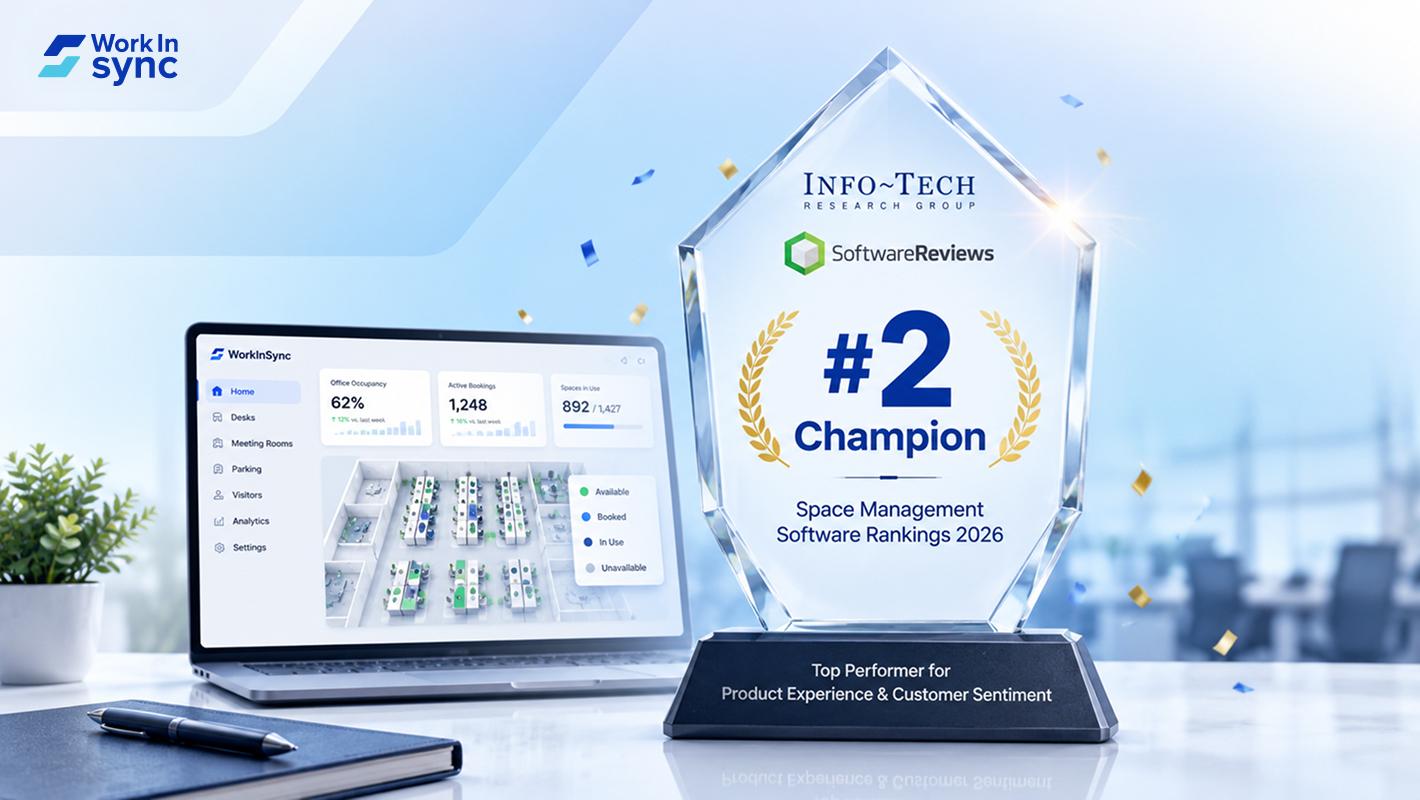
WorkInSync has been recognized by Info-Tech Research Group as a Champion in the 2026 Data Quadrant for Space Management, ranking #2, and as a Champion in the Emotional Footprint, ranking #2. Both awards are published on SoftwareReviews, Info-Tech's ratings platform, where rankings are built entirely from user feedback.

Sai Riddi
|
2 Min Read
Read More
 Desk Booking Software
5 June 2026
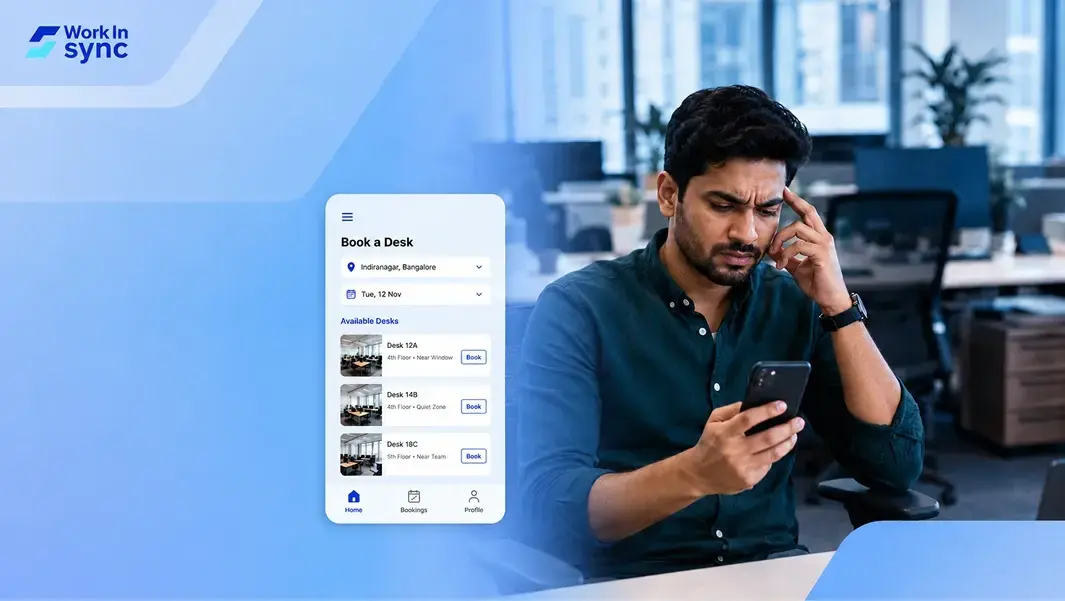
Let’s not pretend otherwise. Somewhere in your organization, a well-meaning IT or facilities team rolled out a desk booking system. There was a demo. Someone said “seamless.” There may have been a slide with the word “frictionless” on it. Leadership nodded. Procurement signed off. And then employees quietly went back to texting each other on […]
Ujjwal Trivedi
|
6 Min Read
Read More