
 Workplace Management
24 September 2026
Best Workplace Management Software in 2026: 6 Tools Compared
Compare six workplace management platforms. See what each is suited for and how to choose the right fit in 2026.

Deesha
|
4 Min Read
Read More
Key Takeaways
Hoteling is a flexible office model where employees dynamically book desks, no assigned seats, just efficient space usage.
It promotes social distancing by assigning workstations with safety protocols in mind and easing sanitization efforts.
Companies like Deloitte and Booz Allen Hamilton use hoteling to cut facility costs and improve desk utilization ratios.
It boosts collaboration by letting employees know who’s sitting where, no more ‘musical chairs’ in the workplace.
Productivity improves since employees don’t waste time hunting for desks, just book and go.
Helps save costs by reducing unnecessary real estate, especially for employees working partially remote.
A smooth transition requires clear communication, familiar booking experiences, and reliable hoteling software.
Hoteling tools should offer multiple seating options, intuitive UI, and strong integrations to support hybrid work.
Hoteling was first introduced into conventional workspaces in the 1990s. It was first adopted by companies with large numbers of traveling salesforce and/or telecommuters. In a post-pandemic workplace, hoteling is more relevant than ever. But what is hoteling in the workplace? And why is it so significant in the present workplace landscape? To understand this concept, keep scrolling.
According to Wikipedia, hoteling is “a method of office management in which workers dynamically schedule their use of workspaces such as desks, cubicles, and offices.” It is the elimination of the concept of assigned seating.
Similarities between an actual hotel and workplace hoteling are not coincidental. The former has been in place for centuries. The latter picks up the finer points of this streamlined process and puts them to work, ultimately reaping the benefits of a flexible workplace.
Recommended Reading: How to Transition to a Hybrid Workplace
Promotes social distancing norms: Hoteling supports social distancing norms. When the desks are assigned to on-site employees, it is done keeping such protocols in mind. Sanitizing the workstations after use also becomes easier.
Helps effective space utilization: Hoteling reduces the number of desks required without restricting employee workflow. These flexible workspaces help preserve order and organization at a fundamental level. The right balance of desks and traditional workspaces results in efficient space utilization. Booz Allen Hamilton, an early adopter of hoteling, achieved a 1:1 worker-to-workspace ratio to successfully reduce its annual facilities cost by 11%. Deloitte has also been extremely successful in maximizing office space using hoteling concepts. They target to reduce rented space to 115 square feet per employee.
Promotes better collaboration and teamwork: Employees can better collaborate with teams and other employees when they know who is sitting where. Hoteling is all about promoting better collaboration across teams.
Improves productivity: Accessibility to a particular desk ensures that employees don’t have to go desk hunting every morning, which can take up a considerable amount of time. This ensures that their productivity remains high.
Saves cost: A survey revealed that 89% of millennials want flexibility when and where they work. Keeping this in mind, instead of offering a permanent desk to an employee who spends a significant amount of time working from home, hoteling allows facility managers to reduce organizational real estate required to support their workforce. Reduced use of desks can equate to less spending on rent and utilities, eventually leading to more capital leftover.
This process can vary in complexity depending on the number of employees, desks assigned, the requirement of additional assets, etc.
Transition to the hybrid workplace and adopting a new implementation strategy can feel disruptive for both employees and management. Therefore, it is imperative to have a plan in place. Here’s how you can make a smooth transition and implement hoteling at work:
It is no surprise that hoteling and hybrid workplaces at large are different from our traditional workplaces. Implementing the hoteling concept will require you to highlight the benefits to the employees. And you need to it quick. An ongoing communication effort like success stories and highlighting best practices will help employees embrace the system comfortably.
When employees are returning to office, they should be quickly able to book their desks. Thus, making them familiar with the system will ensure that implementation is seamless. They should know exactly how to use the booking system, no matter the interface they’re using. They should be able to choose from several seating options to meet their different work styles and claim those spaces from one system.
Effective hoteling programs should depend on a reliable office space hoteling software that provides features employees can rely on. The office software should be easy to use and implement. It should also provide the option of working with a variety of interfaces. And to further create a seamless hybrid workplace experience for your employees, ensure that your hoteling software can be integrated.
Bonus Read: 5 Features of a Hybrid Workspace Management Tool
These two terms are often used interchangeably. However, there are significant differences between the two concepts.
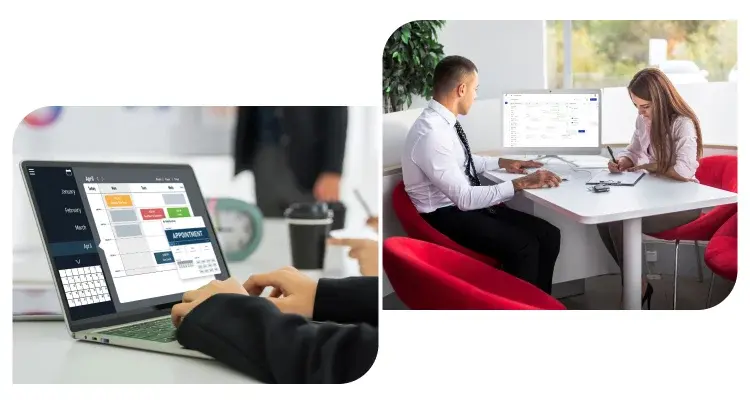
As the hybrid workplace model takes over, it is pertinent that a concept like hoteling will gain traction. Hoteling is the perfect reflection of society’s shifting view of what work is. Adoption of this model has been driven by a need for a digitized workplace, cost savings, and the opportunities that come with new technology.
WorkInSync includes features like workspace management, allowing organizations to integrate the hoteling model seamlessly.
Opt for a free demo today and witness these workplaces transforming features yourself.
To stay on top of the hybrid workplace trends, follow our social media channels, and subscribe to our blog.
 Workplace Management
24 September 2026
Compare six workplace management platforms. See what each is suited for and how to choose the right fit in 2026.
Deesha
|
4 Min Read
Read More
 Announcement
13 August 2026
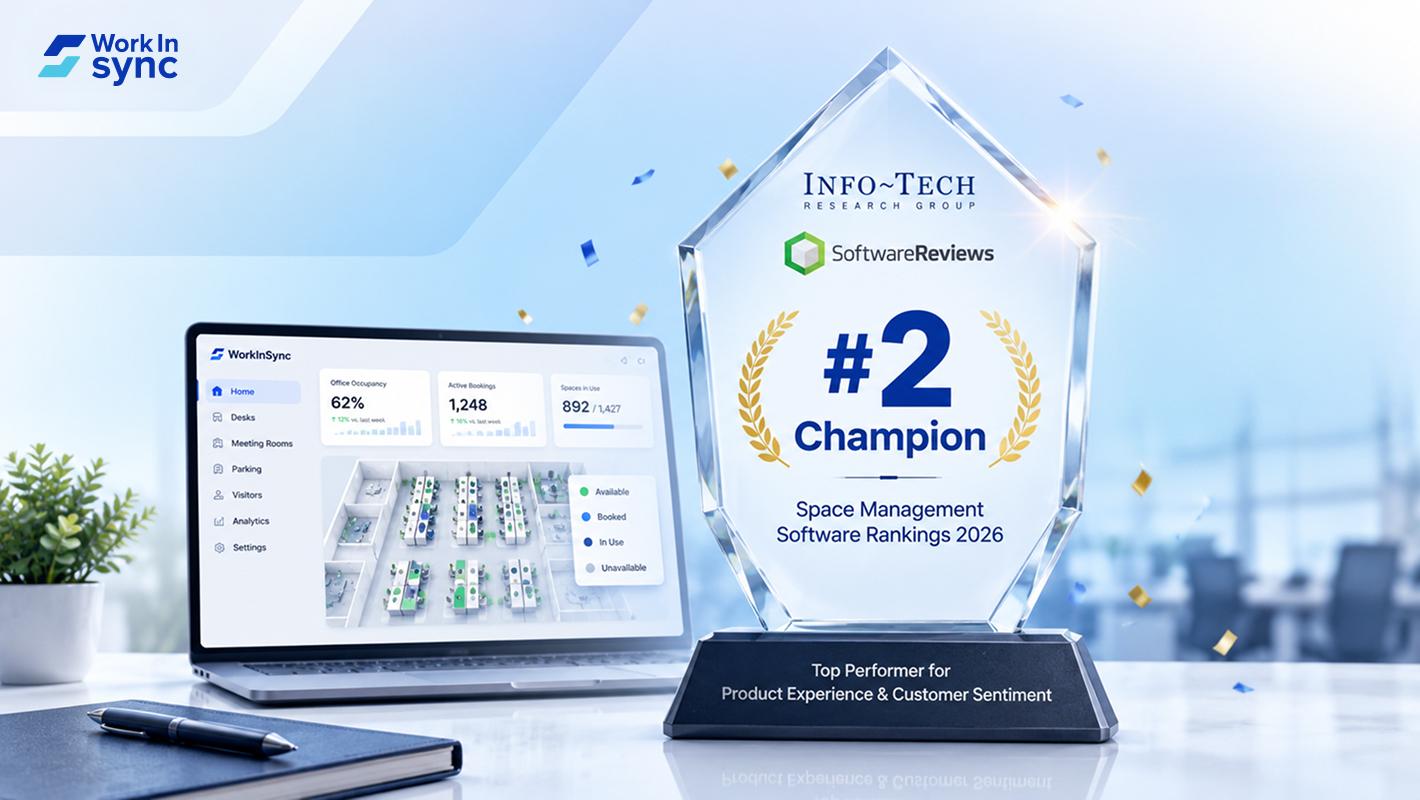
WorkInSync has been recognized by Info-Tech Research Group as a Champion in the 2026 Data Quadrant for Space Management, ranking #2, and as a Champion in the Emotional Footprint, ranking #2. Both awards are published on SoftwareReviews, Info-Tech's ratings platform, where rankings are built entirely from user feedback.

Sai Riddi
|
2 Min Read
Read More
 Desk Booking Software
5 June 2026
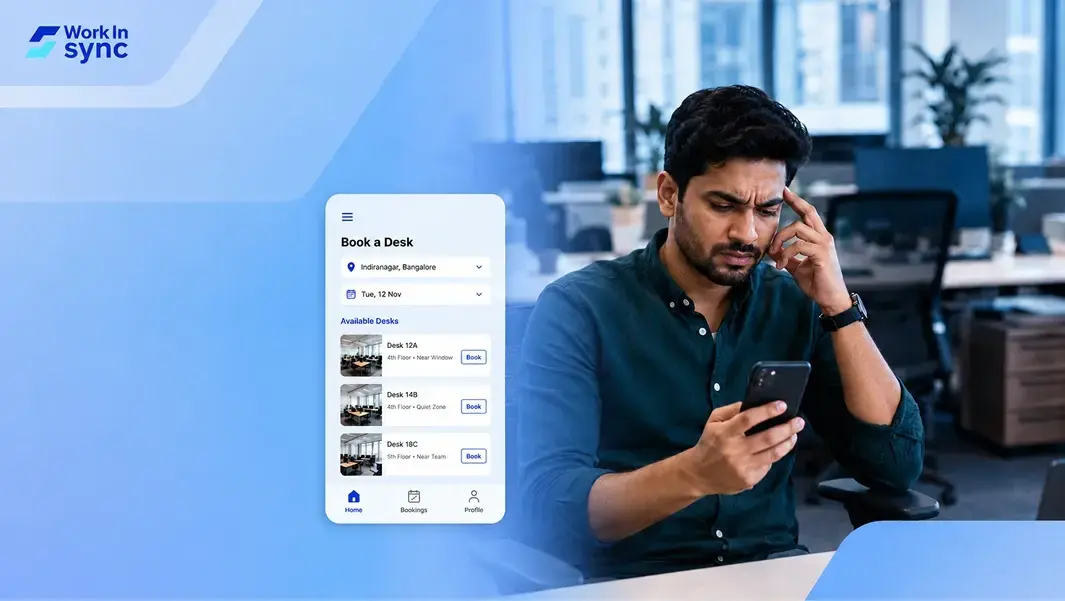
Let’s not pretend otherwise. Somewhere in your organization, a well-meaning IT or facilities team rolled out a desk booking system. There was a demo. Someone said “seamless.” There may have been a slide with the word “frictionless” on it. Leadership nodded. Procurement signed off. And then employees quietly went back to texting each other on […]

Ujjwal Trivedi
|
6 Min Read
Read More