
 Workplace Management
24 September 2026
Best Workplace Management Software in 2026: 6 Tools Compared
Compare six workplace management platforms. See what each is suited for and how to choose the right fit in 2026.

Deesha
|
4 Min Read
Read More
The modern workspace is evolving rapidly. Traditional “first come, first served” approaches to allocating resources often create inefficiencies and leave some employees excluded.
Different employees, different teams have varying needs. This complexity requires a more thoughtful method of managing workplace resources.
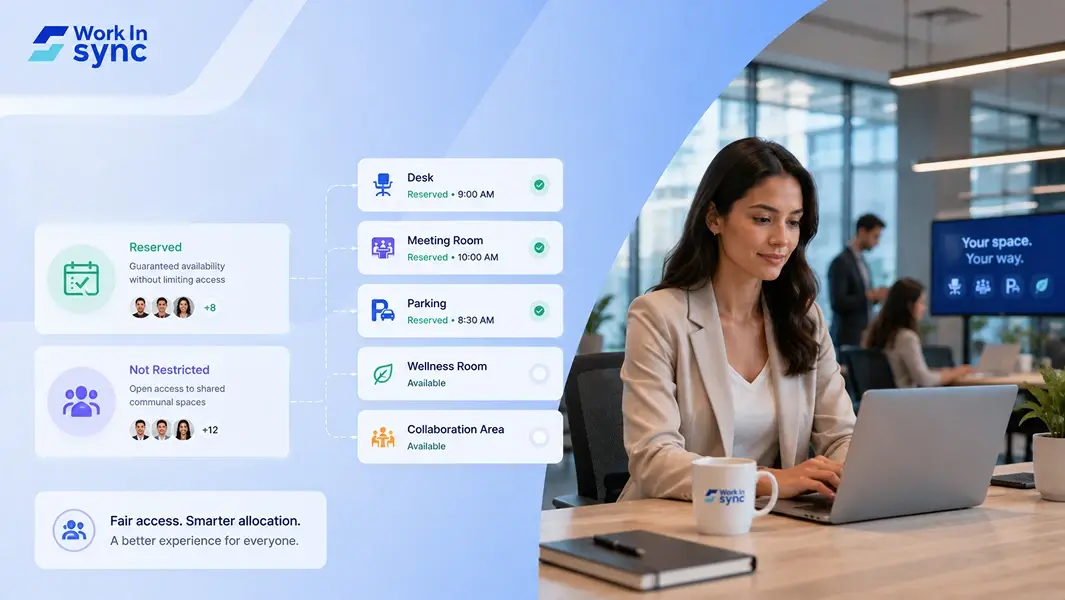
A critical distinction exists between reserving space and restricting access. Reservation means allocating resources to ensure availability without limiting overall access.
By shifting from restriction to reservation, organizations can enhance fairness, increase productivity, and maintain flexibility for all users.
This approach supports diverse work styles and promotes equitable resource use in dynamic environments.
In essence, reserved capacity enables consistent, predictable access while embracing shared communal spaces in parallel.
Traditional workspace allocation may not always serve the entire purpose.
Limited access can create barriers for specific groups. For example, executives may find it difficult to collaborate if dedicated spaces are overbooked or poorly distributed.
Accessibility challenges also arise. People with disabilities or caregivers may face obstacles if workspace allocation does not account for their needs effectively.
These issues result in decreased productivity and hinder collaboration. Frequent adjustments to resource planning are needed, but conventional systems are often too rigid to respond quickly. Rethinking workspace reservation can address these concerns by making allocation more dynamic and inclusive.
Reservation of workspace resources is often misunderstood as exclusion. In reality, it is about enabling productivity, inclusion, and wellbeing for critical groups. These groups include CXOs, persons with disabilities (PWD), parents, team leads, new joiners, and more.
The principle guiding reservation is simple: Reserved doesn’t mean inaccessible for all; it means the right space for the right purpose, at the right time. Reserving resources ensures that those with specific needs or responsibilities have quick, reliable access to essential spaces.
For example, reserving desks for PWDs supports accessibility. Reserved parking spots for parents with young children reduce stress and promote wellbeing. CXOs and team leads benefit from resource allocation that helps them focus on decision-making and leadership without unnecessary obstacles.
Reserved Group | Purpose of Reservation | Benefit |
CXOs | Leadership-focused space | Enhances productivity |
PWD | Accessibility accommodations | Promotes inclusion |
Parents | Easier access and flexibility | Supports wellbeing |
Team leads | Coordination and collaboration | Improves team efficiency |
New joiners | Orientation and onboarding space | Facilitates smoother transition |
Purposeful reservation balances individual needs with overall resource availability. It fosters an environment where everyone can perform optimally without unnecessary competition for space.
This approach reflects an understanding that access is not uniform, and tailored allocation supports diversity and efficiency in the workspace.
Smart tagging enhances visibility and control over workspace resources by assigning specific tags to assets. This system enables precise allocation and easier governance. It streamlines management by categorizing resources clearly according to function and usage.
WorkInSync employs smart tagging to optimize workspace utilization through automation and detailed classification. Each workspace or resource can be tagged for a specific user category like CXO’s, PWD, Parents and more improving allocation accuracy.
The system integrates real-time data to update tags dynamically, reflecting changes in resource use instantly. Once enabled only the relevant user category is able to view and reserve the specific resources.
With these tags, administrators can generate detailed reports on usage trends and empower specific groups.
Allocating workspace resources requires balancing the preferences of high-priority individuals with the need for equitable access. Platforms like WorkInSync enable admins to reserve resources specifically for executives or VIPs, ensuring these key stakeholders always have availability when needed.
At the same time, the system prioritizes space allocation for employees who may have specific needs, such as persons with disabilities (PWD), caregivers, or parents.
This approach respects individual preferences while promoting equitable access across the entire organization. It supports efficient use of limited workspace resources without compromising fairness.
Key outcomes from this approach include:
Improved accessibility and higher employee satisfaction scores.
Enhanced seat and room utilization despite complex schedules.
Positive influence on diversity, equity, and inclusion (DEI) efforts.
Support for overall wellness and higher employee retention rates.
Organizations should use data-driven methods to establish reservation policies. This prevents over-reserving workspace resources and ensures availability aligns with actual demand.
Regular audits of allocation rules help maintain fairness and efficiency. These reviews identify underused or overused resources and allow timely adjustments.
Creating open feedback channels empowers employees to report unmet needs or friction points. This input is crucial for refining reservation systems and improving user experience.
Future-ready workspaces prioritize flexibility, inclusivity, and employee well-being.
Reserved resource allocation, enabled by flexible platforms, meets the demands of a diverse and dynamic workforce. It ensures space is available when needed without creating unnecessary restrictions.
Technology plays a key role in this transformation. AI-powered tools, automation, and smart systems help optimize space usage, making workplaces more efficient and employee-centric.
With solutions like WorkInSync, organizations break down rigid workspace barriers. This creates adaptable environments that balance reservation with accessibility and support real human connection.
Businesses ready to enhance their workplace strategy should explore resource reservation for relevant user categories. These tools empower teams and improve overall space utilization.
Explore how WorkInSync can help your organization build an efficient, inclusive, and future-ready workspace.
Workplace Management24 September 2026
Compare six workplace management platforms. See what each is suited for and how to choose the right fit in 2026.
Deesha
|
4 Min Read
Read More
 Announcement
13 August 2026
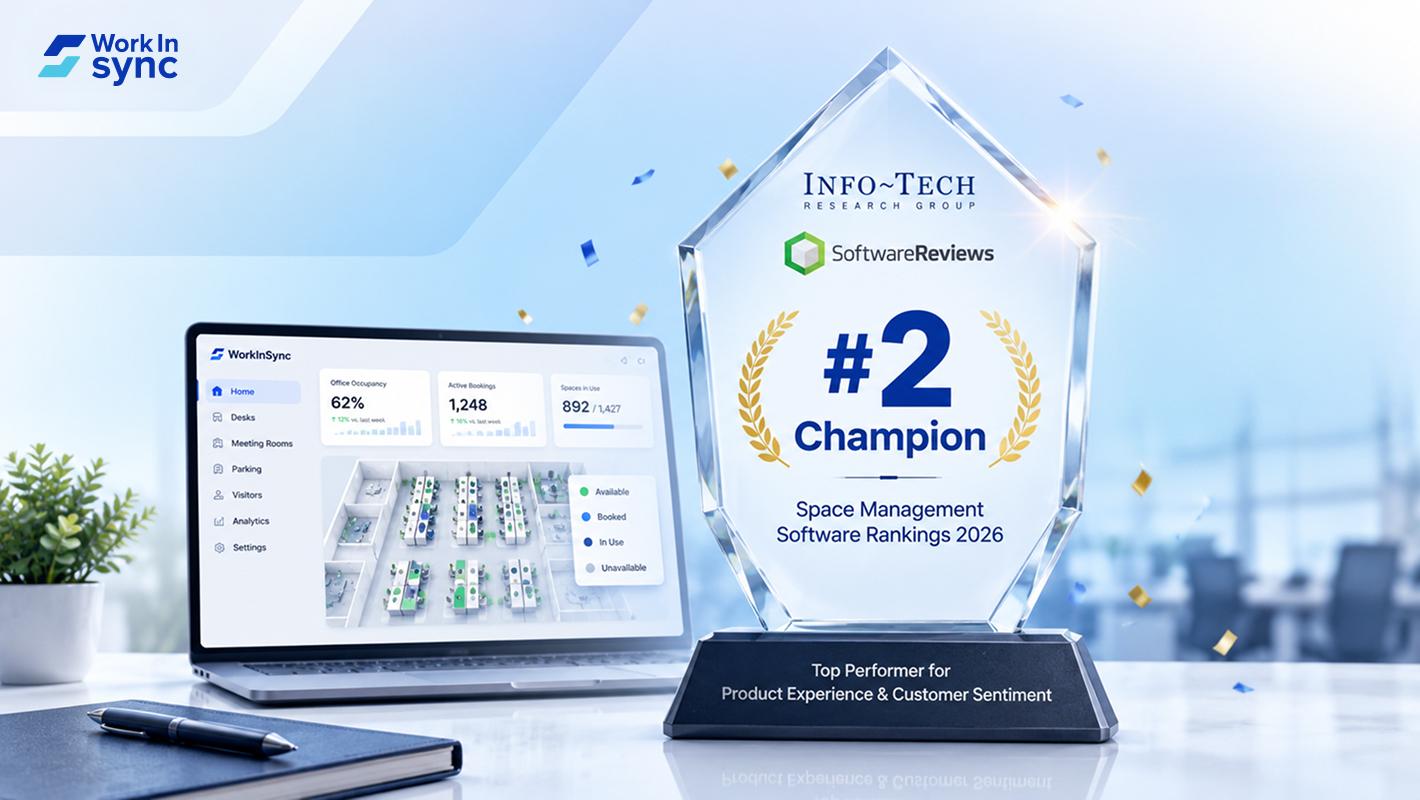
WorkInSync has been recognized by Info-Tech Research Group as a Champion in the 2026 Data Quadrant for Space Management, ranking #2, and as a Champion in the Emotional Footprint, ranking #2. Both awards are published on SoftwareReviews, Info-Tech's ratings platform, where rankings are built entirely from user feedback.

Sai Riddi
|
2 Min Read
Read More
 Desk Booking Software
5 June 2026
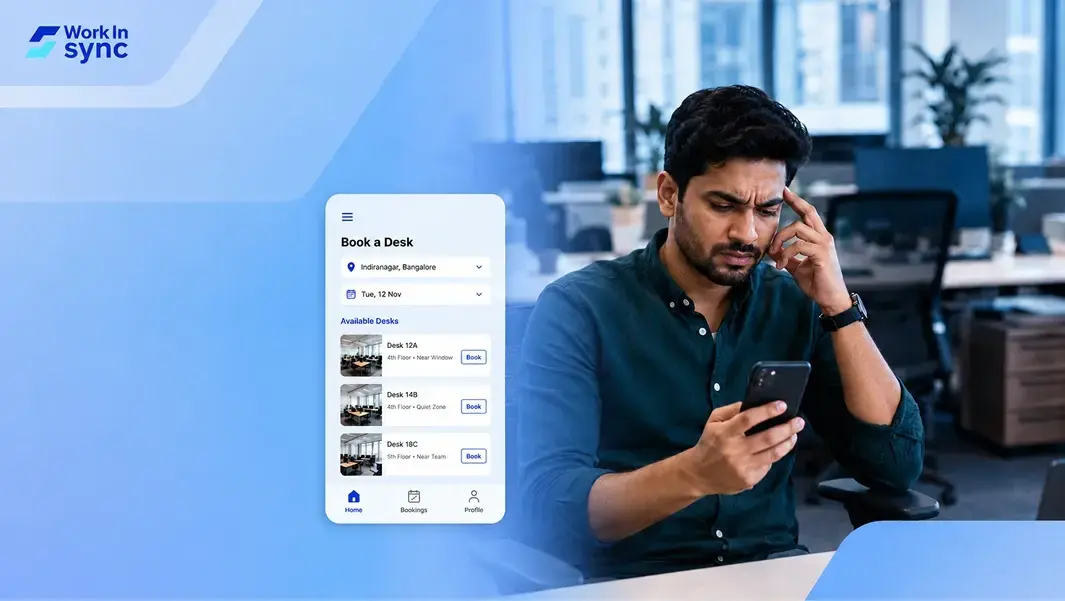
Let’s not pretend otherwise. Somewhere in your organization, a well-meaning IT or facilities team rolled out a desk booking system. There was a demo. Someone said “seamless.” There may have been a slide with the word “frictionless” on it. Leadership nodded. Procurement signed off. And then employees quietly went back to texting each other on […]

Ujjwal Trivedi
|
6 Min Read
Read More