
 Workplace Management
24 September 2026
Best Workplace Management Software in 2026: 6 Tools Compared
Compare six workplace management platforms. See what each is suited for and how to choose the right fit in 2026.

Deesha
|
4 Min Read
Read More


Key Takeaways
Every workplace has a hidden “social network” of influencers who drive change more than official org charts do.
Facility managers (FMs) can leverage these informal influencers to boost adoption of new tools, layouts, or policies.
Research shows that engaging office influencers leads to higher success rates in organizational change.
Simple steps like mapping influencers, recruiting them early, and celebrating their role can transform workplace initiatives.
At the end of the day, change spreads through people, not PDFs or announcements.
Every facility manager knows the organisation chart. Neatly drawn boxes, clear reporting lines, structured communication. But here’s the secret: offices don’t actually run on charts.
They run on whispers at the coffee machine, on the desk someone always stops by “just to say hi”, on the colleague who somehow knows everything before the HR does.
That’s the secret social network of every workplace. And if you, as a Facility Manager, don’t know how to use it, you’re missing your most powerful tool for change.
“Not the online kind, these are the true in-office archetypes.”
The Coffee Machine Guru
They don’t just pour caffeine, they pour wisdom, updates, and occasionally, gossip. They know what’s happening before leadership announces it.
The Corner-Desk Connector
That desk by the aisle? It’s basically an airport lounge. Everyone passes by, everyone chats. This person is a natural hub.
The Silent Leader
No fancy title. No corner office. But when they nod, others follow. They’re the trusted colleague who can sell your new desk-booking tool without even trying.
These are your office “nodes.” Think of them as the Wi-Fi routers of influence.
Rolling out a floor plan redesign? Introducing hot desking? Installing a shiny new visitor kiosk? Here’s the hard truth:
Change doesn’t spread because you announced it in a town hall.
Change spreads because the right people said the right things in the right places.
Research backs this up. A study found that employees often trust informal influencers more than formal leaders during times of change. Why? Because those influencers are embedded in daily life.
In short: ignore the secret network, and you risk empty meeting rooms, abandoned self-check-in kiosks, or frustrated employees who say, “Why didn’t anyone ask us?”
A 2023 MDPI study highlighted that participative leadership styles, combined with informal networks, significantly enhanced organizational change outcomes.
Forbes highlights that informal influence is often more critical than hierarchy when pushing new initiatives.
So yes, this isn’t just “gut feeling.” It’s science.
Pay attention. Who do people crowd around during lunch? Who gets asked the “quick questions”? That’s influence in action.
Loop them in before the rollout. If the Coffee Machine Guru starts praising your new hot-desking system, half your work is done.
Don’t start big. Give influencers first access. Let them test the booking app, provide feedback, and, crucially, discuss it.
People love recognition. Call out these champions in newsletters, Slack channels, or team meetings. Make them heroes of the change.
Influencers aren’t one-off tools. They’re ongoing partners. Keep asking them: “What are people really saying?”
A global pharma company rolled out a new hybrid seating system. Instead of blasting a memo, they worked with a handful of informal influencers, team assistants, long-tenured staff, and even the guy everyone went to for IT help.
Result? The adoption curve spiked. By the end of month one, 82% of employees were actively using the system, a number change managers admitted would’ve been impossible through “top-down” communication.
Moral of the story: influencers aren’t “nice to have.” They’re your adoption engine.
Facility management is often seen as buildings, blueprints, and bookings. But let’s be real: it’s people, patterns, and trust.
The secret social network inside your office isn’t in your IT system. It’s in the way people move, talk, and influence. And if you want smoother change adoption, fewer complaints, and a workplace people actually enjoy, tap into it.
Because at the end of the day, change doesn’t spread through PDFs. It spreads through people.
Workplace Management24 September 2026
Compare six workplace management platforms. See what each is suited for and how to choose the right fit in 2026.
Deesha
|
4 Min Read
Read More
 Announcement
13 August 2026
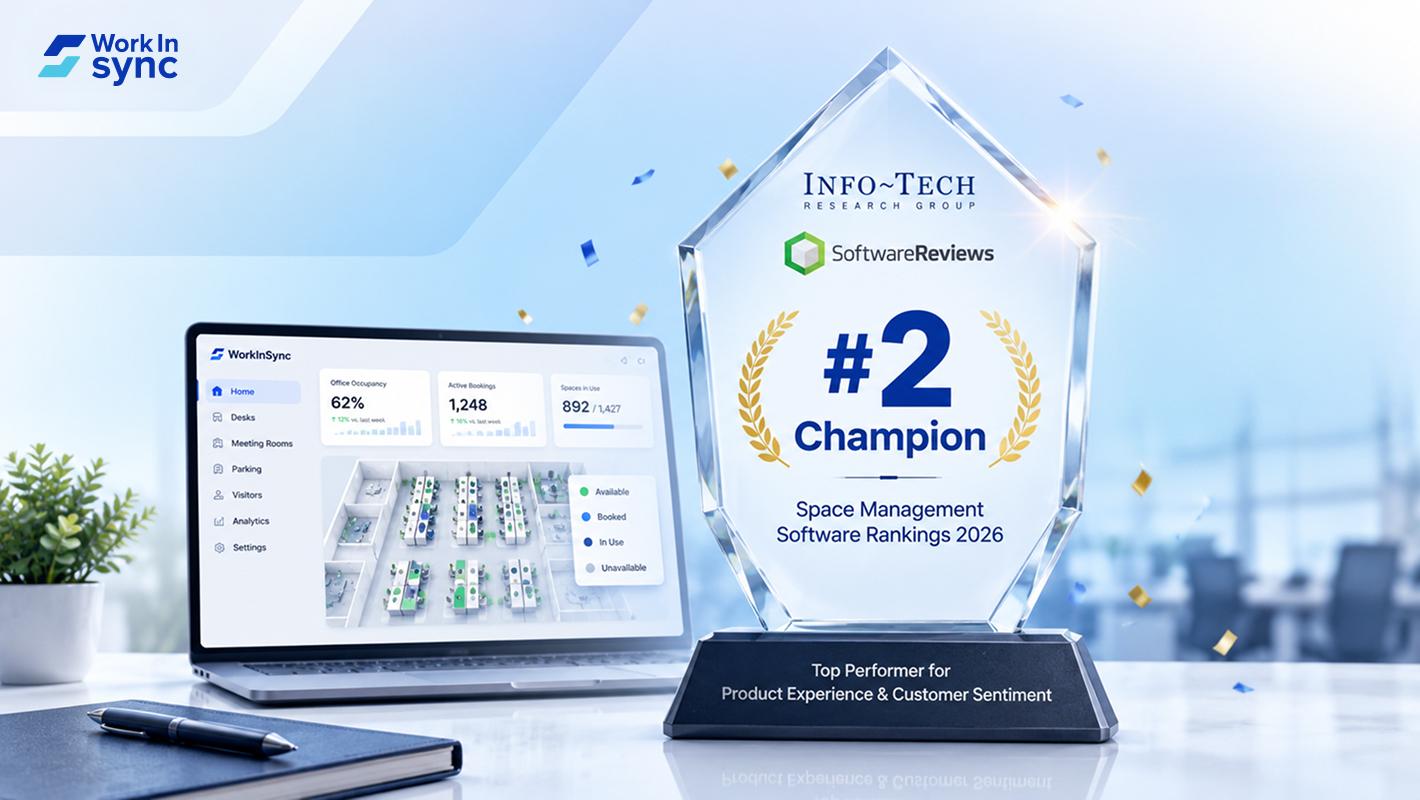
WorkInSync has been recognized by Info-Tech Research Group as a Champion in the 2026 Data Quadrant for Space Management, ranking #2, and as a Champion in the Emotional Footprint, ranking #2. Both awards are published on SoftwareReviews, Info-Tech's ratings platform, where rankings are built entirely from user feedback.

Sai Riddi
|
2 Min Read
Read More
 Desk Booking Software
5 June 2026
Let’s not pretend otherwise. Somewhere in your organization, a well-meaning IT or facilities team rolled out a desk booking system. There was a demo. Someone said “seamless.” There may have been a slide with the word “frictionless” on it. Leadership nodded. Procurement signed off. And then employees quietly went back to texting each other on […]

Ujjwal Trivedi
|
6 Min Read
Read More