
 Workplace Management
24 September 2026
Best Workplace Management Software in 2026: 6 Tools Compared
Compare six workplace management platforms. See what each is suited for and how to choose the right fit in 2026.

Deesha
|
4 Min Read
Read More

Key Takeaways
Hybrid workplaces combine remote and onsite work, aiming to capture the benefits of both models.
Flexibility is a defining feature of hybrid work, contrasting with rigid fully remote or fully onsite structures.
Many employees favor hybrid setups for balancing productivity, collaboration, and personal well-being.
Employers are reassessing traditional work assumptions, prioritizing adaptability and employee choice post-pandemic.
Hybrid work raises challenges, including coordination, communication, and maintaining company culture.
Workers value hybrid flexibility so highly they’re willing to trade other perks for it.
Organizations are actively testing hybrid models to determine optimal work arrangements for the future.
A hybrid workplace has become important. It is deemed as the future of work. But how popular is it? Is it well-adopted? These stats will show the real picture.
The hybrid workplace is a hot topic today. Combining the two models of remote and onsite work, the concept of “new normal” is getting a reboot today with a hybrid workplace.
Hybrid work structures are an effort to build a best-of-both-worlds operational model. Just as there are advantages of working from home, there’s an upside for teams to regularly collaborate in person. Hybrid work models, then, strive to attain the positives of both paradigms.
Bonus Read: What is a Hybrid Workplace?
Hybrid approaches to work are intrinsically more flexible when compared to the more rigid models requiring employees to work predominantly from a singular location. Flip the coin, and the same holds true: dispersed teams that are entirely remote. A hybrid workplace enables teams and organizations to decide how, when, and where to work from.
Here are 21 hybrid workplace stats that organizations must know in 2022.

Also Read: Can a Hybrid Workplace Help Retain Employees?
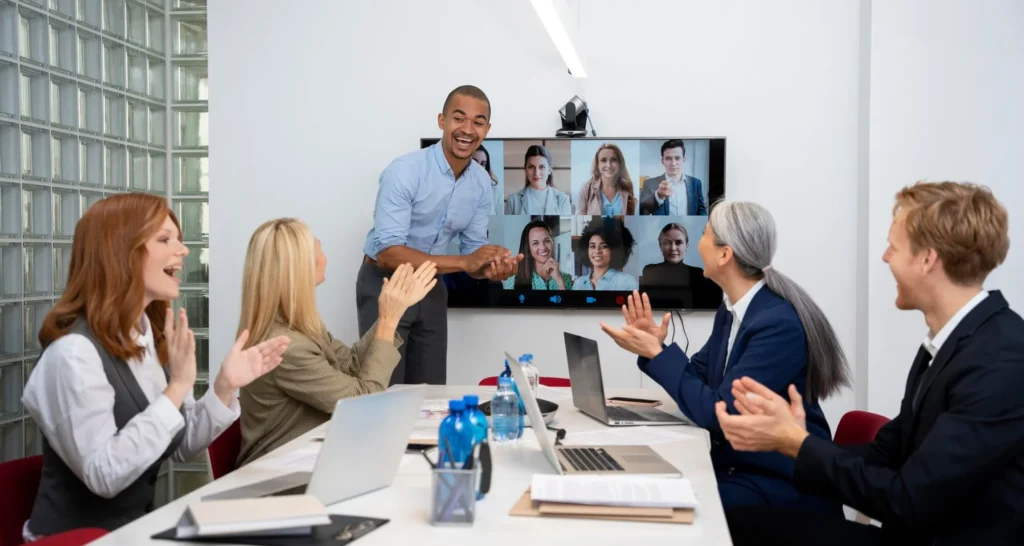
Taken together, these statistics illustrate employers and employees worldwide are no longer bound to traditional notions of work. Instead, long-held assumptions are shifting as companies are preparing for new normal of work and embracing flexibility. The uncertainty and physical distance induced by the pandemic have made companies rethink and reconfigure the elements of work that were once necessary, such as the office space or face time.
As organizations prepare for what comes next, companies must thoroughly look at how and where work gets done, enabling new hybrid models. Hence, while it remains to be seen exactly how the hybrid workplace experiment will pan out, the shift is happening, and it’s happening now.
Want to stay on top of the hybrid workplace trends? Subscribe to our blogs now.
 Workplace Management
24 September 2026
Compare six workplace management platforms. See what each is suited for and how to choose the right fit in 2026.
Deesha
|
4 Min Read
Read More
 Announcement
13 August 2026
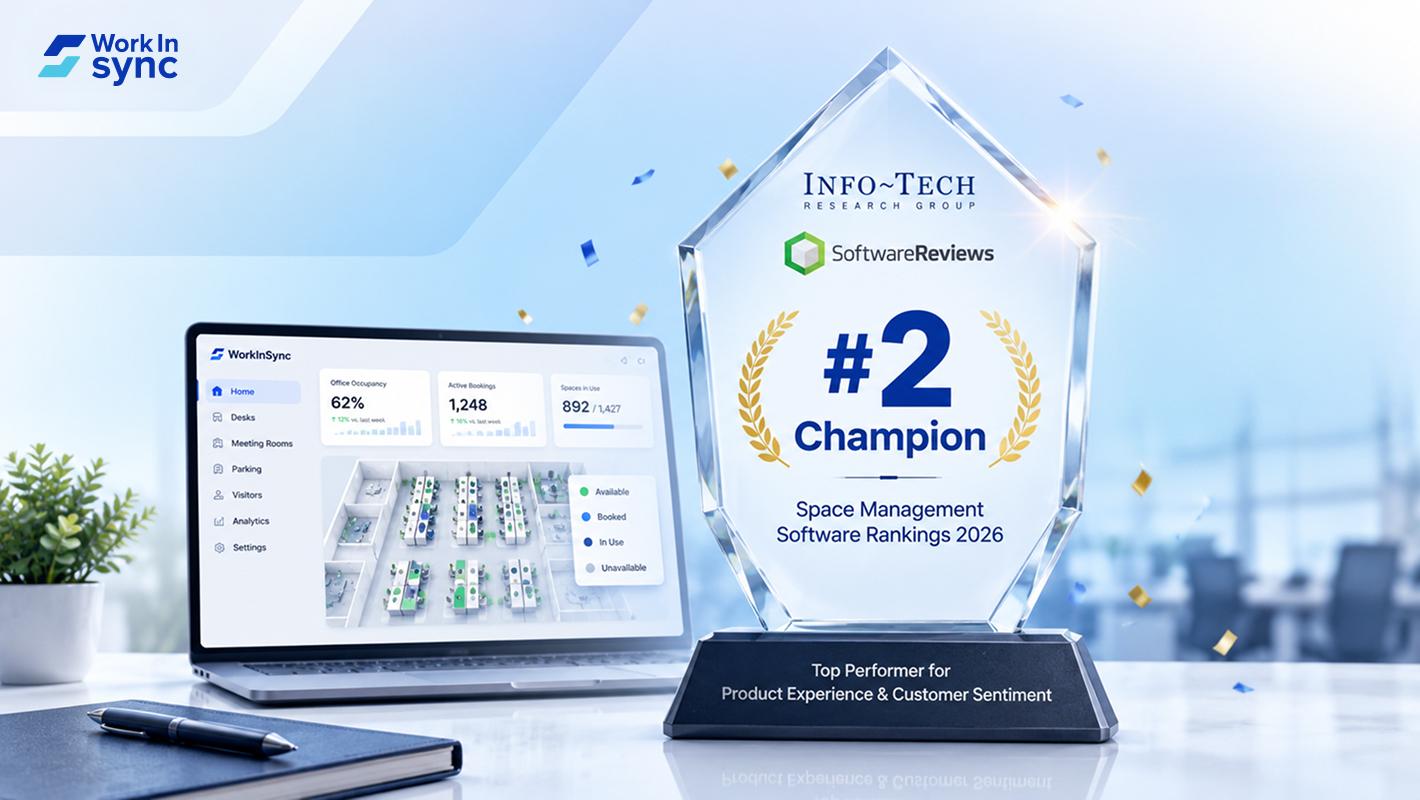
WorkInSync has been recognized by Info-Tech Research Group as a Champion in the 2026 Data Quadrant for Space Management, ranking #2, and as a Champion in the Emotional Footprint, ranking #2. Both awards are published on SoftwareReviews, Info-Tech's ratings platform, where rankings are built entirely from user feedback.

Sai Riddi
|
2 Min Read
Read More
 Desk Booking Software
5 June 2026
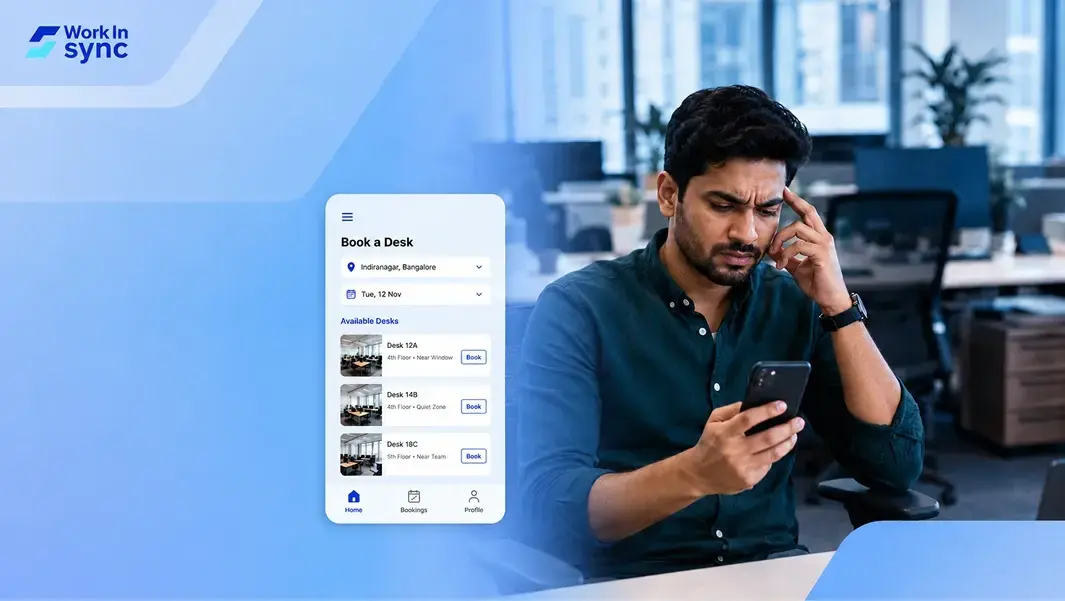
Let’s not pretend otherwise. Somewhere in your organization, a well-meaning IT or facilities team rolled out a desk booking system. There was a demo. Someone said “seamless.” There may have been a slide with the word “frictionless” on it. Leadership nodded. Procurement signed off. And then employees quietly went back to texting each other on […]

Ujjwal Trivedi
|
6 Min Read
Read More