
 Workplace Management
24 September 2026
Best Workplace Management Software in 2026: 6 Tools Compared
Compare six workplace management platforms. See what each is suited for and how to choose the right fit in 2026.

Deesha
|
4 Min Read
Read More


Key Takeaways
Uncertainty about workplace models creates more stress for employees than the actual shift to hybrid setups.
Leaders struggle between delaying communication for clarity and offering proactive hybrid workplace plans for reassurance.
Employees are anxious as most organizations have announced intent for hybrid but lack detailed execution guidelines.
Leaders admit the challenges of hybrid work currently outweigh the opportunities, but many are solvable with planning.
Real estate dilemmas dominate, companies face stranded costs with unused office space and long-term leases.
Hybrid adoption can reduce office space significantly; one firm estimated an 82% reduction was possible.
Utilization studies show desks and offices were already empty 60- 77% of the time pre-pandemic.
Repurposing unused spaces into focus rooms, wellness areas, or shared workstations makes offices flexible and inviting.
Lisa Whited is a founder of Workplace Transformation Facilitation. In this insightful blog, she discusses the viability and effectiveness of adopting a hybrid workplace, and the factors that need to be considered when purchasing a workforce scheduling software.
Employers have been struggling to get their people to return to the office. Resignations, relocations, and transitions to other companies and geographies are rampant. What is on leaders’ minds as they navigate the hybrid workplace and determine what is best for their business and for their employees? I was curious, so I asked several business leaders and am pleased to share their reflections with you, coupled with suggestions that might help all of us.
When my daughter Claire was 4 years old, my husband and I discussed moving to a new house. Claire uncharacteristically started acting out at preschool, displaying a temper, and stubbornly insisting on wearing her pajamas to school. One miserable morning I remember trying to wrestle her out of the backseat of the car as she hung on for dear life screeching, “I don’t want to go!” Her teacher asked if we had made a decision about moving. We had not and were still considering our options. What the teacher said next is something I will never forget: “The uncertainty of whether something will change or not is more difficult for Claire than the change itself will be.”
I’ve been thinking of that bit of wisdom lately while reading articles and LinkedIn posts about what other companies are doing with regards to remote, on-site, or hybrid workplaces. Are people perhaps more stressed about the uncertainty at this moment than they will be when “the future of work” arrives?
Are the companies that are treating their new ways of working as a pilot by iterating and inviting feedback as they move forward providing enough of a concrete plan that puts people at ease? Or are the leaders who have declared with certainty that people need to be in the office Tuesday, Wednesday, and Thursday using the best approach? I found one answer in this McKinsey article:
“Our survey results make the source of anxiety clear: employees feel they’ve yet to hear enough about their employers’ plans for post-COVID-19 working arrangements. Organizations may have announced a general intent to embrace hybrid virtual work going forward, but too few of them, employees say, have shared detailed guidelines, policies, expectations, and approaches. And the lack of remote-relevant specifics is leaving employees anxious.”

I’ve witnessed both ends of the spectrum with my clients: a hesitancy to share information until they have the “right” answers on one end, and on the other end, proactive communication outlining exactly what they want the hybrid workplace to look like for their staff when it is safe to return to an office.
I was curious to hear CEO’s perspectives about the hybrid workplace now, a few weeks before many of them are planning to reopen their offices (pending, of course, the Delta virus variant’s impact on their plans). I asked what they see as challenges and opportunities with the hybrid workplace. I heard back from an equal number of male and female C-suite executives from industries that include financial and legal services, technology, and media. The organizational sizes range from 16 to 700 employees.
One CEO said, “I have more challenges than opportunities right now.” She is not alone – the challenges leaders shared with me outpaced the opportunities by a measure of 1.5:1. Yet, it is not all doom and gloom, and the good news is that many of these concerns can be addressed with technology, thoughtful and inclusive discussions, and long-term strategies.
Also Read: Hybrid Workplace is a Chaos
The three overarching themes I heard were 1) real estate dilemmas, 2) employee hesitancy to return to the office, and 3) improved recruitment opportunities.
A benefit to hybrid working can be a reduction in office space – sometimes by a dramatic percentage. One large financial services company determined it can reduce the amount of its real estate by 82%. However, the timing of such a reduction is another story. Companies either have long leases, or they own their office buildings.
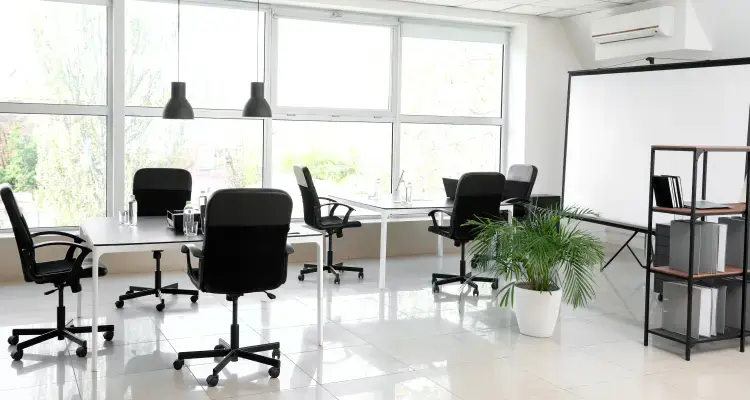
One leader shared, “While some talk about potential efficiencies in terms of expenses on physical locations, that seems like a stretch for many of us who have stranded costs in buildings, parking lots, etc.”
Another stated, “The challenge for us will be real estate cost…We inevitably have space we’re paying for and not using. That cost is small now but will become more substantial as we grow if we continue to honor the strong cultural preference for assigned seating.”
Lease end dates are a fact and, as I’ve shared in previous posts, many organizations had more space than they needed before the pandemic. Unmistakably, companies might have an abundance of space if they adopt a hybrid workplace as their default.
Operating a building when it is empty 20%, 40%, or more a week is not only expensive, but it is wasteful. The construction and operation of commercial buildings contribute 39% to carbon emissions. What can businesses do to mitigate the expense while also waiting for leases to expire? What do they do if they own their real estate?
Let’s take a look at a typical office configuration and how you can take steps to reimagine and repurpose your physical space to be a hybrid workplace.
Most offices have a combination of private offices, open workstations, and enclosed meeting rooms. Some also have open collaboration areas, cafés / lunchroom, copy room(s), and storage spaces. On average, offices range somewhere from 100 square feet to 250 square feet per person.
Typically, private offices and workstations are assigned to an individual and are not shared. Meeting rooms are shared among employees, used as needed, and are often bookable through reservation software. Lunchrooms and open collaboration spaces are usually occupied on an as-needed basis and are not bookable.
Embracing the hybrid workplace allows employees greater flexibility than they had previously. Using simple math over five workdays you can anticipate that your space on any given day might be empty 20% to 100% of the time.
For example, you will have two anchor days for all staff to be in the office together. The other three days will be a choice of remote/work from anywhere days. Staff can also choose to work 100% of the week in the office if they wish. You may also have positions that are 100% remote.
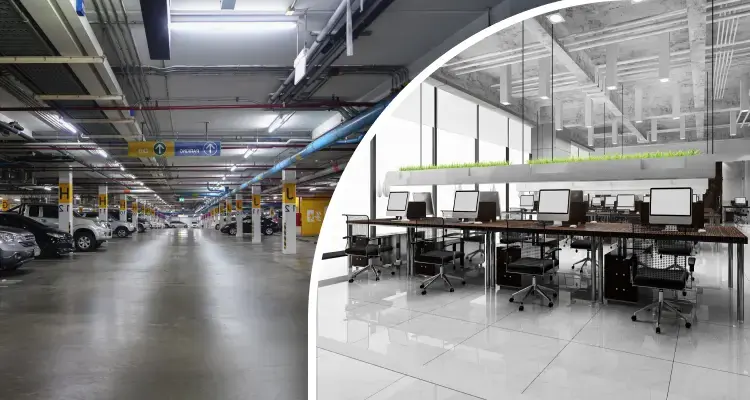
There is an “80% rule” with planning parking garages and office spaces. What that means is that when we think an office (or parking garage) is full, it is often only 80% full. Utilization studies, where offices are measured every hour of a workday over two or more consecutive weeks, often show that workstations are empty on average 60% of the time. Private offices are empty on average 77% of the time. These averages were well documented before the implementation of widespread remote working due to the pandemic.
Workstations and offices were empty so often because how we worked in the 21st century (for white-collar workers pre-pandemic) allowed many tasks to be completed while mobile. People attended meetings in conference rooms, collaborated with colleagues in open areas, brainstormed at clients’ offices, attended off-site meetings, traveled to conferences, or simply were out on vacation (or sick). Given these office utilization statistics before Covid-19, it is understandable that post-pandemic hybrid workplaces will show even lower utilization.
This next action takes some concentrated effort, but it is time well spent. Review the tasks and functions by role and responsibility. Determine if there are positions that do not always require a dedicated desk. Often, we sit at the same desk because we always have – it is a habit and has been how we’ve always worked. When you give employees work settings that offer choice then they can move throughout the office and share the varied work settings with each other, including private focus rooms.
If you have twenty private offices, consider converting 80% of them to shared focus rooms. People book a focus room as they would a meeting room, for a maximum of two hours (or, a predetermined amount of time). They leave the room, head to a lounge seat near a window, and complete a task that doesn’t require as much focus – answering email, for example. After an hour they might head out for lunch, return for a meeting, and then go to a stand-up desk for a few hours to complete their day.
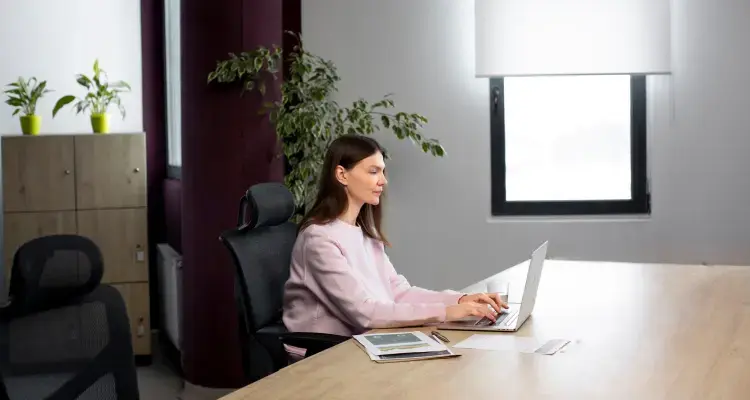
Eliminate title and hierarchy when you conduct this study – stick to the facts about function and task. Recognize that when you take this approach chances are there will be plenty of private rooms for use by all who need to access them, regardless of title.
Consider the same approach with workstations – making most of them sharable and reserving only a handful as assigned seats. Designating workstations and private offices as sharable also means a clear desk policy – people take their belongings with them and leave the desk clear for the next person. This makes it much easier to clean and sanitize the desks between uses as well. (I hear cries of, “what about the photos on my desk?!” Stick with me – we’ll get to that in a bit.)
Take a hard look at your storage rooms and closets. Chances are most of those items have sat untouched for over a year. What do you really need now? Rows and rows of three-ring binders? Bins of hanging file folders? Be ruthless in purging supply rooms, kitchen areas, and file cabinets. See how much space you can empty when you clear the clutter. An empty storage room can be a wonderful meditation or wellness space with different lighting, paint, art, and repurposed furniture.
These are a few simple gestures that require thought and consideration, but they do not need to cost a lot of money. You may find that you can reimagine your office in such a way that you could sublease a floor (or more) and create a more inviting and welcoming place for employees when they are in the office.
Bonus Read: A Practical Guide to Designing a Hybrid Workplace
Perhaps you have a connection to a non-profit that would welcome the use of a newly created unoccupied office area. The limit to how you can repurpose your office is limited only by your preconceived notions. If 2020 taught us anything, it is that our embedded assumptions about what work looks like can be changed. One leader shared, “Although it might be harder to work through the nuances, a hybrid workplace offers the most opportunities for us to optimize our real estate.”
Well, that covers real estate and how a hybrid workplace is the answer to most problems. In the second part of this article, we will discuss employees’ hesitancy to return to the office and how companies can create an appealing hybrid workplace that positively impacts culture.
 Workplace Management
24 September 2026
Compare six workplace management platforms. See what each is suited for and how to choose the right fit in 2026.
Deesha
|
4 Min Read
Read More
 Announcement
13 August 2026
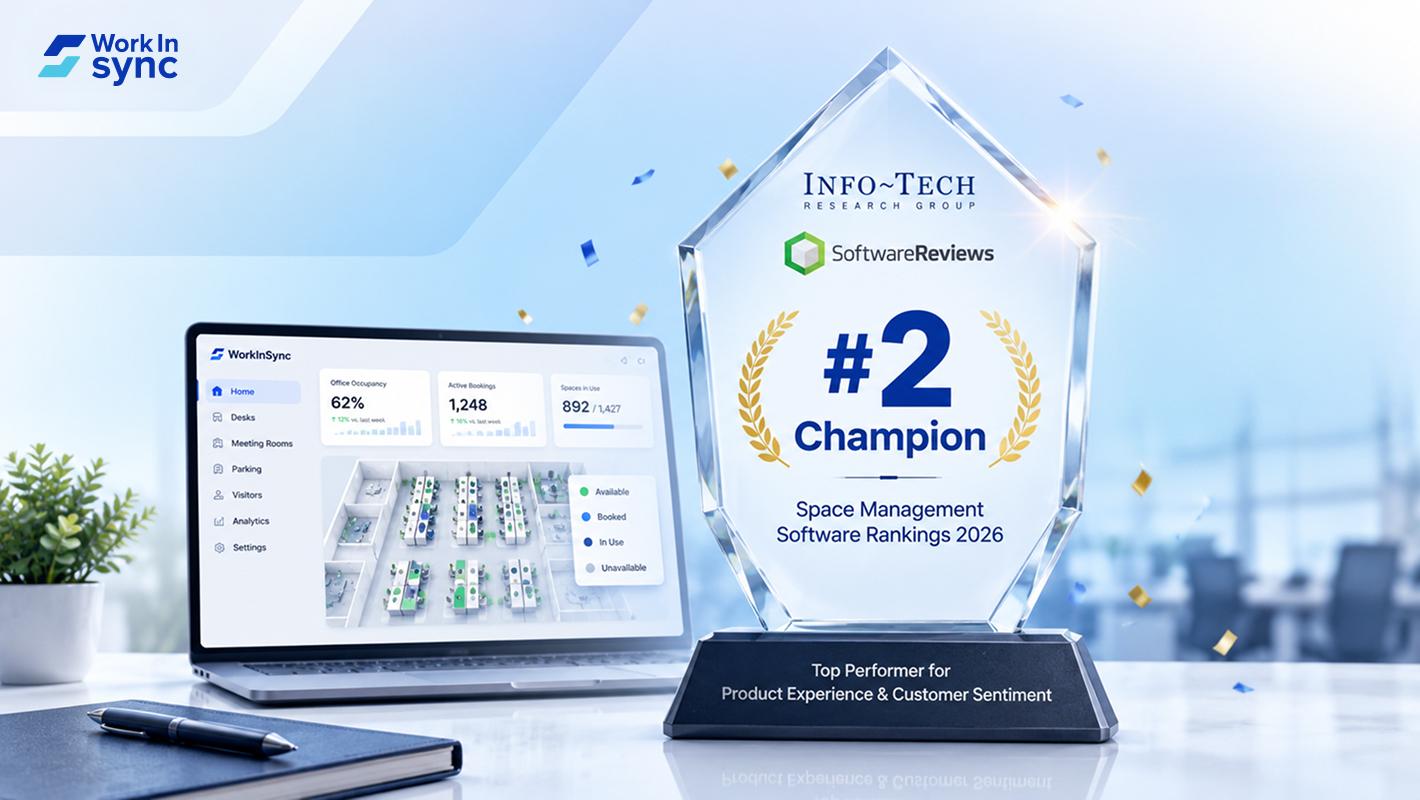
WorkInSync has been recognized by Info-Tech Research Group as a Champion in the 2026 Data Quadrant for Space Management, ranking #2, and as a Champion in the Emotional Footprint, ranking #2. Both awards are published on SoftwareReviews, Info-Tech's ratings platform, where rankings are built entirely from user feedback.

Sai Riddi
|
2 Min Read
Read More
 Desk Booking Software
5 June 2026
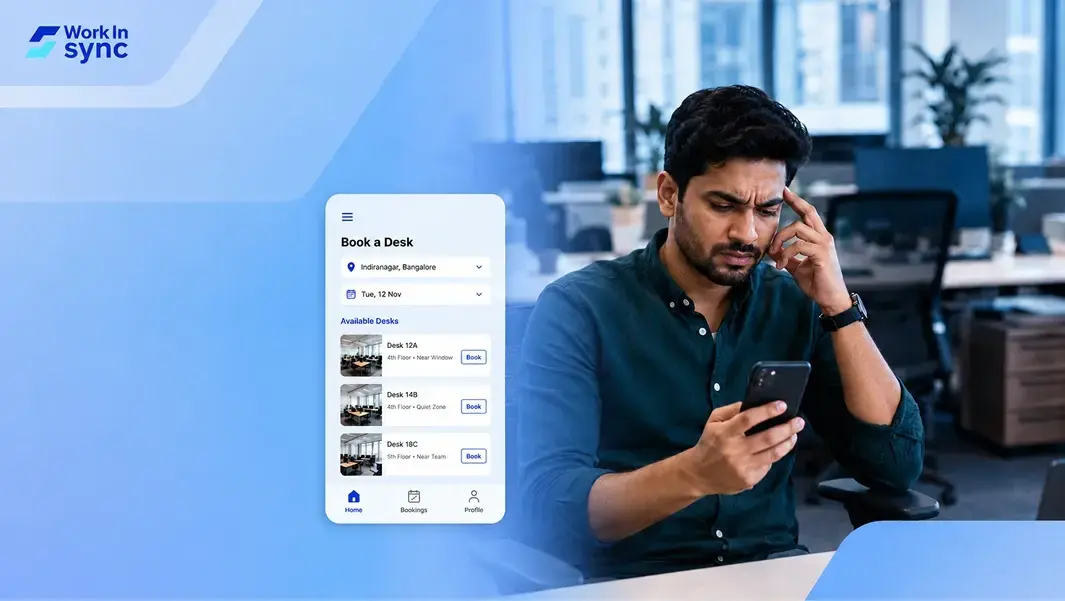
Let’s not pretend otherwise. Somewhere in your organization, a well-meaning IT or facilities team rolled out a desk booking system. There was a demo. Someone said “seamless.” There may have been a slide with the word “frictionless” on it. Leadership nodded. Procurement signed off. And then employees quietly went back to texting each other on […]

Ujjwal Trivedi
|
6 Min Read
Read More