
 Workplace Management
24 September 2026
Best Workplace Management Software in 2026: 6 Tools Compared
Compare six workplace management platforms. See what each is suited for and how to choose the right fit in 2026.

Deesha
|
4 Min Read
Read More

Key Takeaways
Desk booking software has evolved post-COVID into a critical tool for safety compliance, space management, and hybrid workplace flexibility.
Revamping your setup starts with understanding space usage, gathering employee feedback, and planning for future growth or expansion.
Elastic inventory management helps scale desk availability based on changing occupancy levels.
Occupancy sensors support cleaning schedules and space optimization through real-time usage tracking.
Real-time monitoring with intuitive dashboards enables timely, data-driven decisions.
Spatial information features let users choose desks based on preferences like lighting, noise, or team proximity.
A mobile-first experience ensures users and admins can manage desk bookings flexibly from anywhere.
Automated handling of cancellations and rescheduling reduces manual work and improves turnaround.
Modular solutions allow companies to add new features as they scale without upfront investment in unused capabilities.
Across all trends, enhancing employee experience remains the driving force behind desk booking innovations.
Desk booking software is essential to a hybrid workplace. While it opens up opportunities for employees to collaborate better in a flexible setting, there is more to desk booking software. If your end goal is to revamp your hybrid workplace, then keeping up with the latest desk booking trends is essential.
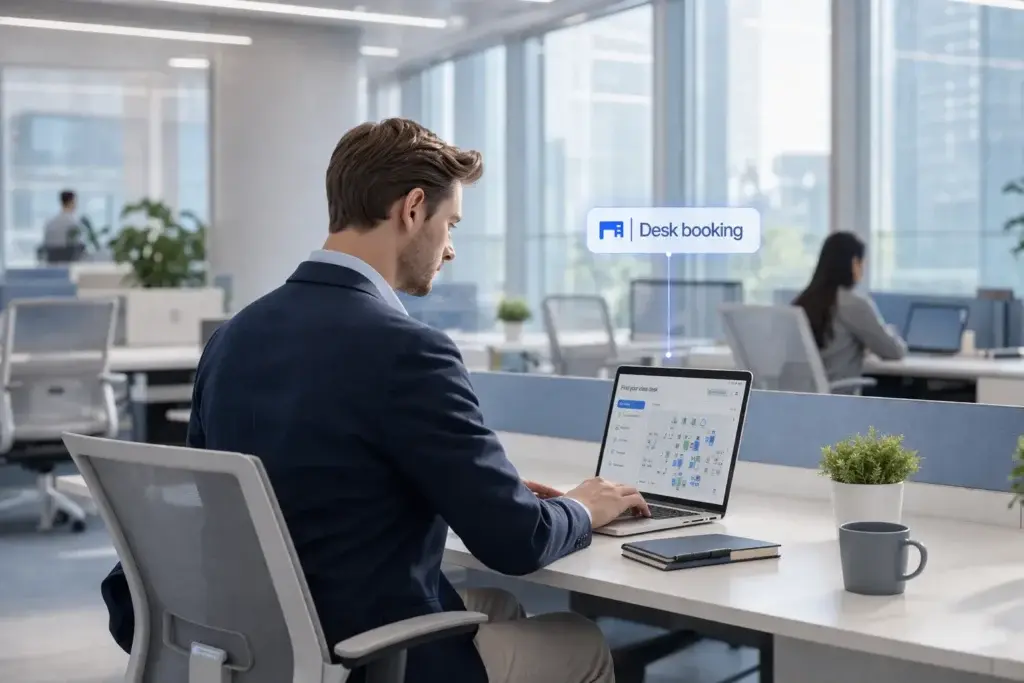
Desk booking software is not new. However, in the post-COVID world, it serves a much larger purpose. It helps offices comply with safety guidelines for disinfection, social distancing, and not exceeding floor capacity limits. Thus, it forms the basis of a hybrid work environment that several companies are now adopting.
Switching to flexible working demands willingness and the ability to adapt to changing situations. A hybrid workplace is identified by its flexibility. So big and small changes are an integral part of a hybrid work model.
If your hybrid workplace is up for revamp, you must know the latest and the best desk booking trends in the market today. You could be an IT manager, a facility manager, or an HR manager – we will help you stay updated.
Also Read: What is Desk Booking Software?
Before you go ahead with a full-blown revamp, planning and prioritizing will help you save time and money. More importantly, you will realize its benefits sooner and how.
When you first switch to a hybrid work model, things may not pan out as per the plan. Even if it does, there is always scope for improvement. Do not be surprised to find processes circumvented or equipment lying unused. Identify your space requirements and list things you can do better in version two of your hybrid work model.

Space utilization data is half the story – the other half comes from qualitative surveys and anecdotal evidence. If users say they call to book desk because the app crashes all the time, you know what to fix.
Running periodic surveys will help you decide the scope of revamping better. You can get significant insights about
Major draws to work on-site
Changes that can make people more productive
Features employees seldom or often use
Ideal solutions from a user’s perspective
Admittedly, a hybrid work model would be new for most companies. Also, many could be on the cusp of significant changes – accelerated growth, bigger teams, more locations, etc. Factor such possibilities into your plan to save time and effort.
Once you have your requirements, it is time to start exploring the best options in the market. Here are a few features businesses are increasingly looking for in a desk booking solution. Make sure you have these on your list when revamping your hybrid workplace.
Right now, you could have 20 percent of your workers visiting the office. If the regulations allow, it could be 60 percent soon. Consequently, your desk inventory requirements change. Therefore, you must pick a solution that offers you elasticity in inventory management.
Knowing when a desk is unoccupied and for what duration helps in several ways. For one, the housekeeping staff can clean and disinfect it without disturbing work. And say, if a desk stays occupied for only 5 percent or 10 percent of the time, you can try and optimize its usage.
IoT-based sensors can help you get this data with ease.

Data helps you make the right decisions. Real-time data helps make decisions in time. If a desk booking system collects real-time data and presents it through an easy-to-understand dashboard, go for it. Of course, it must also have other must-have features from your list of requirements.
When booking a desk, employees have their priorities and preference – natural light, low noise, or in-person collaboration with other team members. A desk booking solution should provide these details to help employees choose a suitable desk. Understandably, it reduces changes in booking and cancellation requests.

Another critical aspect of delivering a good user experience is to take a mobile-first approach. Choose a solution that lets employees book desks through a mobile application. At the same time, the backend desk management should also be accessible on a smartphone.
Not using a mobile-based solution takes away much-needed flexibility from the users. And flexibility forms the bedrock of the hybrid work model.
The user experience of facility and IT managers managing desk bookings is equally crucial. If one were to handle booking and cancellations manually, a desk booking system serves little purpose.
Ideally, a desk booking solution must release a seat to the available pool post-cancellation. It must also handle change requests for time or location without manual intervention.
Uncertainty has always been a part of doing business. If anything, the pandemic only held a magnifying glass to it. Therefore, companies today prefer solutions where they buy capabilities incrementally when needed.
It helps minimize initial investment by not spending on features you do not require at the moment. However, you might need those later as you grow. A modular desk booking solution helps you do it with minimal effort.
The above list captures the common emerging trends in desk booking customer preferences across industries. While most companies are looking for these features, they have other unique requirements too. However, if one picks a common denominator, it is employee experience.
Employee experience has emerged as a compass for decision-making in a hybrid work model. It has helped companies attract and retain talent. A seamless hybrid work model experience also boosts employee productivity. So, striving to provide a great user experience is a win-win for both businesses and employees.
If a desk booking app is known for its relentless focus on exceptional user experience, make sure you shortlist it.
Stay tuned for the latest updates on desk booking software. Subscribe to the WorkInSync blog to learn more about desk booking, desk management, hot desking, and more!
 Workplace Management
24 September 2026
Compare six workplace management platforms. See what each is suited for and how to choose the right fit in 2026.
Deesha
|
4 Min Read
Read More
 Announcement
13 August 2026
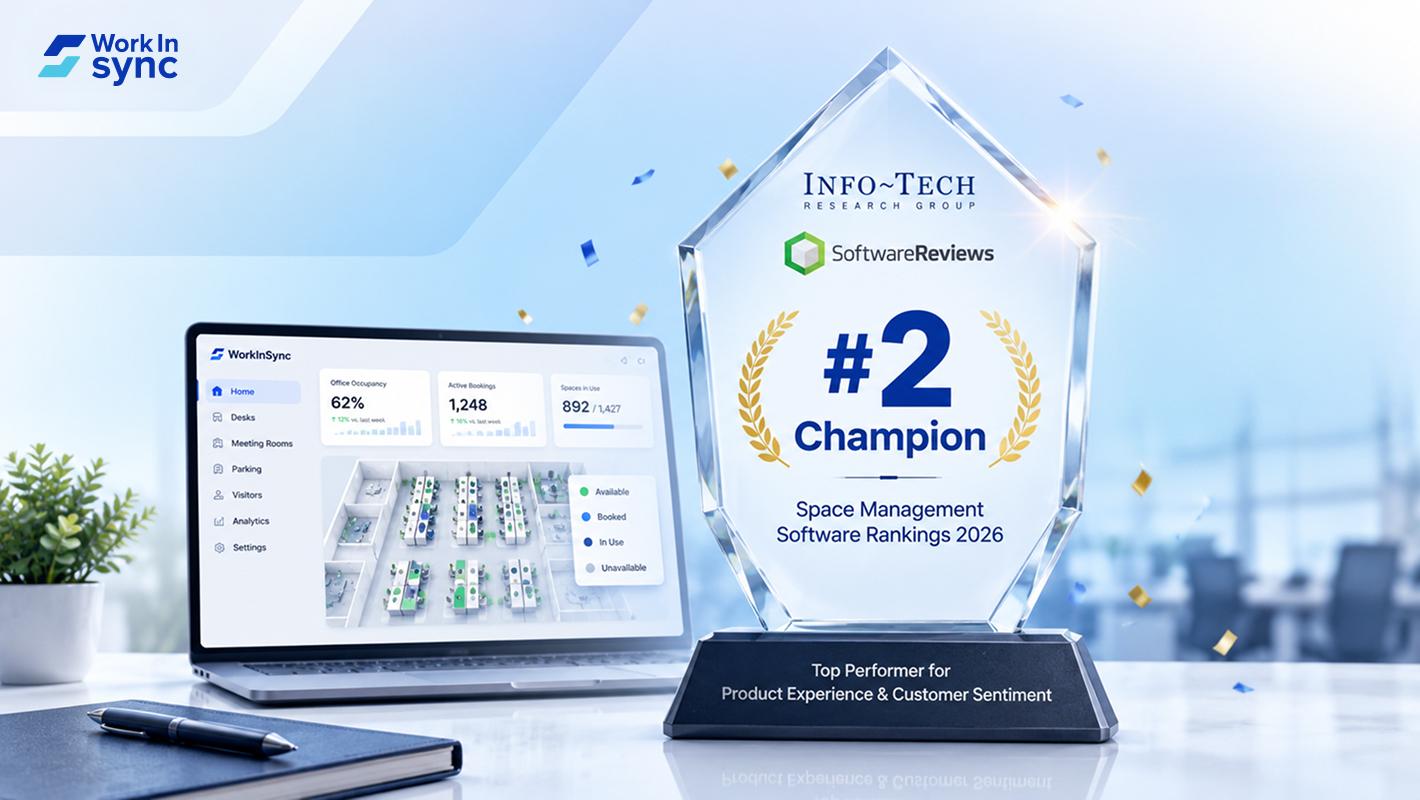
WorkInSync has been recognized by Info-Tech Research Group as a Champion in the 2026 Data Quadrant for Space Management, ranking #2, and as a Champion in the Emotional Footprint, ranking #2. Both awards are published on SoftwareReviews, Info-Tech's ratings platform, where rankings are built entirely from user feedback.

Sai Riddi
|
2 Min Read
Read More
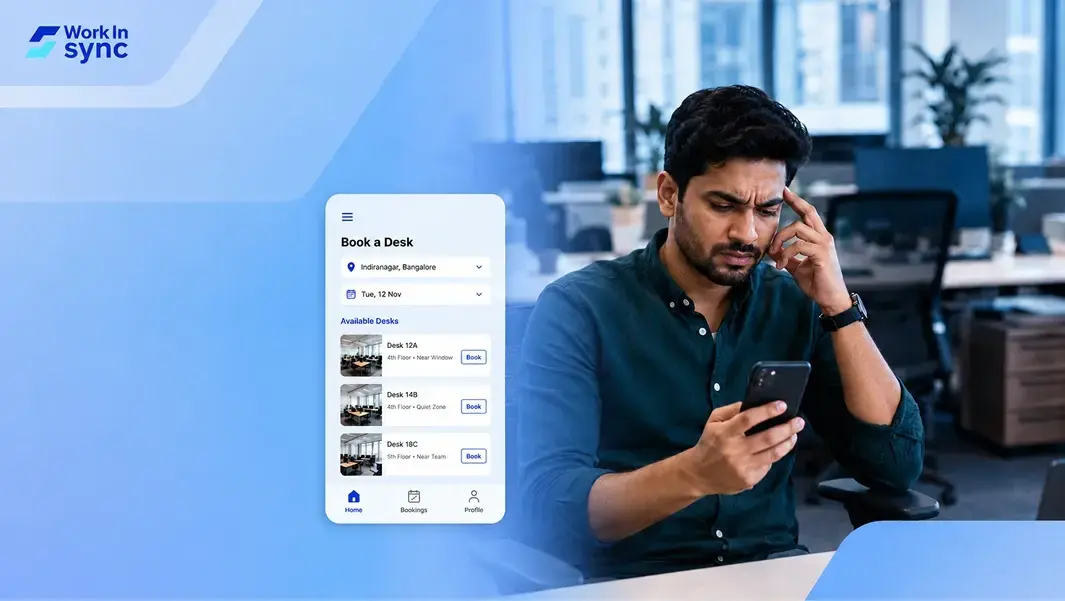 Desk Booking Software
5 June 2026
Let’s not pretend otherwise. Somewhere in your organization, a well-meaning IT or facilities team rolled out a desk booking system. There was a demo. Someone said “seamless.” There may have been a slide with the word “frictionless” on it. Leadership nodded. Procurement signed off. And then employees quietly went back to texting each other on […]

Ujjwal Trivedi
|
6 Min Read
Read More