
 Workplace Management
24 September 2026
Best Workplace Management Software in 2026: 6 Tools Compared
Compare six workplace management platforms. See what each is suited for and how to choose the right fit in 2026.

Deesha
|
4 Min Read
Read More

Key Takeaways
Hybrid work reduces carbon emissions by lowering commute frequency and decreasing office energy consumption.
Flexible schedules allow greener travel choices like public transport, carpooling, or cycling on in-office days.
Downsized offices and partial occupancy cut heating, cooling, lighting, and equipment energy usage.
Digital workflows in hybrid settings reduce paper use by 45–60%, lowering deforestation and supply waste.
Sustainable commuting incentives and transparent reporting boost employee engagement in eco efforts.
Green office upgrades like smart lighting, energy-efficient systems, water-saving fixtures further reduce resource use.
Digital tools like e-signatures, cloud storage, and scheduling apps optimize resource use and office operations.
Addressing home office energy waste with efficient devices and shared workspaces improves overall sustainability.
AI-powered occupancy tracking prevents unnecessary heating, cooling, and powering of underused spaces.
Government incentives and ESG integration are driving hybrid adoption for environmental and business benefits.
The shift to hybrid work since 2020 has created unexpected benefits for our environment. As employees split their time between home and office, we’re seeing significant changes in carbon emissions, energy use, and resource consumption. Adopting hybrid work models can reduce carbon emissions by decreasing commute frequency, lowering office energy needs, and minimizing the environmental impact of daily workplace operations.
Hybrid work arrangements offer a balanced approach that captures environmental benefits while addressing potential downsides. With more and more organisations embracing a hybrid work model, they have a unique opportunity to align workplace flexibility with sustainability goals.
The environmental impact of hybrid work extends beyond just reducing commutes. It allows businesses to reduce office space requirements, share equipment among employees, and rethink how physical workspaces are used and maintained. When implemented thoughtfully, hybrid work creates a win-win scenario for both the organisation and planetary health.
Key Takeaways
Hybrid work reduces carbon emissions by cutting commute frequency and decreasing office energy consumption.
Companies can optimize sustainability benefits by thoughtfully redesigning workspaces and resource allocation for hybrid schedules.
Balancing in-office collaboration with remote flexibility creates both environmental advantages and improved employee wellbeing.
Hybrid work combines in-office and remote work schedules, giving employees flexibility while also maintaining face-to-face interactions. This approach balances personal needs with professional responsibilities.
Companies are embracing hybrid work models for several compelling reasons.
Cost Optimisation: Hybrid models offer cost savings for both employers and employees. Organizations can reduce office space and utility costs, while employees can save on commuting expenses and time spent commuting.
Universal Talent: The talent advantage is undeniable. Employers can attract workers from a wider geographic area when daily office attendance isn’t required. This expands the talent pool dramatically.
Improved Employee Satisfaction: Employee satisfaction improves with hybrid arrangements. They gain better work-life balance by eliminating daily commutes and having more control over their schedule.
Ease of Work: Technology has made hybrid work practical. Video conferencing, cloud storage, and collaboration tools allow for effective work regardless of location.

Hybrid work models deliver significant environmental advantages by reducing the resources we use in our daily work lives. These benefits range from cutting transportation emissions to lowering office energy needs and decreasing material consumption.
When employees work from home part of the week, their carbon footprint gets reduced directly through decreased commuting. To add on, consider these commute-related benefits:
Fewer vehicles on roads mean reduced traffic congestion and lower collective emissions
Less frequent commuting cuts employees personal transportation costs and environmental impact
More flexibility to choose off-peak travel times, reducing time spent in traffic jams
For those days when people do commute, they might find it easier to consider greener alternatives like public transportation, carpooling, or cycling since the commitment is less frequent.
Offices with hybrid workforces typically require less physical space and consume fewer resources.
Energy savings come from:
Reduced heating and cooling needs in partially occupied spaces
Lower electricity usage from lighting and equipment
Smaller office footprints as companies downsize their real estate
Waste generation also decreases with fewer people in the office daily. This includes everything from cafeteria food waste to paper towels and cleaning supplies.
Digital workflows become the norm in hybrid environments, drastically cutting paper consumption. When you’re working between locations, digital documents are simply more practical than physical ones.
This shift creates several environmental benefits:
Lower paper demand reduces deforestation and manufacturing impacts
Fewer printer supplies like ink cartridges and toners need production and disposal
Reduced shipping impacts from office supply deliveries
Sustainable business practices emerge naturally in hybrid settings as teams embrace digital collaboration tools. Document sharing platforms, digital signatures, and cloud storage replace resource-intensive physical alternatives.
Even when in-office, hybrid workers tend to maintain these digital habits, creating lasting reductions in resource consumption. Companies often report 45-60% reductions in paper usage after implementing hybrid work policies.
Hybrid work models offer companies powerful opportunities to reduce their environmental impact while maintaining productivity. When implemented thoughtfully, these approaches can significantly cut emissions, decrease resource consumption, and support broader sustainability goals.
Hybrid-first policies integrate both remote and in-office work, ensuring employees experience the benefits of both environments.
Organisations can encourage sustainable commuting for in-office days by offering employee commute, public transit subsidies, or carpooling incentives.
Tracking and sharing the environmental impact of the hybrid work strategy is encouraged. Employees are more engaged when they see how their flexible schedules contribute to lower emissions. Regularly highlighting these sustainability gains in internal reports reinforces the positive impact of hybrid work.
Organisations can downsize office footprints to match actual usage patterns in hybrid environments. Many companies have reduced real estate by 30-50% by implementing hot-desking or hotel systems where employees reserve spaces as needed.
The remaining spaces can be retrofitted with energy-efficient systems such as smart lighting, programmable thermostats, and improved insulation. Energy-saving technology pays for itself through reduced utility costs while supporting your sustainability goals.
Focus on environmentally friendly furnishings and fixtures. Choose recycled materials, low-VOC paints, and sustainable fabrics. Install water-saving fixtures in bathrooms and kitchens to reduce consumption by up to 30%.
Consider renewable energy options like solar panels or switching to green energy providers. These investments demonstrate your commitment to sustainability and can attract eco-conscious clients and employees.
Implement completely paperless processes through digital document management systems. Tools like DocuSign, and Microsoft SharePoint allow for seamless collaboration without printing.
Optimize your video call infrastructure to make remote collaboration seamless. Invest in quality cameras and microphones to eliminate the need for travel to meetings.

Use smart scheduling tools to optimize office usage. Apps can coordinate team days to maximize collaboration while minimizing the number of days buildings need to be fully operational.
Deploy energy management software to monitor and control usage. These systems can automatically power down unused equipment and provide data on consumption patterns to identify further opportunities for reduction.
Implementing a truly sustainable hybrid work model requires addressing key obstacles while balancing organizational goals with environmental impact. Technology and thoughtful policies can transform these challenges into opportunities for meaningful change.
Remote work shifts energy consumption from centralized office buildings to individual homes, creating unique sustainability challenges. Many home offices use more energy than necessary due to inefficient heating, cooling, and outdated equipment.
You can significantly reduce your home office footprint by investing in energy efficient devices. Here are a few practical solutions to consider:
Quick Energy-Saving Tips:
Use smart power strips to eliminate phantom energy drain
Position your desk near natural light to reduce artificial lighting needs
Working in shared spaces like coffee shops or coworking venues occasionally can also reduce your individual energy usage. These spaces distribute energy costs across multiple users, making them more efficient than heating or cooling an entire home for one worker.
Organizations face communication and coordination challenges when implementing sustainable hybrid work policies. Without careful planning, sustainability initiatives can become fragmented across remote and in-office environments.
To align your sustainability efforts across distributed teams:
Set clear metrics – Establish measurable sustainability KPIs that work for both office and remote settings
Leverage technology – Use workplace management solutions to track space utilization and optimize energy consumption
Create accountability – Assign sustainability champions for both remote and in-office teams
Smart office scheduling can reduce your organization’s carbon footprint by preventing underutilized spaces from being unnecessarily heated, cooled, and powered. Many companies now use AI-powered systems to predict office occupancy and adjust building systems accordingly.
Even the best sustainability policies fail without proper employee engagement and awareness. Creating a culture of environmental responsibility requires consistent messaging and incentives that work across different work arrangements.
You can foster sustainable behaviors by making sustainability visible with digital dashboards. And also offering eco-education through micro-learning sessions focused on specific sustainable actions employees can take regardless of work location. These 5-10 minute modules can address issues like proper electronic waste disposal, energy conservation, and sustainable purchasing.
Hybrid work models and sustainability efforts are evolving together, creating new opportunities for environmental protection while maintaining productivity. The intersection of these approaches will shape how businesses operate in coming years.
The trend toward hybrid workplaces is accelerating among environmentally conscious companies. By 2030, experts predict that 70% of businesses will have adopted some form of hybrid model as their standard operating procedure.
You’ll see this shift happening as organizations recognize the dual benefits: reduced carbon footprints and improved employee satisfaction.
Technology companies are leading this charge, with many already adopting permanent hybrid policies that prioritize both environmental impact and employee flexibility.
Government incentives are increasingly supporting businesses that implement sustainable workplace practices. Tax breaks for companies reducing their carbon footprint through hybrid work arrangements are becoming more common across developed nations.
You can expect to see stricter regulations around corporate environmental reporting in the coming years. The EU’s Corporate Sustainability Reporting Directive is just the beginning of what will likely become global standards.
Forward-thinking corporations are already incorporating hybrid work into their ESG (Environmental, Social, Governance) frameworks.

The most effective policies combine clear sustainability targets with flexible work arrangements that empower employees to contribute to environmental goals.
Hybrid work offers a powerful way to reduce our impact on the planet. Significant environmental benefits can be seen when your organization cuts down on daily commuting through flexible work arrangements.
Remote and hybrid models don’t just help the environment—they also boost your company’s ESG goals. When you implement these practices, you’re creating a win-win for your business and the planet.
Effective collaboration remains possible—and often improves—in hybrid settings. Digital tools now make it easy for your teams to work together regardless of location, reducing the need for resource-intensive office spaces.
The future of sustainable work is flexible. By embracing hybrid models, you position your organization as forward-thinking while balancing environmental responsibility with workplace efficiency.
Want to make your hybrid work strategy more sustainable? Explore how WorkInSync can help optimize your workplace for efficiency and eco-friendliness. Book a demo today!
 Workplace Management
24 September 2026
Compare six workplace management platforms. See what each is suited for and how to choose the right fit in 2026.
Deesha
|
4 Min Read
Read More
 Announcement
13 August 2026
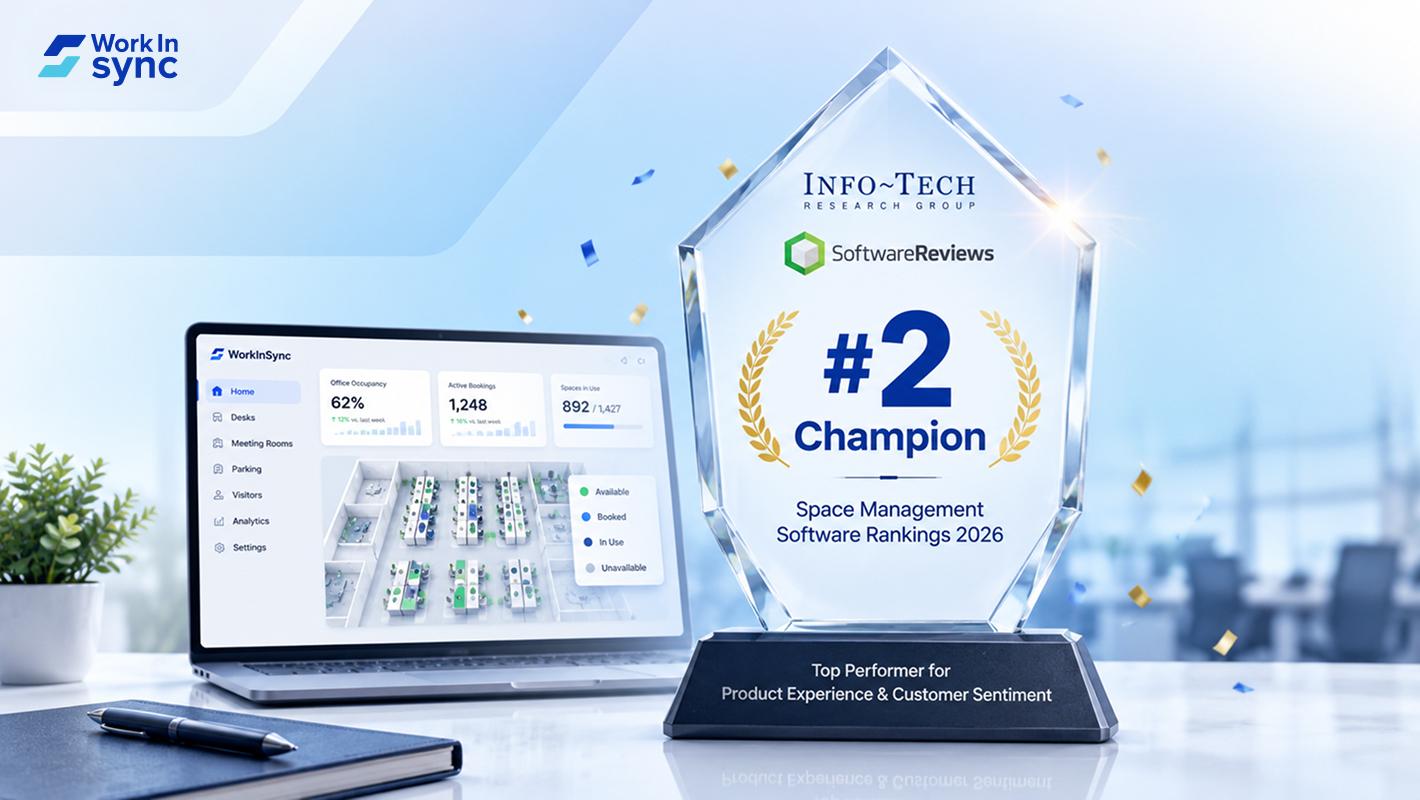
WorkInSync has been recognized by Info-Tech Research Group as a Champion in the 2026 Data Quadrant for Space Management, ranking #2, and as a Champion in the Emotional Footprint, ranking #2. Both awards are published on SoftwareReviews, Info-Tech's ratings platform, where rankings are built entirely from user feedback.

Sai Riddi
|
2 Min Read
Read More
 Desk Booking Software
5 June 2026
Let’s not pretend otherwise. Somewhere in your organization, a well-meaning IT or facilities team rolled out a desk booking system. There was a demo. Someone said “seamless.” There may have been a slide with the word “frictionless” on it. Leadership nodded. Procurement signed off. And then employees quietly went back to texting each other on […]
Ujjwal Trivedi
|
6 Min Read
Read More