

Hybrid Workplace
How to Create a Digitized Hybrid Workplace in 2021?
Key Takeaways
In 2021, organizations prioritized flexible work models, employee engagement, increased automation, and cost reduction alongside safe office re-entry.
Pre-pandemic offices were centralized hubs for collaboration, resources, and culture, but many assets operated as disconnected, underutilized units.
Globally, only 13% of organizations used office space over 80% of the time, leaving $150 billion annually in unused space.
Remote work gained acceptance, but 64% of employees still wanted some on-site work for collaboration, networking, and spontaneous interactions.
Hybrid workplaces combine on-site and remote work, with design tailored to talent needs, business functions, and project phases.
Office spaces must be redesigned to ensure social distancing, manage occupancy, and limit movement in high-traffic areas like cafeterias or elevators.
Digitized hybrid workplace platforms unify assets, enable real-time coordination, improve productivity, and can cut real estate costs by up to 30%.
Organizations already investing in digital innovation are 2.7 times more likely to be top performers than late adopters.
As the world slowly adjusts to the post-pandemic new normal, green shoots of economic recovery are expected globally. IMF projects that the world GDP will rise to 5.2% in 2021 after contracting to 4.4% in 2020 (1). As per a global CFO survey conducted by the Boston Consulting Group, 60% of the respondents expressed cautious optimism for the near future, anticipating an increase in sales and profits in 2021 (2).
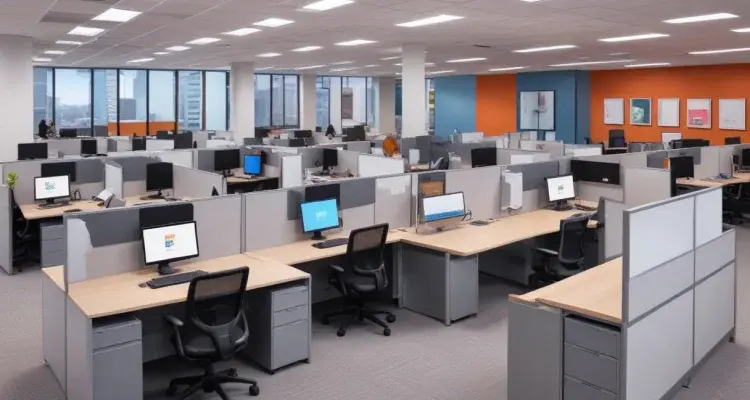
Key Organizational Agenda for 2021
As a derivative of this cautious optimism, some of the key organizational priorities for 2021 are setting up flexible working models, focusing on employee engagement, increasing automation at the workspace, and cost reduction (2 & 3).
Getting employees safely back to the office is another short-term agenda for many organizations. The number of employees coming back to the office is slowly increasing, as indicated by the Kastle Back to Work Barometer. However, concerns remain about ensuring their health and safety and minimizing any business disruptions due to the same.
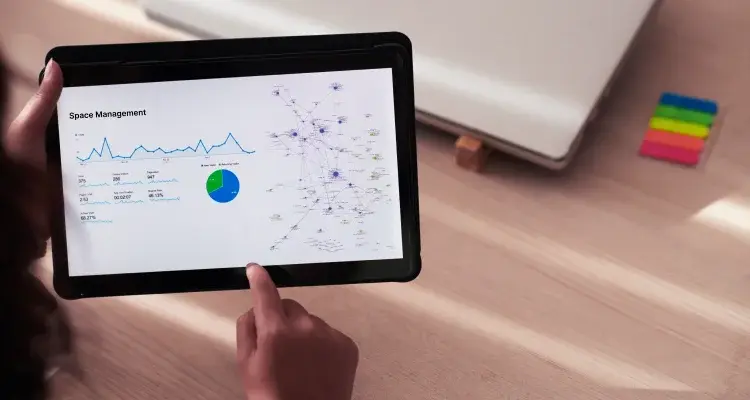
Creating a Digitized Hybrid Workplace to Enhance Organizational Resilience
In the pre-pandemic era, offices have served as spaces for collaboration and ideation. They also provided a platform for employees to socialize and interact with each other thereby reinforcing organizational culture. Offices provided access to different types of capital assets and services (e.g. printers, courier services) to achieve the same (6). These features helped amplify employee productivity. Office spaces were designed to accommodate almost all the employees of the organization and were set-up in all major geographies of operations. Organizations typically planned to add more office space to accommodate growth in employee strength (7).
However, in many organizations, the various assets/amenities provided in the office space (e.g. access management infrastructure, desk & meeting rooms, cafeteria, etc.) have been structured and operated as discrete, disconnected units and have been viewed more as an operational requirement rather than as a strategic business need. This impacted employee productivity and led to inefficient utilization of office assets. A Workplace Survey conducted in 2017 (8) found that:
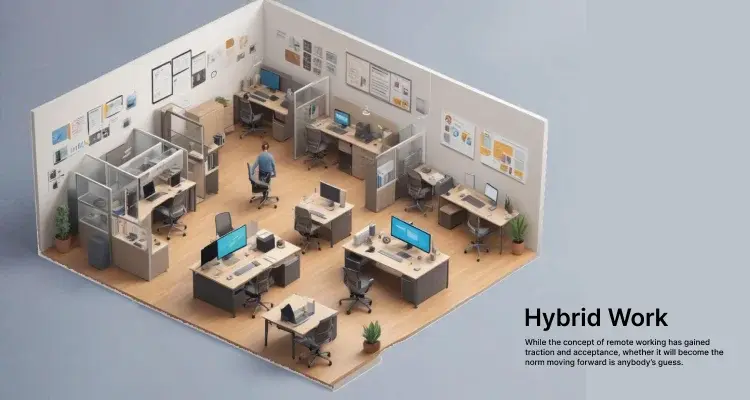
Globally, only 13% of organizations utilized their space more than 80% of the time. In 2018, 37% of workplaces were empty during any given workday, which translated to approximately $ 150 billion in unused space (9).
During COVID times, the concept of offices has undergone a paradigm shift. From being a single physical space for congregation, offices have become distributed physical spaces located in employees’ homes. All interactions have moved online, with organizations adopting different digital tools for the same.
While the concept of remote working has gained traction and acceptance, whether it will become the norm moving forward is anybody’s guess. In a survey conducted by Salesforce, only 37% of survey respondents viewed full-time remote work as the most appealing long-term scenario. 64% of the respondents wanted to spend at least some of their working hours at an office, factory, or other types of workplace (11). A BCG study suggests that employees miss the connectivity they had with colleagues in office. Respondents told that they miss “being able to spontaneously walk to a coworker’s desk and discuss an issue” and “social gatherings at work.” (10).
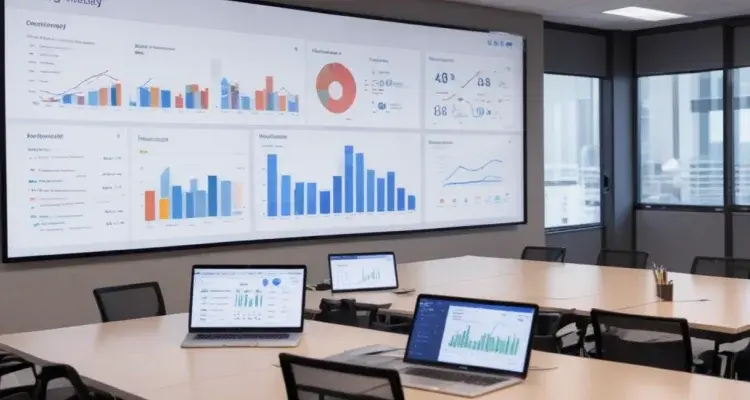
For now, organizations are cautiously evaluating when and how to safely bring employees to office. However, the office experience will not be the same before a vaccine is available (7). Employees working onsite will be required to wear masks and follow various health and safety protocols on the office premises. Companies will have to redesign office spaces to ensure social distancing and restrict movement in congested areas (e.g. office cafeteria, meeting rooms, elevator, etc.).
Most of the CXOs are actively considering the concept of hybrid / flexi workplaces that promote flexible work models. This includes creating a workplace experience that enables employees to move seamlessly between onsite and remote work and suitable office spaces that enable the same (10). As per McKinsey research, flexi-workplaces’ share of the US office market has been growing at 25% annually for the past 5 years. Post pandemic, the percentage of time worked in main and satellite offices is projected to decline by 12% and 9% respectively, while flex office space will hold approximately constant (7).
The type of hybrid workplace model adopted will vary across organizations, based on talent availability, business, and functional requirements. For example, professional-development journeys (being physically present in the office at the start and working remotely later) and project stages (being physically co-located for initial planning and remotely executing the project) could be key influencers on the model adopted (7). Organizations will have to take a fresh look at office space required and how it impacts collaboration, productivity, culture, and work experience.
How to Create Digitized Hybrid Workplace
However, creating and managing a hybrid workplace / flexi-workplace requires a lot of planning and coordination across multiple teams (Business, HR, Real-Estate & Facilities, Transport etc.) as well as coordination with employees on a real-time basis. To achieve this, organizations will have to

Technology will play a central role in enabling the hybrid workplaces and their associated operations. It is required to connect the disparate office assets into a holistic interactive system. Workplace digitization will bring all the concerned stakeholders onto a common platform and ensure seamless planning and coordination at scale. A digital workplace platform will also provide decision-makers (CXOs) visibility on their workforce operations and enable real-time business decision-making.
A digitized hybrid workplace will not only improve employee productivity but will also lead to savings in real-estate-related costs (rent, operations & maintenance cost, etc.) which form the largest cost category outside of compensation for many organizations. It is estimated that a 30% reduction in real-estate costs could be realized over time (7). It will also increase organizational flexibility and make it resilient to future disruptions.
Due to the pandemic, digital transformation is expected to become a key determinant of competitive advantage. According to a Gartner study, organizations that have already invested in digital innovation are 2.7 times more likely to be top performers than the organizations investing in the future (4).
Hence, as the year 2020 comes to an end, CHROs and COOs should start planning their organization’s return-to-office policies for the next year and include workspace digitization initiatives as part of the same. This is critical to ensure an engaged workforce and to build a resilient organization of the future.
About WorkInSync
WorkInSync is a technology solution that enables organizations to establish hybrid workplaces and enables employees’ safe return-to-office.
WorkInSync is backed by our decade-long experience creating MoveInSync – the world’s largest commute platform that is currently used by 150 global enterprises, including 38 of the Fortune 500.
Sources
World Economic Outlook, October 2020: A Long and Difficult Ascent, IMF
COVID-19 CFO Pulse Check #3, 2020, BCG
40% of CEOs worry about post-pandemic social, economic unrest: Mint-Bain survey, 2020, Livemint.com
2021 CIO Agenda: Seize This Opportunity for Digital Business Acceleration, 2020, Gartner
The Evolving State of Digital Transformation, 2020, BCG
Purpose of place: History and future of office, 2020, Cushman & Wakefield, Centre for Urban & Real Estate Analysis (The George Washington University)
Reimagining the office and work life after COVID-19, 2020, McKinsey & Company
Office Workplace Survey, 2017, Senion
We have a space problem: Benchmarks reveal $150 billion in office waste, 2019, Density
What 12,000 Employees Have to Say About the Future of Remote Work, 2020, BCG
New Survey Data Shows Possible Scenarios for the Future of Offices, Commuting, and Cities, 2020, Salesforce








Download Our App



 MoveInSync 2026, All rights reserved