
 Workplace Management
24 September 2026
Best Workplace Management Software in 2026: 6 Tools Compared
Compare six workplace management platforms. See what each is suited for and how to choose the right fit in 2026.

Deesha
|
4 Min Read
Read More

Key Takeaways
COVID-19 accelerated the shift to hybrid work, with many companies expecting to adopt it fully within six months.
A hybrid workplace blends remote and in-office work, allowing employees to choose where and how they are most productive.
Employers report higher productivity in hybrid settings, with technology enabling seamless integration of physical and virtual offices.
Key expectations include flexible work hours, broader recruitment reach, reduced office footprint, and improved home office setups.
Transitioning requires rethinking policies for both in-office and remote staff, including social distancing guidelines and flexi-desking.
Providing remote workers with enterprise-grade home setups supports efficiency and productivity.
Encouraging collaboration is vital, using virtual tools to keep teams connected and engaged.
Building a culture that fosters communication, inclusion, and innovation is central to hybrid workplace success.
Tools like WorkInSync can streamline the transition and ongoing management of a hybrid model.
Almost overnight, COVID-19 forced millions of employees from across the globe to re-think their approach to work. Though work from home has become the new norm, it is not a long-term solution. 59% of organizations are already returning to work as our collective efforts flatten the curve. Research conducted by recruitment experts at Hays reveals that almost 55% of employers predict transition to a hybrid era within the next six months. Salesforce revealed in a report that 33% of millennials and 43% of GenZ are ready to split their work between home and office. This split of workforces thus acts as a catalyst to accelerate a hybrid workplace model, a structure where some employees work from home and some from the office.
But what is the hybrid workplace model? How to establish one for your company? Let’s delve deeper into the topic and know more about it.
Bonus Tip: 5 RTO Features in a Hybrid Workplace Tool
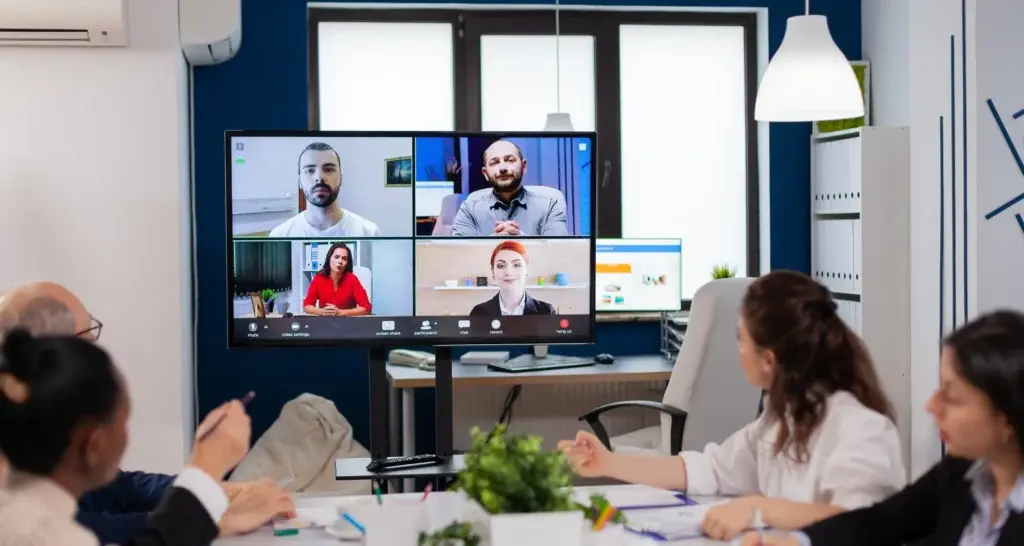
To put it simply, a hybrid workplace is a structure that balances employees working both remotely and from the office. It is an amalgamation of physical and virtual offices and empowers employees to work from anywhere.
In this model, employees can choose to work, however, and from wherever they are most productive. And with 85% of organizations believing in increased productivity as a result of this setting, the hybrid workplace is the future.
Home office spaces built into our residences
Increased flexibility during working hours
Recruitment over a larger demographic area
Smaller company footprint due to dispersed locations
Technology designed for seamless amalgamation of work from home and office
So, now that we have a basic understanding of what is a hybrid workplace model and what to expect from it, let us understand how can we adapt our existing organizations to the hybrid structure.
Rethinking Work Patterns
With the introduction of hybrid working practices, flexibility on location, log-in hours, and days have been achieved. Apart from these aspects, we should review and revise our policies, be it for those coming to the office or working from home.
For those going to the office, strict guidelines on maintaining social distancing or using “flexi desking” can be a good start. This will let employees book desks when they need it while keeping it open for others when not in use.
As for the remote workers, helping them set-up functional and enterprise-grade workstations at home will ensure increased productivity.
Fostering Better Collaboration
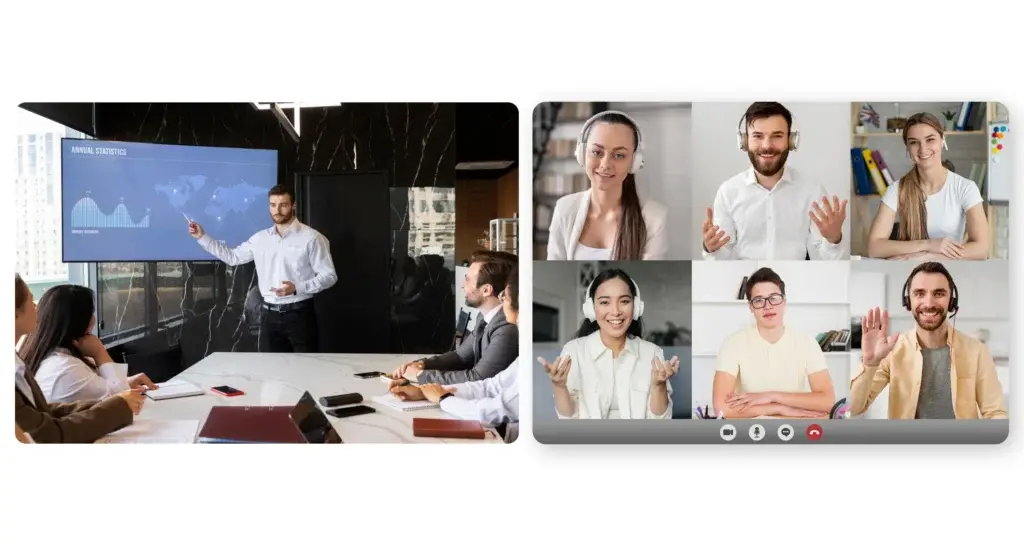
As a hybrid workplace promotes a balance of physical and virtual, with greater emphasis on the latter, it is essential to encourage more collaborations.
With dispersed teams, virtual collaboration can not only create the opportunity to include everyone in the organization but also connect them better. Most remote workers feel left out and this can ultimately hamper their work. Employees who feel that their voices are being heard are 4.6 times more likely to feel empowered to perform their best at work.
Harness audio and video calls to enable more social interaction amongst colleagues. Create virtual “water cooler” moments to keep them motivated. By fostering your employees to collaborate more, you can seamlessly integrate the hybrid workplace culture.
Also Read: How to Design a Hybrid Workplace
Employees are becoming more flexible and gaining more freedom in how, when, and where they work. With the hybrid workplace model in place, it is all about creating environments that foster productivity, collaboration, innovation, and safety.
WorkInSync is designed to foster this change – to help it grow and thrive. Product modules such as the Team Work Planner and Communication Console allow a seamless transition to a hybrid work model. If you are interested in learning more about this product, get in touch with us now at hello@workinsync.io
To stay updated on the latest trends about the hybrid workplace model, follow us on our social media channels.
 Workplace Management
24 September 2026
Compare six workplace management platforms. See what each is suited for and how to choose the right fit in 2026.
Deesha
|
4 Min Read
Read More
 Announcement
13 August 2026
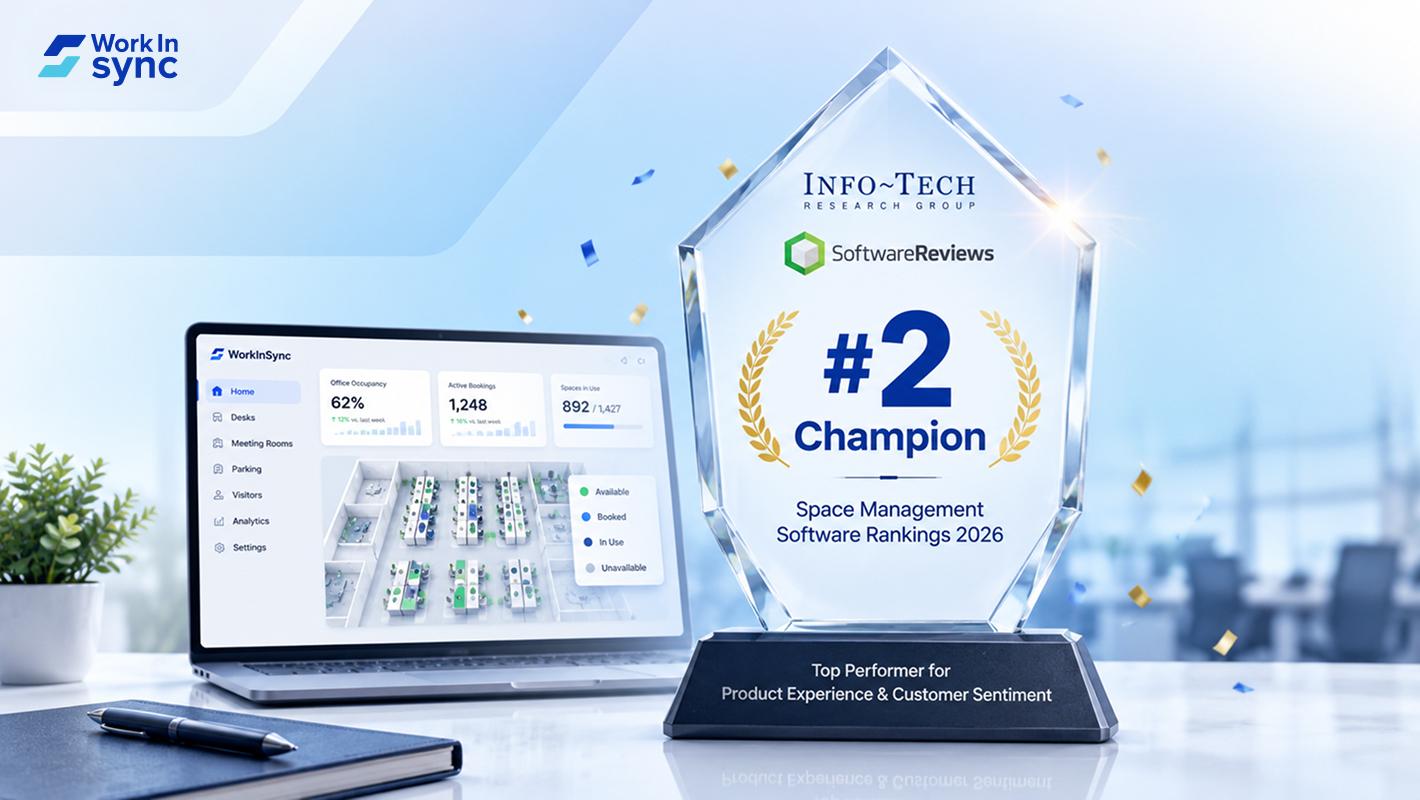
WorkInSync has been recognized by Info-Tech Research Group as a Champion in the 2026 Data Quadrant for Space Management, ranking #2, and as a Champion in the Emotional Footprint, ranking #2. Both awards are published on SoftwareReviews, Info-Tech's ratings platform, where rankings are built entirely from user feedback.

Sai Riddi
|
2 Min Read
Read More
 Desk Booking Software
5 June 2026
Let’s not pretend otherwise. Somewhere in your organization, a well-meaning IT or facilities team rolled out a desk booking system. There was a demo. Someone said “seamless.” There may have been a slide with the word “frictionless” on it. Leadership nodded. Procurement signed off. And then employees quietly went back to texting each other on […]

Ujjwal Trivedi
|
6 Min Read
Read More