
 Workplace Management
24 September 2026
Best Workplace Management Software in 2026: 6 Tools Compared
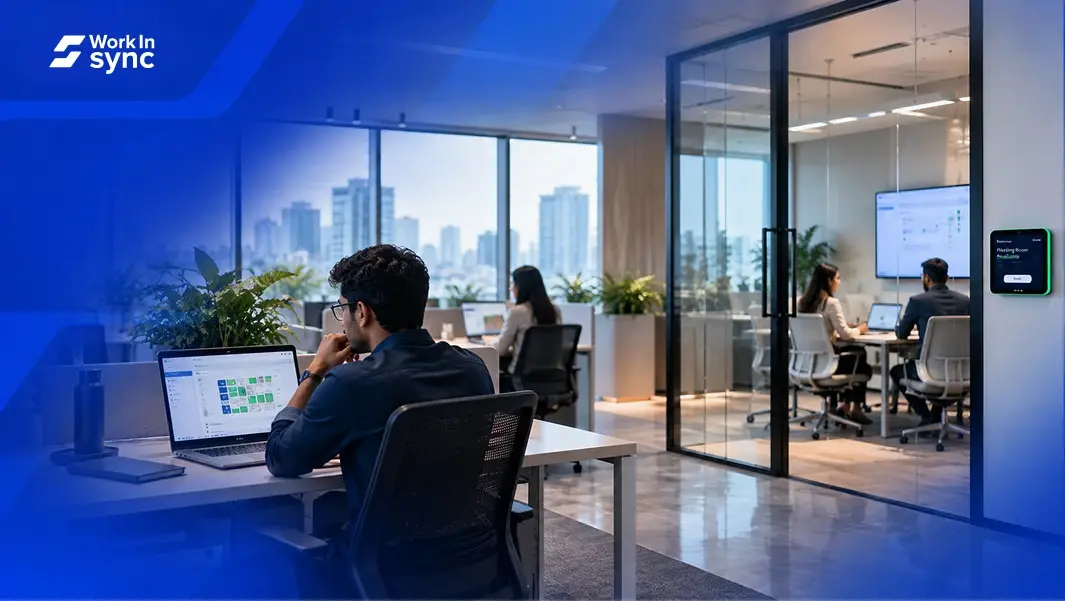
Compare six workplace management platforms. See what each is suited for and how to choose the right fit in 2026.

Deesha
|
4 Min Read
Read More

Key Takeaways
A hybrid workplace policy outlines guidelines for attendance, communication, scheduling, performance, and compliance in a flexible work model.
For HR managers, clear policies ensure transparency, equity, and accountability—crucial for maintaining a unified culture across in-office and remote teams.
Policies should cover core workdays, eligibility, remote work etiquette, data security, and office resource access.
According to PwC, 68% of executives believe a well-defined hybrid policy improves retention and engagement.
This guide empowers HR leaders to craft agile, inclusive, and future-ready workplace frameworks.
The introduction of a hybrid workplace policy has more significance than you expect it to be. Read on this blog to learn how you can design, implement, and establish an effective hybrid workplace policy for your organization.
The pandemic irreversibly changed the rigid 9 to 5 work culture. Remote employees are more satisfied with their professional lives, and they have better control over work life balance.
74% of employees say they are more likely to keep working for an employer that allows remote work.
However, remote employees do have specific challenges. Most experts believe that it is not a sustainable model. But it is essential to understand that full time on-site work is no longer an option either. Hence, the hybrid work model came up as the best of work options.
Often deemed the future of work, a hybrid work environment hinges on the balance between on-site and remote work. Hybrid work arrangements have companies crafting flexible schedules for their employees. They can work from home on some days and come to the office on others.
As the pandemic is slowly turning into endemic, human resources executives are asking their employees to return to the office. And their bet is on the hybrid system.

However, introducing flexibility into an established, rigid work system is challenging. There are chances of uncertainty, miscommunication, and confusion. Fortunately, you can avoid this problem by rolling out a solid work policy for your hybrid workplace.
Also Read: What is a Hybrid Workplace?
A hybrid workplace policy defines where your team members will work throughout the workweek. While this idea sounds easy, it can be tricky to execute.
When working with multiple teams, you must cater to different job duties, operating requirements, and employee schedules. To keep confusion at bay, it is best to be as specific and clear as possible.
So, your hybrid workplace policy should outline the expectations and responsibilities for your employees. Furthermore, it must provide guidelines that all employees must follow for optimum coordination, collaboration, and communication.
But to make your hybrid workplace policy stay in sync with your employees’ needs, you will need employees’ input.
For instance, some teams might prefer in-office work on certain days of the week. Others may wish to address individual employees’ work preferences for a hybrid workplace. So, it is crucial to gather feedback before chalking out your policy.
For your policy to be transparent, enforceable, and inclusive, it should reflect the desires of your employees. However, as an HR manager, you need to assign a set of people to decide the rules of your hybrid workplace.
You can reach out to workplace managers. Being the frontrunners of their departments, they have insight into the operations and preferences of their teams. Thus, they can shape a policy that best fits the needs of their teams.

Once all the ABCs are duly collected, you can begin drafting the policies. Here are some tips on what to include:
For your staff to accept a new hybrid workplace policy, they need to understand why you enforce it. So, you must provide them with a clear answer. If you have involved your employees in the policy’s creation, this step will be a breeze.
Mention who can work on a hybrid workplace schedule and who cannot. Define all the criteria required.
For example, does an employee have to be employed at your company for a certain number of years? Do they need managerial approval? Personal situations such as health reasons? The better you define these, the easier it will be for your staff.
If your hybrid workplace has one mandatory meeting every month that all employees must attend in person, make sure the meeting days are well-outlined.
It is critical to notify your staff about what you expect from them while doing their jobs remotely. It is because the working hours you expect from your employees could change in a hybrid workplace.
You may expect your employees to work a few hours beyond the designated shift timing. To your employees, that is like “work overtime.” And this can lead to friction.
To avoid mismanagement, you can set the working hours for all employees to be available for meetings. Beyond these hours, you can maintain flexible expectations for working hours.
Display the policy on your internal workplace website, intranet, and other messaging groups. Provide links to resources such as FAQ pages, employee survey results, and feedback reports that are the basis of your hybrid workplace policy. Also, encourage your employees to reach out to the HR department and ask questions.
Once you have the policy in place, circulation will come easy.

Before enforcing your policy, you must inform all your employees about the changes. Be careful at this stage because you cannot afford to leave room for any confusion.
The single most effective thing to do here is to communicate religiously. Think of this process as launching a new product or service and creating awareness.
Here are some ideas on what you can do:
a. Send regular emails leading up to the day of enforcement. You can create a chain of reminder emails and get creative.
b. Present your policy at company meetings. By doing so, you ensure that all employees are on the same page.
c. Post updates on your workplace communication channels like Slack, and let the message stay pinned on the top of the chat. You can also give your employees opportunities to ask any questions.
A hybrid workplace policy is more than just a set of guidelines. It allows you to clear up confusion, manage expectations, and empower your employees with a schedule that enables them to stay productive.
Want to create a thriving hybrid workspace? Try WorkInSync.
WorkInSync is a one-stop solution for all your hybrid workplace needs. From employee scheduling to desk booking to meeting room management, WorkInSync is where your search ends.
You can also subscribe to our blogs to stay updated with the latest trends in the hybrid workplace space.
 Workplace Management
24 September 2026
Compare six workplace management platforms. See what each is suited for and how to choose the right fit in 2026.
Deesha
|
4 Min Read
Read More
 Announcement
13 August 2026
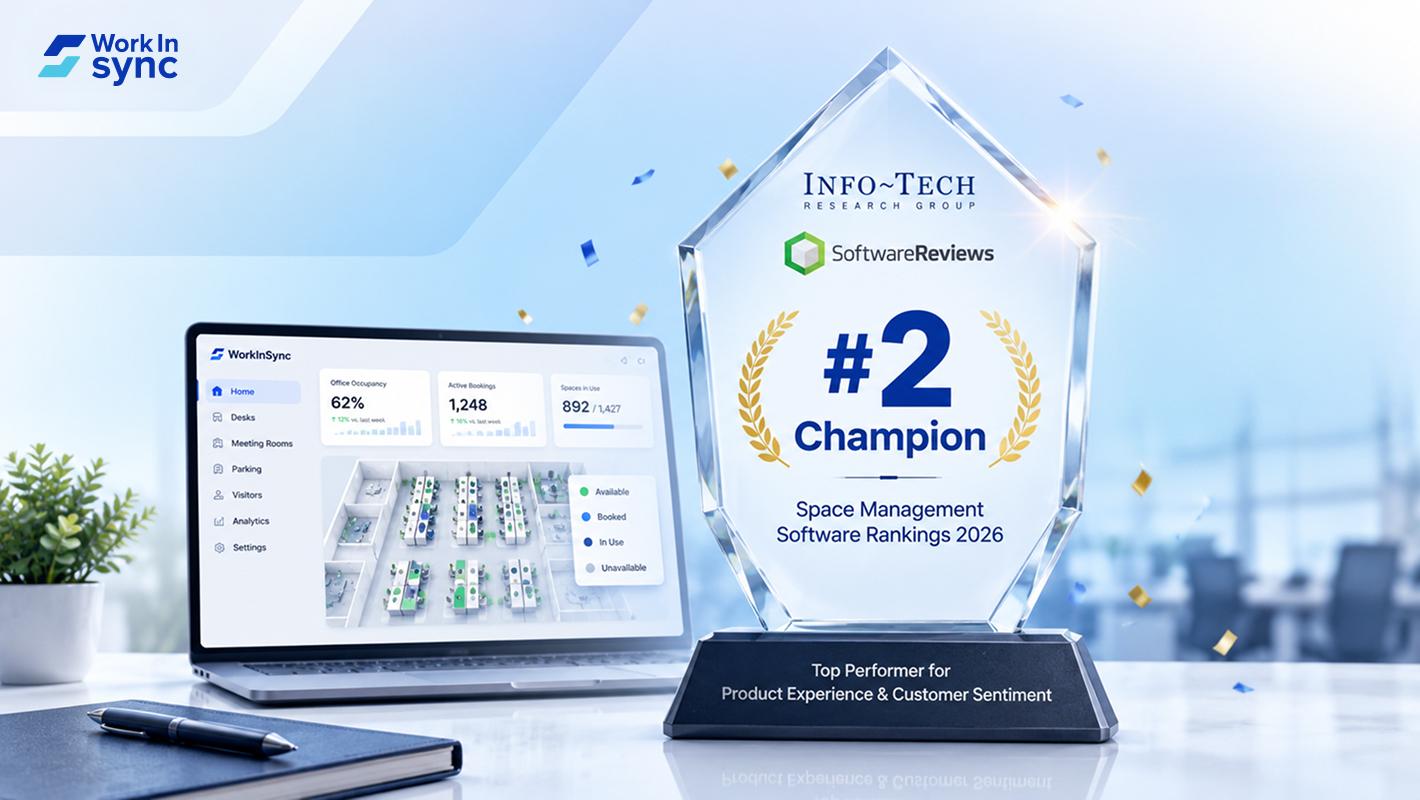
WorkInSync has been recognized by Info-Tech Research Group as a Champion in the 2026 Data Quadrant for Space Management, ranking #2, and as a Champion in the Emotional Footprint, ranking #2. Both awards are published on SoftwareReviews, Info-Tech's ratings platform, where rankings are built entirely from user feedback.

Sai Riddi
|
2 Min Read
Read More
 Desk Booking Software
5 June 2026
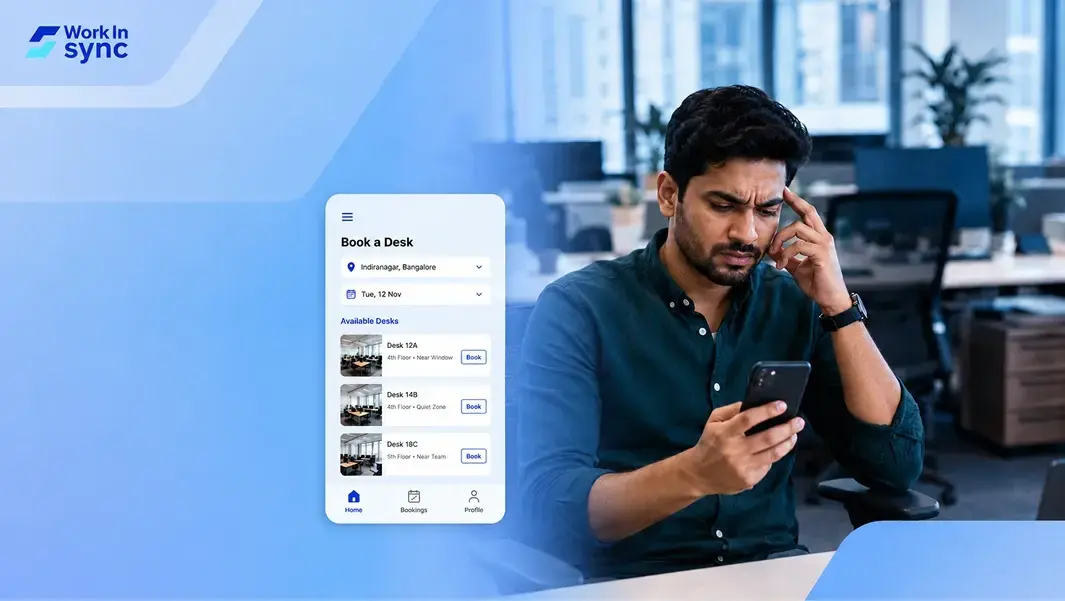
Let’s not pretend otherwise. Somewhere in your organization, a well-meaning IT or facilities team rolled out a desk booking system. There was a demo. Someone said “seamless.” There may have been a slide with the word “frictionless” on it. Leadership nodded. Procurement signed off. And then employees quietly went back to texting each other on […]

Ujjwal Trivedi
|
6 Min Read
Read More