
 Workplace Management
24 September 2026
Best Workplace Management Software in 2026: 6 Tools Compared
Compare six workplace management platforms. See what each is suited for and how to choose the right fit in 2026.

Deesha
|
4 Min Read
Read More

Key Takeaways
Flexibility in work location and sometimes hours
Digital collaboration tools for remote communication
In-person time for specific activities and team building
Tech infrastructure that supports both remote and office work
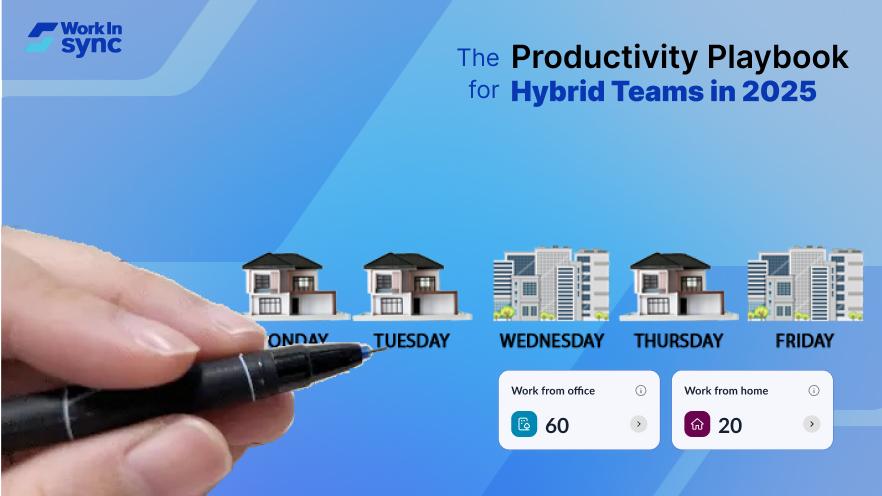
Hybrid work is a flexible work model that combines work from home and in-office work. In this arrangement, you and your team members split time between working from home (or another location) and coming into a physical office.
However, hybrid work isn’t simply about location. It represents a fundamental shift in how work gets done and how teams collaborate across different environments.
The key components of hybrid work include:
Flexibility in work location and sometimes hours
Digital collaboration tools for remote communication
In-person time for specific activities and team building
Tech infrastructure that supports both remote and office work
The landscape of work has transformed dramatically, with hybrid teams now becoming the standard for many organizations. Today’s successful companies recognize that balancing remote and in-office work requires a thoughtful approach to maintain productivity. Hybrid work models can increase team productivity by up to 55% when properly implemented with clear communication protocols and the right technology tools.
CEOs and team leaders who invest in proper hybrid work strategies not only see improved productivity but also benefit from significant cost savings on office space and reduced employee turnover.

Productivity in hybrid teams is not just about getting more done—it’s about creating sustainable work patterns that benefit both employees and organizations. When your hybrid team maintains high productivity, you directly impact your company’s bottom line and competitive edge.
Key benefits of productive hybrid teams:
Increased revenue and profitability
Better employee retention
Higher customer satisfaction
Greater innovation and market adaptability
Your hybrid team’s success depends on balancing flexibility with accountability. When team members work from different locations, productivity becomes the common thread that keeps everyone aligned with organizational goals.
Creating a successful hybrid work model requires thoughtful planning and clear guidelines.
Start by examining which positions can effectively function in a hybrid setup. Not all roles adapt equally well to hybrid settings. Evaluate each position based on:
Communication requirements: How much face-to-face interaction is necessary?
Technology needs: Can tasks be completed with standard remote tools?
Security considerations: Are there data privacy concerns?
Output measurability: Can you track productivity without physical presence?
Consider piloting hybrid arrangements for borderline positions before making permanent decisions.
Establish concrete guidelines around working hours, availability, and performance metrics.
Document specifications for:
Work schedules: Fixed days vs. flexible arrangements
Response times: How quickly team members should reply to messages while working from home
Meeting protocols: When cameras should be on, attendance requirements
Deliverables tracking: How work output will be measured
Clearly articulate the benefits of your hybrid model to gain buy-in.
Anticipate challenges before they arise by mapping common hybrid work obstacles:
Communication barriers:
Information silos between remote and office teams
Reduced spontaneous interactions
Technical difficulties during meetings
Develop mitigation strategies like structured check-ins, virtual social events, and collaboration principles that address these concerns directly.
Equip your team with the resources they need to succeed in a hybrid environment. This includes both technical tools and human support systems.
Technology infrastructure:
Reliable video conferencing platforms
Document sharing and collaboration software
Project management tools
Secure remote access solutions
Team development:
Training for managers on effectively leading distributed teams
Resources for employees to set up effective home workspaces
Clear escalation paths for addressing concerns
Regular feedback mechanisms to refine your approach
Hybrid work environments create unique obstacles that can impact how effectively teams function.
Communication breaks down easily when team members work from different locations. Without intentional communication practices, important information gets lost or delayed.
Working together seamlessly becomes more challenging when team members aren’t in the same physical space. Digital collaboration requires different approaches than in-person teamwork.
Hybrid work creates unique time management challenges that can reduce productivity if not properly addressed. Finding balance between focused work and team availability becomes more complex.
Keeping team members engaged and connected presents significant challenges in hybrid environments. Remote workers often feel isolated while office workers may feel resentment toward those working from home.
Culture is one of the critical challenges hybrid teams face. Your team may struggle with inconsistent understanding of team values and norms. There also arises difficulty in establishing trust across physical distance.
Creating an effective hybrid workplace requires balancing flexibility with clear structure. The following practices can help your team maintain high productivity while enjoying the benefits of hybrid work.
Clear expectations are the foundation of successful hybrid work. Consider creating a team agreement that outlines:
Core collaboration hours when everyone is available
Response time expectations for different communication channels
Project milestones and individual responsibilities
How success will be measured for each role
This clarity helps reduce anxiety and provides structure while still honoring individual work preferences and work-life balance.
Effective hybrid teams master both synchronous (real-time) and asynchronous communication. Reserve synchronous meetings for complex discussions, brainstorming, and relationship building. Use asynchronous communication for updates, information sharing, and routine decisions.
Focus on what your team accomplishes rather than when or where they work. Successful hybrid work models depend on productivity, not presence. This shift in mindset builds trust and empowers employees.
Create formal policies that support your hybrid work model. These should balance flexibility with fairness and cover both practical and cultural aspects of your workplace.
Review and adjust your policies regularly based on team feedback and changing needs. The right balance will look different for every organization.
The right technology stack is essential for keeping hybrid teams productive and connected. These digital tools ensure seamless collaboration regardless of physical location.

Project management platforms serve as the central hub for hybrid team coordination. There are different such tools available like Asana, Trello, and Monday.com.
When selecting a project management tool, consider your team’s size, technical comfort level, and workflow complexity. The best tool is one that becomes invisible—supporting your work without requiring constant attention.
Effective communication tools are the lifeblood of hybrid teams. Slack, Microsoft Teams, and Zoom are some of the popular options.
Consider implementing communication protocols that specify which tool to use for different types of messages. This prevents important information from getting lost in constant notifications.
Time management becomes more challenging in hybrid environments where visibility into work hours varies. Time Management tools like Toggl and RescueTime help employees track time spent on specific tasks, projects, applications, and websites. They also provide detailed reports and insights.
Cloud platforms enable real-time collaboration regardless of team members’ locations. Tools like Docs, Sheets, and Slides enable real-time editing.
When implementing cloud platforms, establish clear file organization structures and naming conventions. This prevents the chaos that can emerge when everyone has document creation permissions.
WorkInSync is a comprehensive platform designed to enable hybrid work environments. It centralizes scheduling, space management, and collaboration tools into one interface, eliminating the need to manage multiple applications.
WorkInSync’s booking system allows team members to reserve desks and meeting spaces with just a few clicks. The visual floor plan feature shows available spaces and who is sitting where, helping teams coordinate in-person collaboration days efficiently.
The check-in feature confirms actual space usage, providing accurate data on office utilization. This helps your organization make informed decisions about real estate needs and costs.
The scheduling module helps coordinate when team members will be in-office versus working from home. Managers can view team schedules at a glance, making planning in-person meetings and collaboration sessions easier.
Attendance tracking provides visibility without intrusion. This balances accountability with autonomy, which makes hybrid work attractive to employees.
WorkInSync’s analytics dashboard provides insights into how your hybrid work model is functioning in practice. You can track office utilization rates, collaboration patterns, and schedule adherence metrics.
These data points help you refine your hybrid strategy based on actual usage rather than assumptions.
WorkInSync facilitates better collaboration through features like team visibility calendars that show at a glance which team member is working from the office and who is remote.
WorkInSync offers powerful solutions designed specifically for the challenges of today’s hybrid work environment. It helps you streamline workplace management while keeping your team connected and productive regardless of their location.
WorkInSync is a SaaS solution that enables organizations to adopt and manage hybrid workplaces seamlessly. It is a comprehensive tool for balancing remote and in-office work schedules.
The solution works for everyone in your organization, from leadership who needs visibility into workplace usage to employees who want a smooth transition between home and office environments.
Organizations implementing WorkInSync see tangible improvements in their hybrid work operations:
Your Growth ≠ Your Real Estate Growth
A multinational IT services & consulting organisation balances their hybrid work model with a 4:1 Employee-to-Desk Ratio.
At MoveInSync, we believe that your growth today doesn’t have to necessitate the growth of your real estate. This was proven true when we enabled the consulting organisation to manage its workforce of more than 28,000 employees with just 8,000 desks.

Tracking productivity in hybrid environments requires both quantitative metrics and qualitative feedback. The right measurement approach creates accountability while respecting the flexibility that makes hybrid work effective.
Start by defining clear goals that focus on outcomes rather than office presence. Regularly scheduled team check-ins have proven effective for 67% of hybrid workers with collaboration plans.
Consider these essential KPIs for hybrid environments:
Project completion rates
Quality metrics
Collaboration indicators
Individual output
Create regular feedback channels to understand what’s working and what’s not. Use quick pulse surveys to gauge team sentiment about productivity barriers.
A two-way feedback approach works best:
Manager to employee – Provide clear performance guidance
Employee to leadership – Gather insights about process improvements
Hybrid work productivity isn’t static—it requires ongoing refinement. Review your metrics quarterly to identify trends and adjust approaches accordingly.
Test different collaboration techniques before fully implementing them. For example, try asynchronous documentation for certain projects while maintaining synchronous meetings for others.
Managing hybrid teams requires a strategic blend of clear communication, thoughtful planning, and the right technology. These elements combine to create an environment where both remote and in-office team members can excel.
Regularly reassess and adapt your hybrid model based on team feedback and changing needs. The most successful hybrid teams view their approach as a continuous work in progress rather than a fixed structure.
 Workplace Management
24 September 2026
Compare six workplace management platforms. See what each is suited for and how to choose the right fit in 2026.
Deesha
|
4 Min Read
Read More
 Announcement
13 August 2026
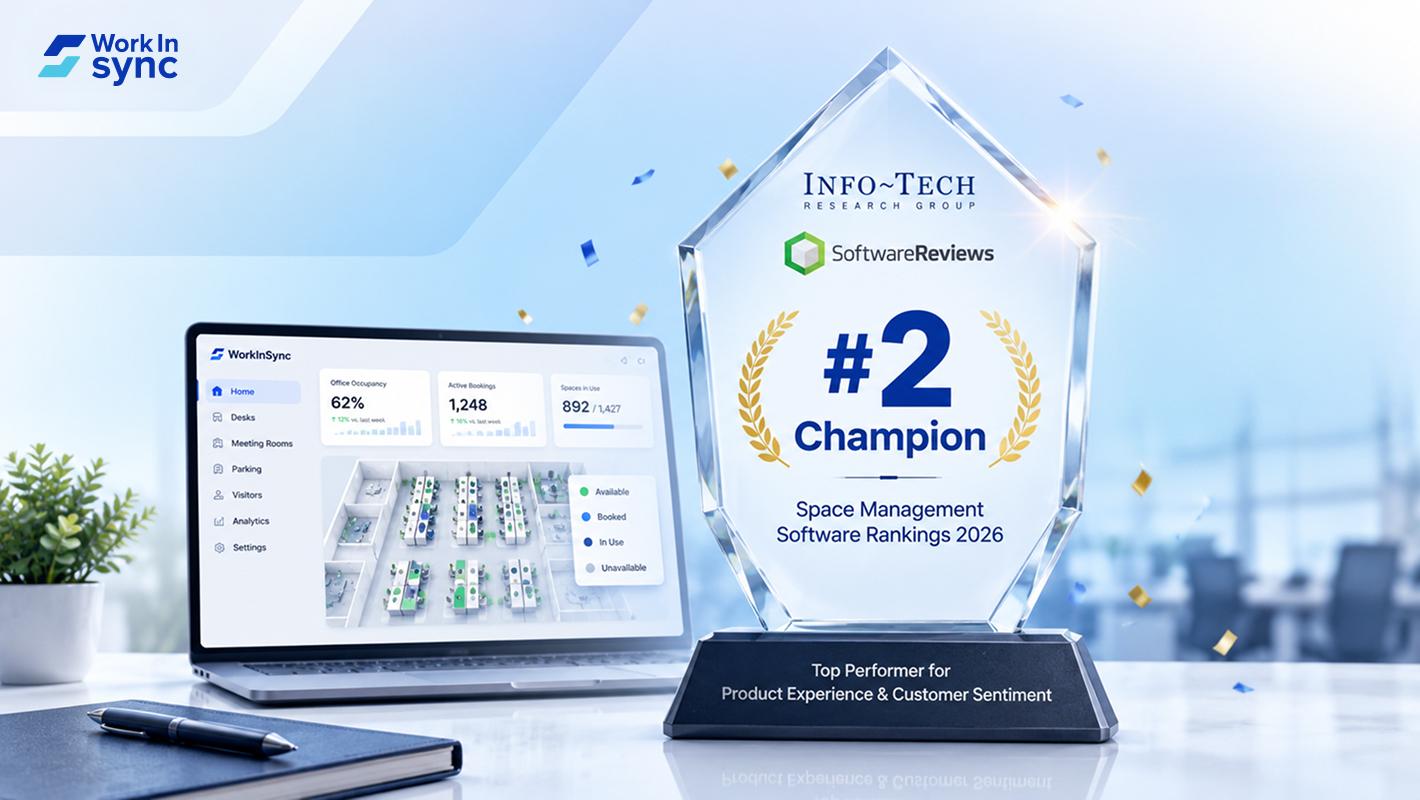
WorkInSync has been recognized by Info-Tech Research Group as a Champion in the 2026 Data Quadrant for Space Management, ranking #2, and as a Champion in the Emotional Footprint, ranking #2. Both awards are published on SoftwareReviews, Info-Tech's ratings platform, where rankings are built entirely from user feedback.

Sai Riddi
|
2 Min Read
Read More
 Desk Booking Software
5 June 2026
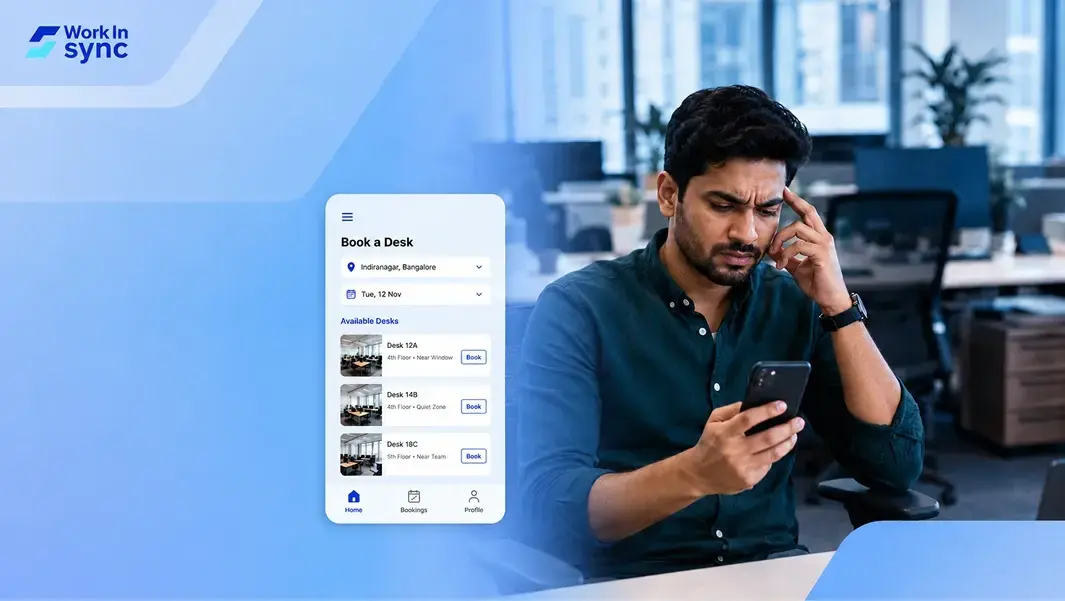
Let’s not pretend otherwise. Somewhere in your organization, a well-meaning IT or facilities team rolled out a desk booking system. There was a demo. Someone said “seamless.” There may have been a slide with the word “frictionless” on it. Leadership nodded. Procurement signed off. And then employees quietly went back to texting each other on […]
Ujjwal Trivedi
|
6 Min Read
Read More