
 Workplace Management
24 September 2026
Best Workplace Management Software in 2026: 6 Tools Compared
Compare six workplace management platforms. See what each is suited for and how to choose the right fit in 2026.

Deesha
|
4 Min Read
Read More
Key Takeaways
32% of employees have already returned to offices, with tech aiding hybrid workplace transition.
Hybrid work magnifies pre-existing issues like wasted time finding desks and underutilized facilities investments.
Planning attendance in hybrid models is complex, often exceeding the capacity of manual task forces.
Fear of infection persists, requiring safety measures like QR-based access, mask detection, and contact tracing.
Scheduling tools and integrations like Microsoft Teams improve collaboration and visibility of employee work preferences.
Technology-driven planning tools optimize costs while balancing convenience, collaboration, and resource usage.
Office commute tech ensures safety with vaccination checks, masks, sanitization, and ML-based route optimization.
Workplace management systems reduce chaos by showing real-time attendance, seating, and meeting participation details.
Large tech companies like Goldman Sachs, Apple, Amazon, and Ernst & Young have already started implementing a cautious return to office strategy. There seems to be a surprisingly large number of employees who’ve even returned to the office.
According to The Washington Post, about 32% of employees are back in the office already. Regardless of their size, most organizations are actively adopting technology to help them plan their return to office and manage the new agile workplace. This blog discusses what’s happening in the new normal and how technology is assisting organizations in coping with it.

The hybrid workplace has become the solution we all require to promote a smooth return to office; however, it accentuates some pre-existing problems. This 2017 survey revealed that employees used to waste about 60 mins/week in finding desks, rooms, and colleagues in a typical setup. Quick math tells us that this must be costing a mid-sized company with 1000 employees around $85,000/month.
While you come to terms with that whopping figure, it will be worse than this in a hybrid environment.
Another problem of the hybrid workplace is the utilization of investments made in facilities. In a pre-COVID office setup, the average occupancy was about 63%, leading to 37% waste of the facilities investment. If you continue with the same infrastructure, you will likely see this loss ramp up higher.
Here are some new challenges the employees and employers face as they return to the office in a hybrid workplace.
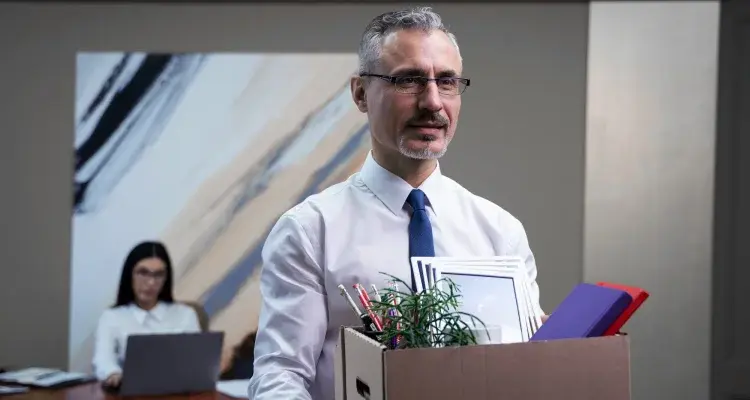
For employers, the apparent issue is planning. Most organizations have created a multi-disciplinary tasks force to help understand and tackle this planning. How to distribute the ownership of who’s coming and who’s not? Most surveys suggest that companies are looking to get their employees for two to three days in the office instead of five. Which three days? How to handle the variability that comes with this flexibility? Most of these committees eventually feel they aren’t equipped to do this effectively for an extended period.
The first one is fear of infection. Employers are giving their best to ensure safe office premises. However, with a sudden influx of people, it is not easy to manage the new workplace without causing inconvenience. Employees won’t be wearing Hazmat suits in the office. And wearing masks all the time or even maintaining social distancing can be a challenge. You can’t know with certainty how much hygiene they are following when they are out of the workplace.
There seems to be no reason to return to office for a significant percentage of people, particularly those who work as individual contributors. Most of these employees have set up their work in low-cost remote locations and are reluctant to return. And practically, it makes no sense to get “everyone” to return to office.
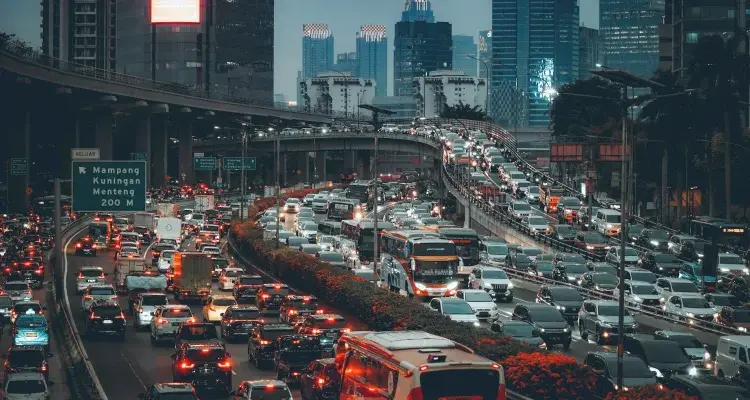
Whether the company provides the commute or you drive your car, travel time has been one deterrent in return to office gamut. This story from CNBC suggests that commuting might worsen in the future because with flexibility in a hybrid workplace, more employees will decide to go to the office between Tuesday and Thursday. The traffic will become like London’s weather – unpredictable and painful.
Imagine it is 10:30 am, and you are in the office about to start a meeting with five of your team members. You see only three of them. How do you know whether the other two members will join virtually, or should you wait for them to make it to the conference room? It is uncertain and chaotic. The confusion is rife. It is harder to say who is working virtually and who is on unplanned leave. You might still have enough visibility in your team, but what about people you want to collaborate with but are from other teams?
While most organizations have created a task force to tackle their return to office, they are getting severely limited by the visibility of employee’s preferences and plans and changing policies. And honestly, essential tools like spreadsheets and emails are not enough.
The post-pandemic world has sped up the adoption process of technology by three to four years for most organizations. The share of digital-enabled products in the portfolios of leading organizations has accelerated by seven years.

Be it Zoom rooms, Facebook’s virtual reality-based rooms, or space management tools like WorkInSync, the advent of a hybrid workplace has led to the adoption of technology.
Here’s how organizations use technology to counter all the different challenges they and their employees face.
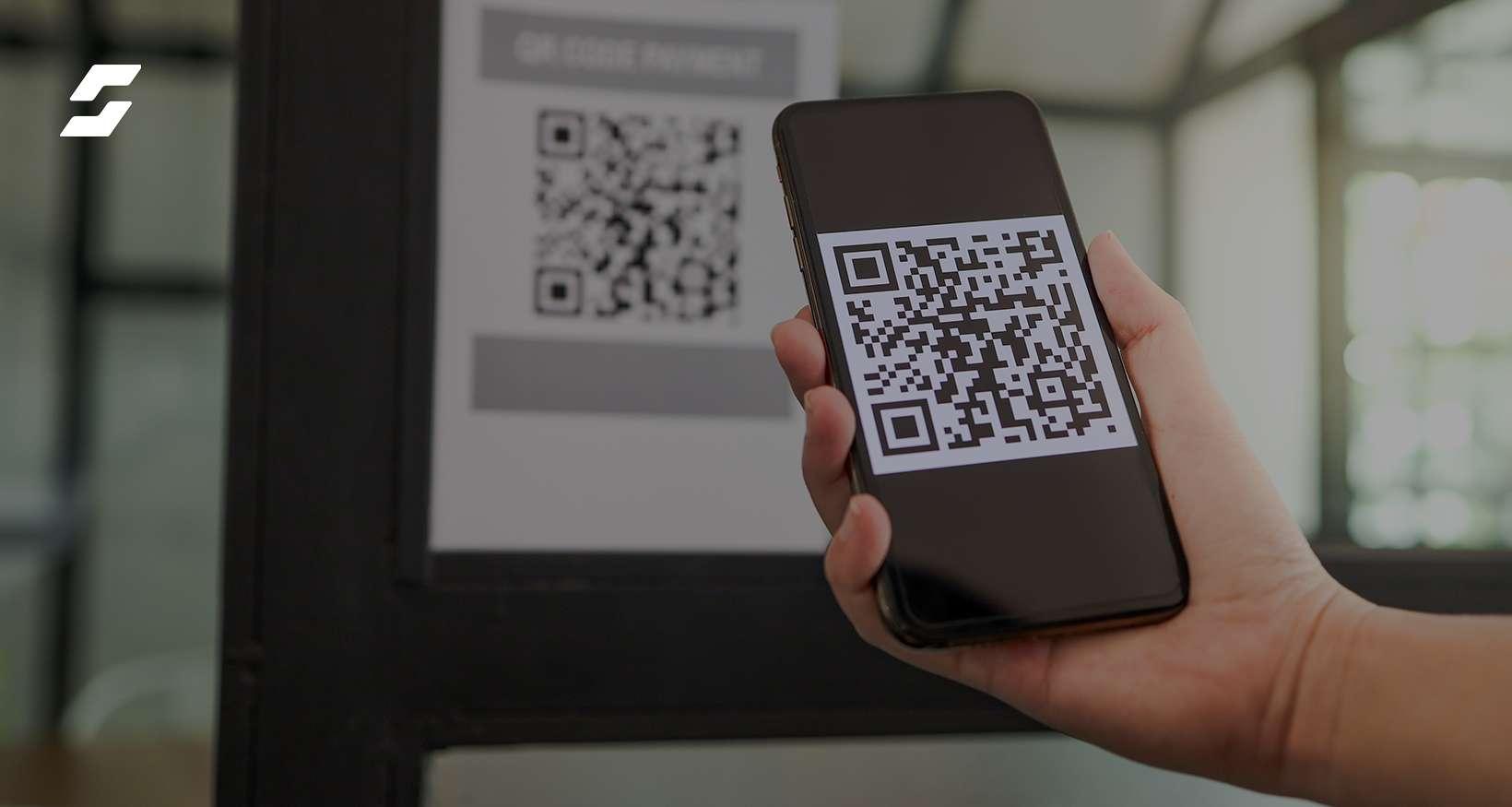
To ensure safety, organizations are getting employees to sign self-declaration forms. Many companies across the United States and Asia, including Japan and India, are asking for a vaccine certificate to return to office. However, vaccine status remains a sensitive topic across Europe and Australia. Employers can ensure a safe return to office with technology like QR-based access to the office, face mask detection, and contact tracing.
Technology is being used to create team calendars and scheduling tools that capture employees’ preferences and plans. With easy visibility, collaboration becomes straightforward. Be it the colleague or the team manager, tech is making the return to office strategy convenient. Also, owing to technology, most apps can be easily integrated with others. For instance, WorkInSync can be integrated with Microsoft Teams and Google Assistant, giving a clear picture of an employee’s routine.
Planning for a return to office needs to take into consideration several factors. While it has to be convenient for everyone, it should also help facilities teams optimize costs. Since the return to office is more subjective to what everyone wants, relying on technology enables the workplace managers to build multiple scenarios and find balance among convenience, collaboration and costs. Tools like RTO Calculator and team calendar can be great examples of a flawless system.
Commuting is safe when you are traveling with vaccinated, wearing a mask, and using a sanitizer. Introducing technology to office commute can ensure all of this and more. It can mandate both travelers and drivers to follow strict protocols, making office commute safe for everyone. Besides safety, machine learning-based route optimization and accurate travel time predictions make it reasonably easy for both facilities teams and employees to return to the office on time.

Imagine it is 10:30 am, and you are in the office, about to start a meeting with five of your team members. You open an app and know instantly who will be attending the meeting physically and who will be joining virtually. You also know where they are seated. You know that they can find step-by-step directions to your meeting place. Technology is making all of these possible. Even if it is less dramatic than google glasses, our reality is augmented with data-based insights.
The emergence of technology has been imminent. As the world adopts a hybrid workplace, challenges are being met head-on with rapidly evolving technology solutions.
So, why are you waiting? Get an all-round solution like WorkInSync today to start your return to office journey with technology. Opt for a free demo today.
Subscribe to our blogs to stay updated with the latest return to office trends.
 Workplace Management
24 September 2026
Compare six workplace management platforms. See what each is suited for and how to choose the right fit in 2026.
Deesha
|
4 Min Read
Read More
 Announcement
13 August 2026
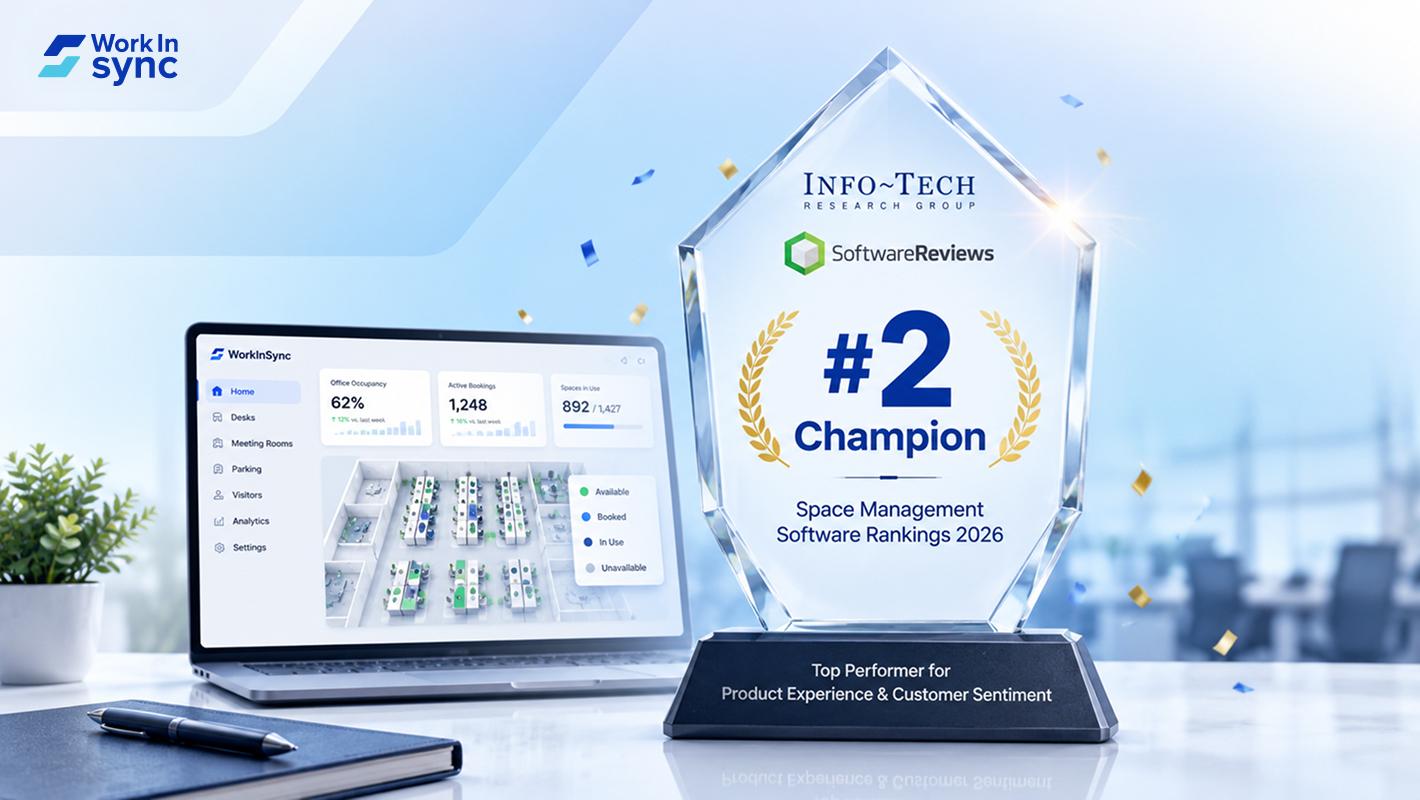
WorkInSync has been recognized by Info-Tech Research Group as a Champion in the 2026 Data Quadrant for Space Management, ranking #2, and as a Champion in the Emotional Footprint, ranking #2. Both awards are published on SoftwareReviews, Info-Tech's ratings platform, where rankings are built entirely from user feedback.

Sai Riddi
|
2 Min Read
Read More
 Desk Booking Software
5 June 2026
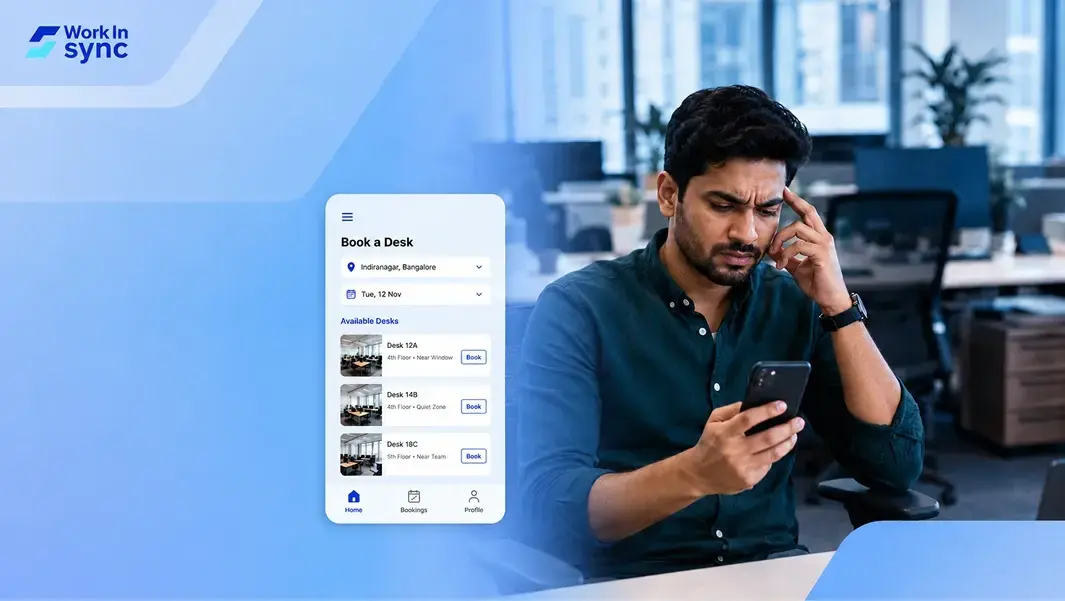
Let’s not pretend otherwise. Somewhere in your organization, a well-meaning IT or facilities team rolled out a desk booking system. There was a demo. Someone said “seamless.” There may have been a slide with the word “frictionless” on it. Leadership nodded. Procurement signed off. And then employees quietly went back to texting each other on […]

Ujjwal Trivedi
|
6 Min Read
Read More