
 Workplace Management
24 September 2026
Best Workplace Management Software in 2026: 6 Tools Compared
Compare six workplace management platforms. See what each is suited for and how to choose the right fit in 2026.

Deesha
|
4 Min Read
Read More
Key Takeaways
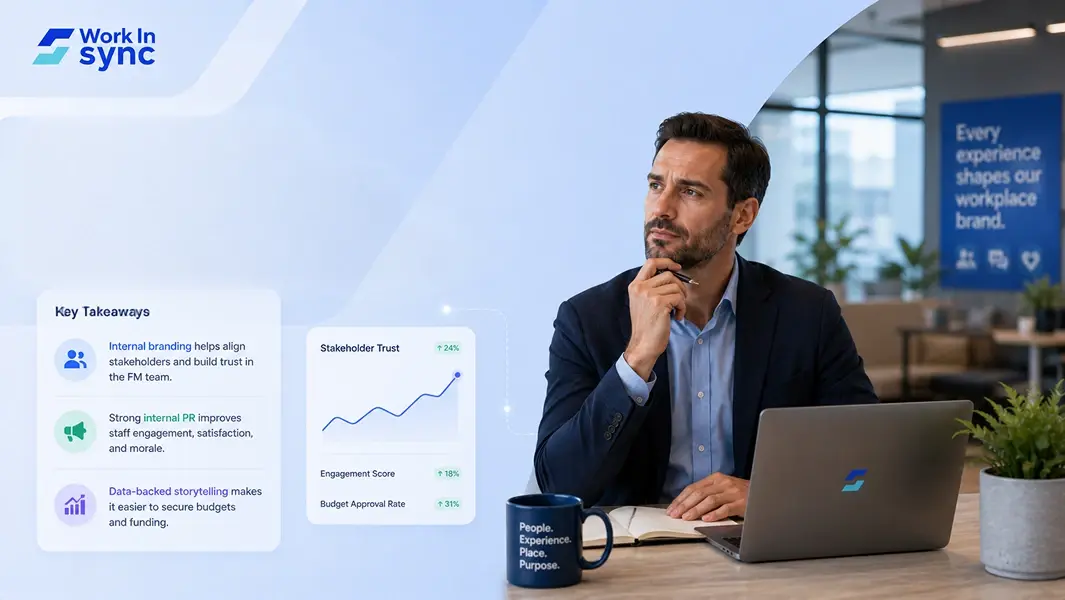
Facility Managers who think like marketers don’t just maintain buildings; they build brands, trust, and strategic influence within their organizations.
Internal branding helps align stakeholders and build trust in the FM team.
Strong internal PR improves staff engagement, satisfaction, and morale.
Data-backed storytelling makes it easier to secure budgets and funding.
Imagine your facility isn’t just walls, HVAC, cleaning, maintenance, and safety. Imagine your facility as a brand, one that conveys values, inspires trust, and aligns with organizational goals. For Facility Managers, adopting marketing techniques such as branding, strong communication, and internal PR isn’t just “nice to have,” it’s essential. Here’s how to do it:
Why it matters:
When your internal stakeholders, management, and employees understand what your facility team stands for (reliability, safety, sustainability), you shift perception. You’re no longer seen as a cost center but as a strategic value driver.
How to do it:
Define your value proposition: for example, “We enable uninterrupted operations through proactive maintenance.”
Stay consistent: Use clear messaging across dashboards, reports, signage, newsletters, and meetings.
Showcase wins: Highlight avoided downtimes, energy savings, safety milestones, or employee satisfaction metrics.
Why it matters:
Internal PR isn’t about self-promotion; it’s about creating transparency, trust, and engagement. Clear, proactive communication builds credibility and ensures everyone knows the value your team adds.
How to do it:
Share regular updates: Keep leadership and employees informed about projects, issues, and upcoming initiatives.
Create feedback loops: Encourage input and show how it drives improvement.
Tell stories, not reports: Use visuals and data to show real impact, safety wins, sustainability success, or maintenance innovations.
Use multiple channels: Email, slack, digital displays, or town halls
Why it matters:
Branding isn’t just for marketing; it influences how every stakeholder perceives your work. A strong internal brand improves buy-in, morale, and even customer satisfaction.
How to do it:
For leadership: Frame FM initiatives in terms of ROI, risk reduction, and sustainability impact. Speak their language, data, and outcomes.
For employees: Create a sense of belonging. Recognize contributions and show how their work fuels operational excellence.
For customers/visitors: A clean, safe, and well-communicated environment builds trust, retention, and premium value perception.
Why it matters:
Data gives your communication credibility. It helps justify budgets, influence decisions, and demonstrate tangible impact.
How to do it:
Use insights strategically.
Present sustainability or tech investments (workplace management solution) as business cases, not expenses.
Increased buy-in from leadership → easier funding of projects (especially tech, sustainability, upgrades).
Better employee morale and retention → fewer reactive issues, less turnover.
Improved operational efficiency → fewer emergencies, smoother maintenance schedules, lower costs.
Stronger risk management & compliance due to better visibility and communication.
Enhanced reputation internally and externally (if applicable) → stakeholders perceive the facility team as strategic, reliable, not just reactive.
Facility Management isn’t just about maintaining buildings or fixing what’s broken; it’s about shaping experiences, enabling productivity, and driving organizational excellence.
When Facility Managers think like marketers, they don’t just manage spaces, they build trust, communicate value, and influence strategy.
By embracing storytelling, branding, and strong internal communication, FM leaders transform how their work is perceived from background support to a core business function that drives efficiency, sustainability, and employee satisfaction.
Because if you don’t tell your story, someone else will, and they may not capture the true value your team brings.
 Workplace Management
24 September 2026
Compare six workplace management platforms. See what each is suited for and how to choose the right fit in 2026.
Deesha
|
4 Min Read
Read More
 Announcement
13 August 2026
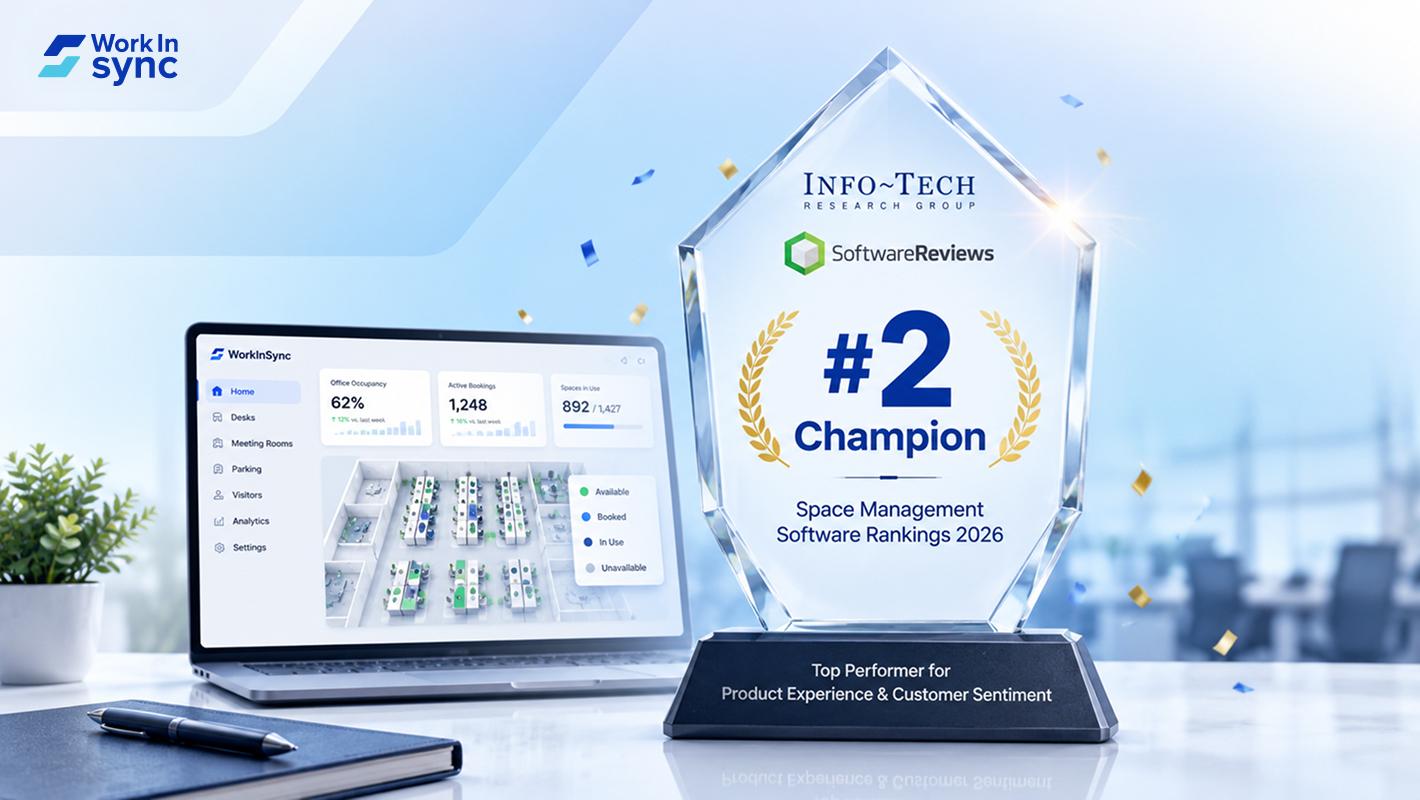
WorkInSync has been recognized by Info-Tech Research Group as a Champion in the 2026 Data Quadrant for Space Management, ranking #2, and as a Champion in the Emotional Footprint, ranking #2. Both awards are published on SoftwareReviews, Info-Tech's ratings platform, where rankings are built entirely from user feedback.

Sai Riddi
|
2 Min Read
Read More
 Desk Booking Software
5 June 2026
Let’s not pretend otherwise. Somewhere in your organization, a well-meaning IT or facilities team rolled out a desk booking system. There was a demo. Someone said “seamless.” There may have been a slide with the word “frictionless” on it. Leadership nodded. Procurement signed off. And then employees quietly went back to texting each other on […]

Ujjwal Trivedi
|
6 Min Read
Read More