
 Workplace Management
24 September 2026
Best Workplace Management Software in 2026: 6 Tools Compared
Compare six workplace management platforms. See what each is suited for and how to choose the right fit in 2026.

Deesha
|
4 Min Read
Read More

Key Takeaways
Space management is the backbone of a productive hybrid work model.
It helps organizations balance remote and in-office attendance, reduce overheads, and optimize the use of shared resources.
With 70% of companies planning to adopt hybrid work long-term (CBRE), managing workspace occupancy, sanitization schedules, and desk bookings isn’t optional — it’s essential for ensuring agility, safety, and employee satisfaction.
Space management is an indispensable component of the hybrid work model. This blog post gives you eight great reasons to use space management to ensure that your hybrid workplace is seamless.
Are you planning to get your employees back to the office and work the good old way? That’s unlikely to happen. In all likelihood, your employees will return to a transformed space, a hybrid workplace.
For most organizations it would be a first. Therefore, you need to ensure that it works seamlessly and efficiency does not take a hit. A workplace management system forms the foundation of this hybrid work model.
Without a space management solution, operating a hybrid work model is like shooting in the dark for no reason. You will know neither which way your efforts are heading nor the impact.
Bonus Read: What is a Space Management Solution?
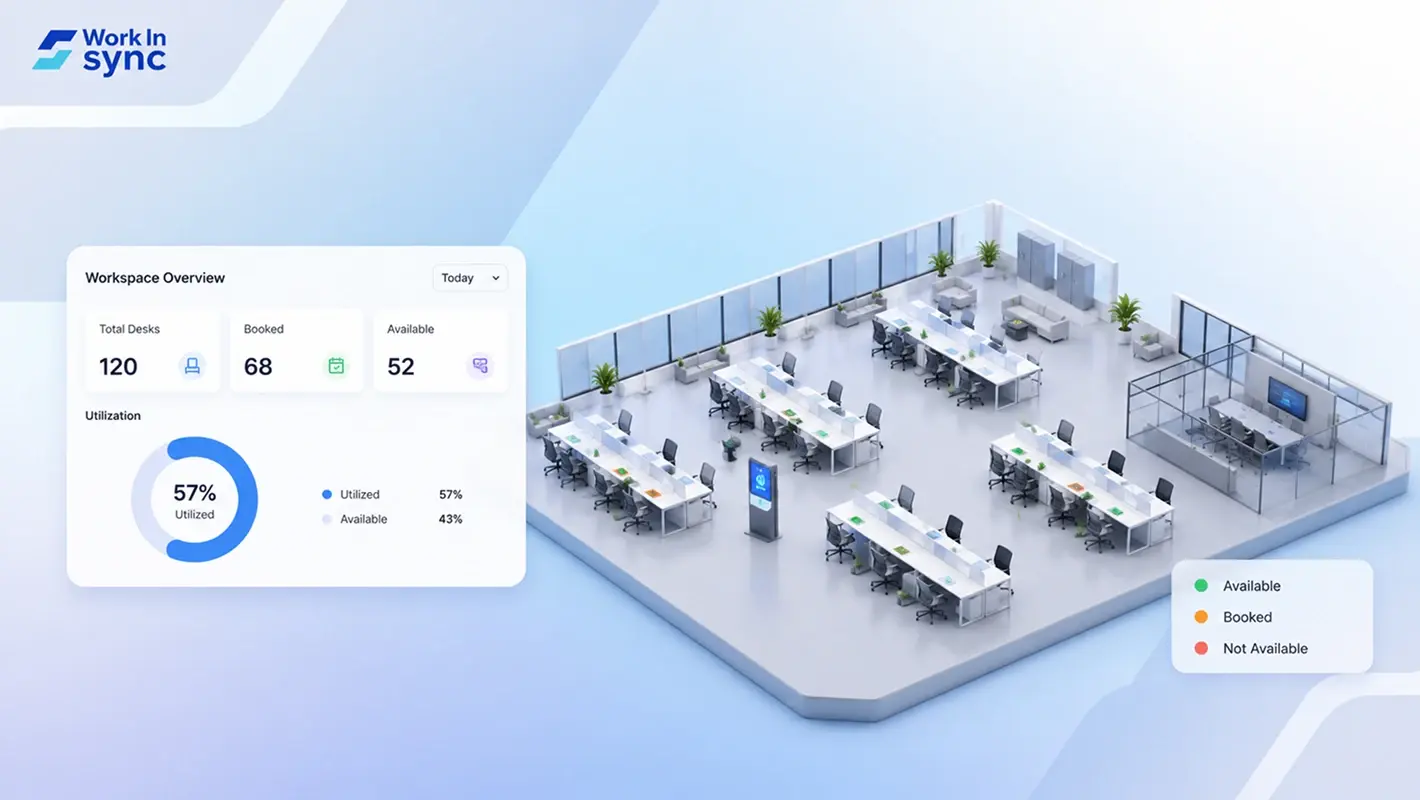
It is not possible to track and forecast your space requirements without data. A space management system provides you with insights into space utilization. Moreover, it collects and presents data in real-time.
Using wireless IoT sensors to collect data, you can do away with manual surveys that consume time and effort. Apart from collecting data, a space management system can analyze and provide valuable insights to optimize space utilization. This is also crucial if you want to engage in appropriate space planning.
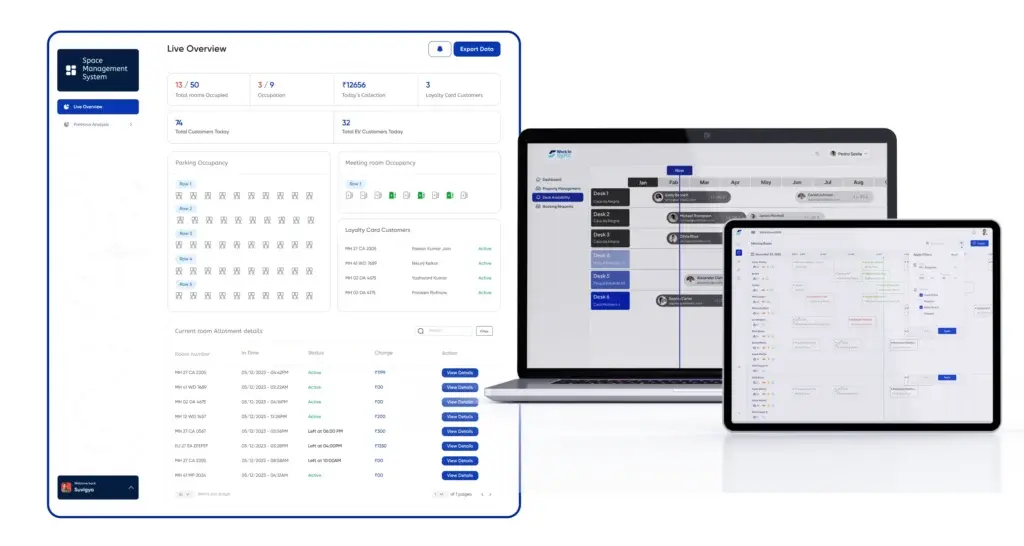
If you have offices in different locations, a space management system acts as a central repository of distributed data. Further, a cloud-based solution helps you access the dashboard from any place.
A centralized dashboard can also help you access and analyze data in real time, enabling faster decision-making. This could be particularly beneficial when analyzing actions that prevent the spread of infection.
Also Read: 7 Signs You Need a Space Management Software
An advanced space management solution will alert you if your HVAC systems are cooling or heating a sparsely occupied floor. Similarly, it can prioritize using spaces with natural light to reduce energy wastage on lighting.
So, through space management, you can optimize energy consumption and real estate costs.
Manually managing the desks or meeting room bookings could lead to several inefficiencies. The space management solution can automate it. It can sync with the desk and meeting room booking system to change the capacities based on overall occupancy. This can also help reduce space wastage.
It is, therefore, necessary to integrate with desk booking solution and meeting room booking systems.
The pandemic has transformed the way we work in more than one way. Both employees and employers acknowledge the benefits of flexible working and asynchronous communication. However, traditional offices are not built for this style of work.
The current office setup is meant for all employees to work together for several hours. If one were to accommodate flexible working hours, it could lead to several operational challenges. For instance, tracking the hours an employee puts in would be difficult.
A space management solution helps overcome these challenges with real-time data from various sources.
Recommended Reading: 5 Benefits of Space Management Software
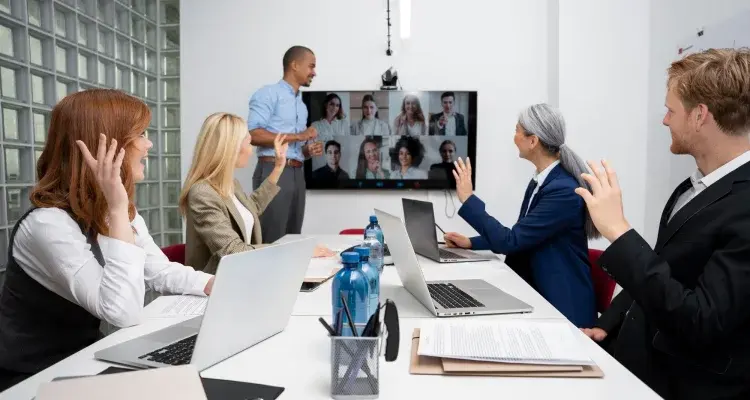
The Great Resignation has been a wake-up call for companies’ management and leadership teams. It has prompted businesses to relook at their employee engagement strategies. Several companies are focusing on measuring and improving employee experience today. A space management system helps you do it better.
With a space management solution, you can automate space booking and cancellation. It provides employees with complete transparency into space availability. With an app-based booking interface, space management can make the entire process seamless.
One of the indirect yet significant benefits of a space management system is improved productivity. For instance, as teams book rooms for a finite time, meetings are more focused and productive. Also, employees visit the office and book desks when they need them for specific tasks.
So, the space and energy utilization always yield a RoI.
If you plan to go hybrid, you will need data and a host of automated systems. A modern space management software can sync with these systems to make the hybrid work model seamless and efficient.
Working with space booking solutions, it collects and analyzes data for better decision-making. It can also provide insights to optimize your space requirements and save real estate costs.
Apart from direct cost savings, it provides several intangible benefits also. It helps improve employee experience and makes them feel safer in the post-pandemic times. A space management system also reduces the need for manual intervention by facility management teams. It does this by automating several mundane tasks.
Stay tuned to the WorkInSync blog to learn more about tools that make your hybrid workplace successful.
 Workplace Management
24 September 2026
Compare six workplace management platforms. See what each is suited for and how to choose the right fit in 2026.
Deesha
|
4 Min Read
Read More
 Announcement
13 August 2026
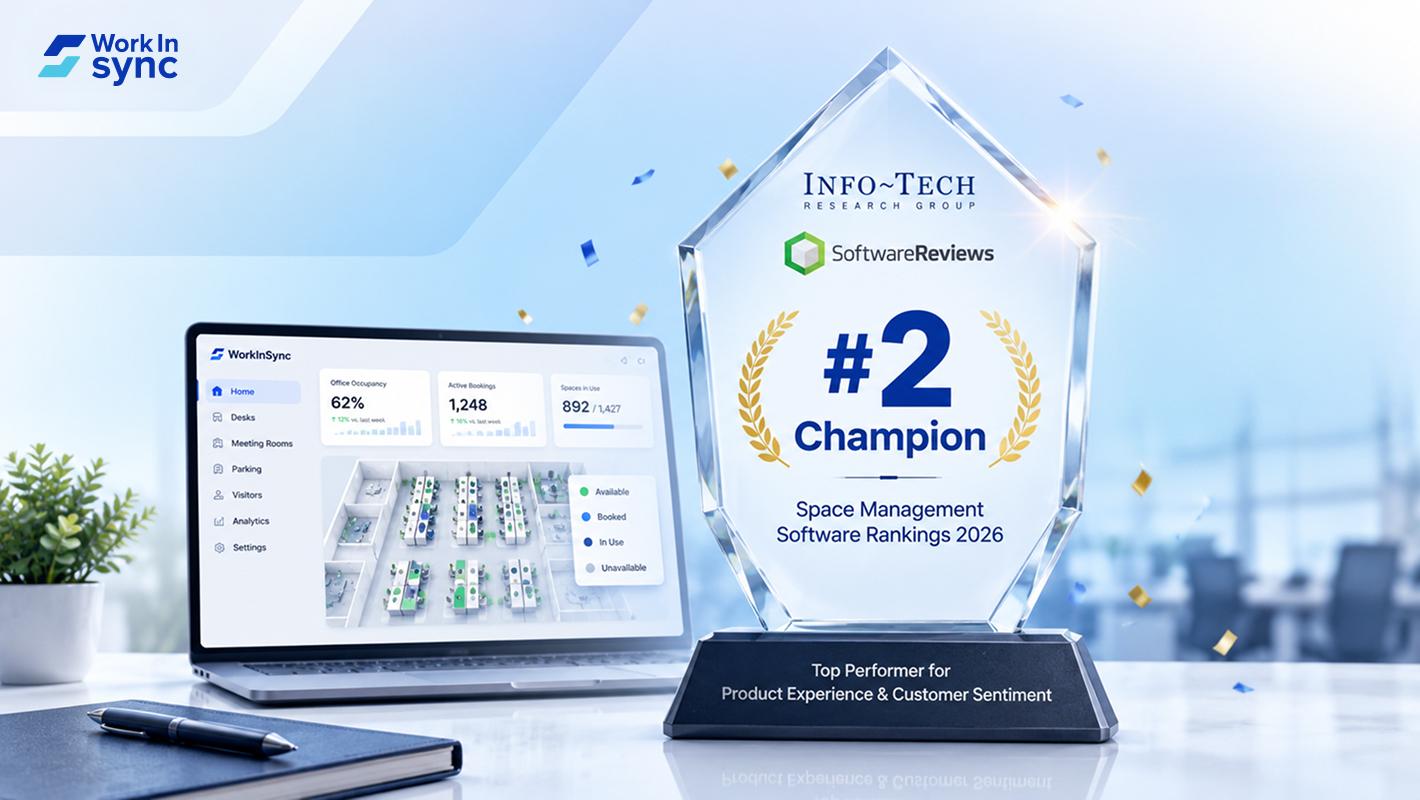
WorkInSync has been recognized by Info-Tech Research Group as a Champion in the 2026 Data Quadrant for Space Management, ranking #2, and as a Champion in the Emotional Footprint, ranking #2. Both awards are published on SoftwareReviews, Info-Tech's ratings platform, where rankings are built entirely from user feedback.

Sai Riddi
|
2 Min Read
Read More
 Desk Booking Software
5 June 2026
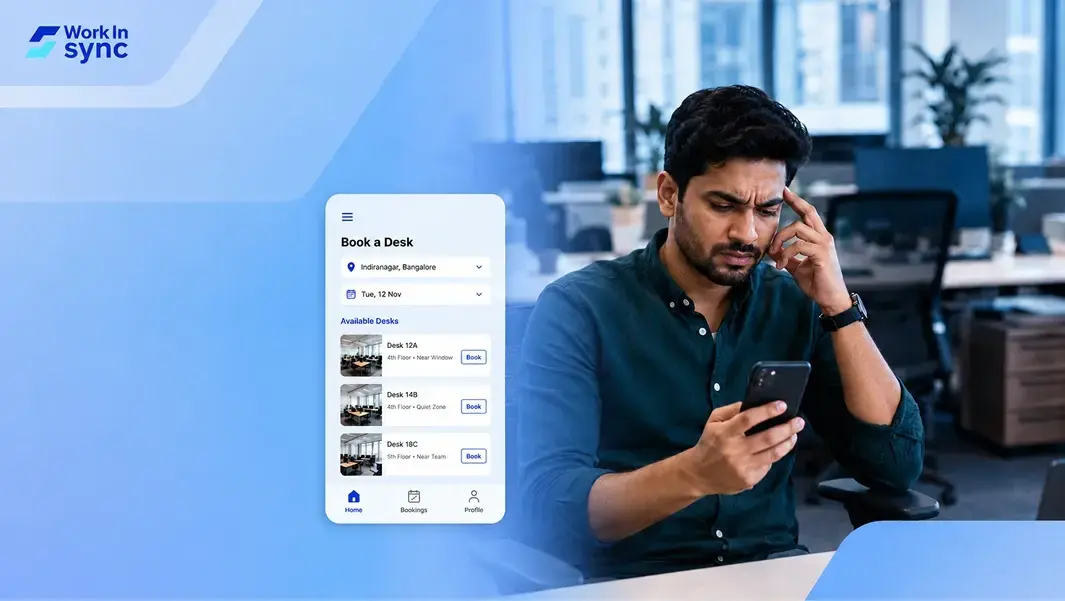
Let’s not pretend otherwise. Somewhere in your organization, a well-meaning IT or facilities team rolled out a desk booking system. There was a demo. Someone said “seamless.” There may have been a slide with the word “frictionless” on it. Leadership nodded. Procurement signed off. And then employees quietly went back to texting each other on […]

Ujjwal Trivedi
|
6 Min Read
Read More