
 Workplace Management
24 September 2026
Best Workplace Management Software in 2026: 6 Tools Compared
Compare six workplace management platforms. See what each is suited for and how to choose the right fit in 2026.

Deesha
|
4 Min Read
Read More
Key Takeaways
A workplace analytics guide offers a roadmap for understanding how office spaces are used, which areas are under- or over-utilized, and how to improve workplace design.
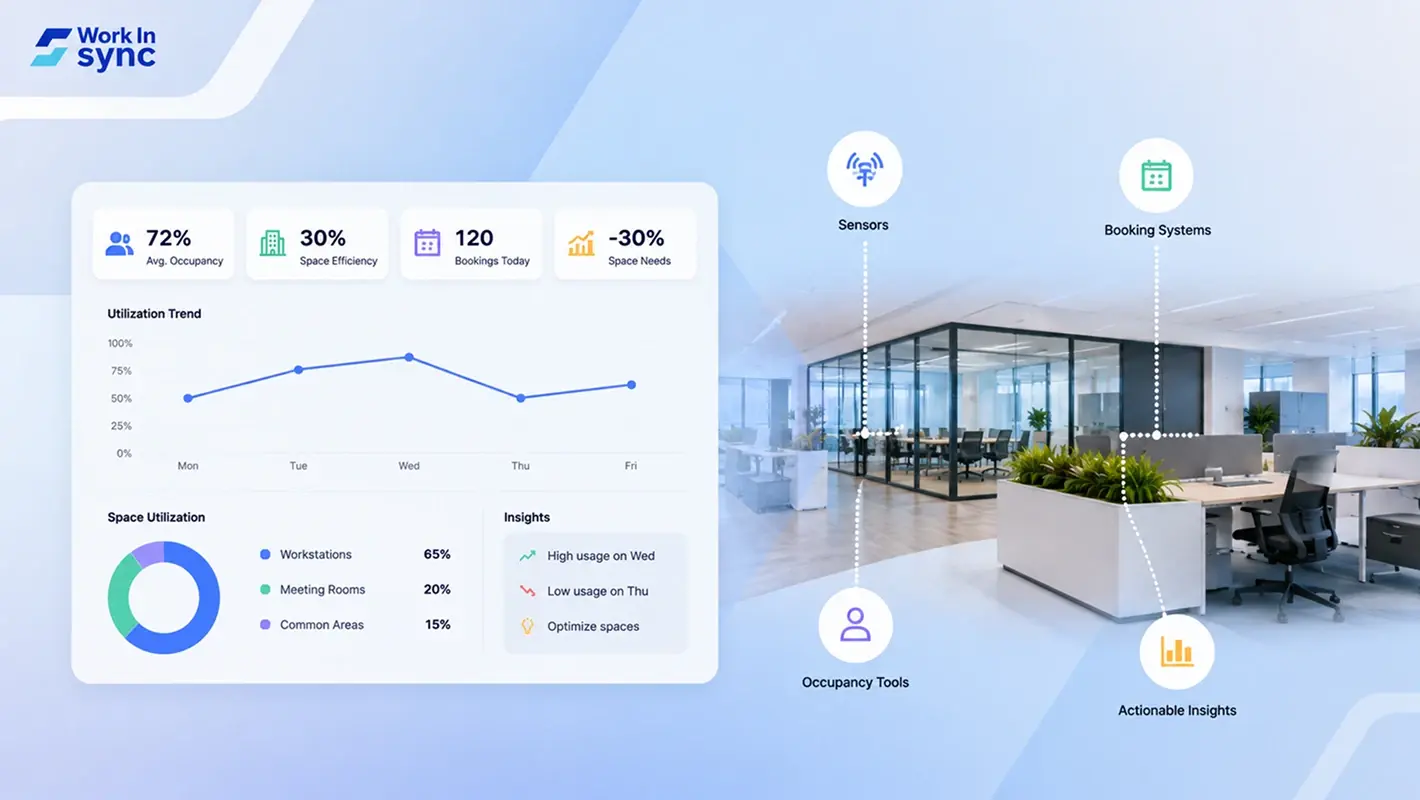
These analytics combine data from sensors, booking systems, and occupancy tools to offer real-time, actionable insights.
According to McKinsey, organizations using workplace analytics effectively can reduce space requirements by up to 30%, saving millions annually.
The guide supports data-driven decisions around hybrid scheduling, hot-desking, and resource planning—crucial for modern office management.
It empowers HR, IT, and Facilities teams to align physical spaces with employee needs, driving both cost-efficiency and employee satisfaction.
Workplace analytics is a tool that helps you understand how your office space is used. It focuses on collecting and analyzing data related to various aspects of work life.
These tools track important metrics like employee attendance, office space usage, and visitor volume. For example, they can show you which areas are crowded and which are rarely used.
Office space utilization data can guide your decisions. Knowing how often spaces are occupied helps you manage resources better. You can adjust layouts or allocate space based on actual usage patterns.
Using these insights, you can improve operational efficiency. In turn, this leads to a more engaged and productive workforce. Ultimately, workplace analytics empowers you to optimize both space and team performance.

Workplace analytics plays a crucial role in improving hybrid work settings. By utilizing data effectively, you can increase productivity, manage office spaces better, and provide employees with the flexibility they need to thrive. Each aspect of workplace analytics supports a more efficient and comfortable work environment for everyone involved.
In a hybrid work model, flexibility is essential for keeping employees engaged. Workplace analytics helps you identify when and where employees work best.
By analyzing data on employee work patterns, you can offer flexible hours or hybrid work options that align with their preferences. For instance, if data shows that your team is more productive during certain hours, you can encourage a schedule that embraces this insight.
This tailored approach not only boosts individual productivity but also fosters a work culture that values employee well-being.
Efficient office space utilization is critical in a hybrid model. Workplace analytics provides insights into how often different areas of your office are used.
This data allows you to identify underused spaces and optimize layouts. For example, if conference rooms are rarely booked, you might consider redesigning them for more collaborative workspaces.
You can then allocate resources effectively, reducing unnecessary costs and creating a functional environment that suits both remote and in-office workers.
Real-time data is vital for making quick adjustments in a hybrid workplace. With workplace analytics tools, you can monitor office usage and employee trends as they happen.
This capability enables you to address issues before they escalate. For instance, if certain areas become overcrowded, you can adjust desk assignments or manage bookings more effectively.
Having access to this data allows for continuous improvement in workplace design, ensuring that both remote and on-site employees have the resources they need.
A comprehensive view of workplace performance is essential for informed decision-making. Workplace analytics gives you a complete picture by combining data from different sources, including employee feedback, productivity metrics, and resource usage.
This holistic understanding enables you to identify strengths and weaknesses within your hybrid work model. You can then make data-driven decisions that enhance efficiency and satisfy employee needs.
For example, if you notice a dip in engagement, you can implement strategies based on analytics to improve collaboration or communication.
Employees value flexibility, especially in a hybrid work environment. Workplace analytics supports this by enabling you to offer customized work options that meet individual needs.
By understanding employee preferences through collected data, you can allow options like hybrid work days or flexible hours. This choice empowers employees to create their ideal work-life balance, leading to higher satisfaction and retention rates.
Offering tailored flexibility not only boosts morale but also enhances overall workplace productivity.

Workplace analytics provide valuable insights that can greatly enhance productivity and decision-making in your organization. By understanding employee behaviors and space utilization, you can create a more efficient workplace. Here are two key benefits.
Implementing workplace analytics allows you to track employee performance metrics accurately. With tools that monitor workflow, you can identify patterns in productivity. This helps you see which teams are thriving and where improvements are needed.
For example, you might find that flexible working hours increase output among your staff. By recognizing these trends, you can adjust policies to foster a more productive environment.
Additionally, analytics can reveal time spent on tasks, helping you streamline processes. Reducing bottlenecks and enhancing collaboration can lead to greater operational efficiency.
Data-driven insights from workplace analytics empower you to make informed business decisions. Instead of relying on gut feelings, you can analyze hard data to guide your strategies.
For instance, understanding how different areas of your office are utilized allows you to optimize space. You can identify underused spaces and repurpose them, ensuring that real estate costs are managed effectively.
Furthermore, identifying trends in employee engagement can lead to better retention strategies. By investing in what employees value based on data, you enhance your workplace culture.
Ultimately, leveraging workplace analytics helps you manage productivity more effectively, leading to a more engaged and efficient workforce.

Understanding workplace analytics metrics is crucial for improving various aspects of your organization. These metrics provide insights into employee performance, space usage, collaboration effectiveness, and overall employee satisfaction. By focusing on specific metrics, you can make informed decisions that enhance productivity and the workplace experience.
Effective space management can save costs and improve employee engagement. Start with occupancy rates, which measure how often workspaces are being used.
Analyzing space utilization data can also help identify optimal work environments. For instance, using workplace management software allows you to view peak usage times and adapt spaces accordingly.
This data helps you make informed decisions about future office layouts, ensuring that your space aligns with employee needs while enhancing the overall workplace experience.
Measuring collaboration and meeting efficiency is vital for fostering teamwork. Key metrics include meeting duration, number of participants, and decision-making time. Tracking these can reveal if meetings are productive and whether team members are engaged.
You can also assess the effectiveness of communication tools by monitoring usage patterns. For example, understanding which platforms employees prefer can guide technology investments.
Improving collaboration through effective meetings leads to stronger employee engagement and better project outcomes.
Employee satisfaction is crucial for retention and productivity. Key metrics to track include employee net promoter score (eNPS), survey feedback, and turnover rates. These can provide insights into how employees feel about their workplace.
Regularly conduct surveys to assess factors like work-life balance, management support, and growth opportunities. Monitoring these elements helps you identify areas for improvement.
Additionally, correlate satisfaction metrics with performance data to understand how employee experience affects productivity. This comprehensive approach leads to a more motivated workforce and a positive workplace environment.
Selecting the right workplace analytics software is crucial for improving efficiency and understanding your workspace. Focus on your specific needs and ensure that any solution you consider meets your security and compliance requirements.
Start by defining what you want to achieve with workplace analytics. Consider your organization’s goals and how analytics can help you reach them. Identify key metrics that matter most, such as:
Space utilization: Understand how well your office space is being used.
Employee productivity: Track attendance and performance trends over time.
Visitor insights: Analyze visitor traffic patterns for better resource management.
Assess whether you need real-time data or periodic reports. This will guide you in choosing software that aligns with your strategic objectives. Look for tools that offer customization, allowing you to adapt the software features to meet your specific requirements.
Security is a major factor when choosing workplace analytics software. You must ensure that the software you select complies with industry regulations and best practices.
Data encryption: Confirm that data is encrypted both in transit and at rest.
Access controls: Ensure that only authorized personnel can access sensitive data.
Compliance: Check if the software adheres to regulations like GDPR or HIPAA.
Request details about the vendor’s security policies and data handling practices. A trustworthy provider will be transparent about how they manage and protect your information, helping you safeguard your organization against potential risks.
To effectively implement workplace analytics, focus on establishing a structured approach. This involves taking specific steps to gather and analyze data while addressing potential challenges.
Begin by defining your goals. Determine what you want to achieve, such as optimizing office space or improving employee productivity. This clarity will guide your analytical efforts.
Next, select the right tools. Research and gauge which workplace analytics solutions align with your goals. Consider platforms that offer insights into talent management, collaboration patterns, and facility usage.
Once you’ve chosen a tool, start collecting data. Gather input from employees and utilize technology to track metrics related to workforce planning and space utilization. This might include measuring usage rates of meeting rooms or analyzing communication habits.
Finally, train your team on how to use these tools. Provide clear instructions and ensure they understand the importance of workplace analytics in enhancing the overall workplace strategy.
Adopting workplace analytics can come with challenges. One common issue is employee resistance. To address this, emphasize the benefits, such as enhancing work-life balance and improving job satisfaction.
Data privacy is another concern. Ensure that you comply with regulations and prioritize transparency about how data will be used. This fosters trust among your team.
In addition, establish a dedicated team responsible for overseeing the implementation of analytics. This team can focus on facility management, ensuring that findings translate into actionable insights for improving the workplace environment.
Regularly review and adjust your analytics strategies. Adaptability is crucial, as workplace needs may change over time. By addressing these challenges head-on, you can successfully integrate workplace analytics into your organization.

The future of workplace analytics is shaped by advanced technologies that enhance how businesses understand employee performance and office space use. Innovations in AI and predictive analytics are set to transform workplace management.
AI and machine learning will significantly improve workplace analytics tools. These technologies will help you analyze large sets of data quickly and accurately.
You can expect AI to provide real-time insights on employee behaviors and space usage. For instance, algorithms can identify patterns in how teams interact and utilize space.
Benefits of using AI in workplace analytics include:
Enhanced Decision Making: AI can recommend adjustments to office layouts based on usage trends.
Personalized Workspaces: Machine learning can help create tailored environments that boost employee satisfaction and productivity.
By harnessing these technologies, you can make data-backed decisions that enhance efficiency and workplace dynamics.
Predictive analytics will play a vital role in shaping the future of workplace strategies. By leveraging historical data, you can forecast trends in employee attendance and office space utilization.
Understanding these patterns helps optimize resources and enhance planning. For example, predictive models can anticipate peak occupancy times, allowing for better space management.
Key advantages of predictive analytics include:
Improved Resource Allocation: Understanding when and where spaces are needed helps reduce costs.
Strategic Workforce Planning: Predictive analytics aids in staffing decisions, ensuring you have the right people in the right place at the right time.
Investing in predictive analytics ensures that you stay ahead of trends, driving growth and efficiency in your organization.
WorkInSync offers powerful workplace analytics tools that help you optimize space and improve employee productivity. With its user-friendly interface, you can easily access key metrics.
Key Features:
Flexible Workspaces: You can track usage patterns in real time. This helps you understand how often spaces are used.
Employee Insights: Gain valuable data on employee attendance and engagement. This can guide your decisions on workspace design and resource allocation.
Utilization Reports: WorkInSync provides detailed reports. These include occupancy rates and peak usage times, allowing you to adjust space as needed.
Benefits:
Enhanced Efficiency: The data helps improve operational workflows.
Cost Savings: By analyzing space usage, you can reduce unnecessary expenditures.
Informed Decisions: You’ll have the data needed to make strategic choices about your workspace.
Using WorkInSync’s analytics tools empowers you to create an environment that meets your team’s needs. With real-time data and actionable insights, you can foster a more efficient and flexible workplace.
Workplace analytics play a crucial role in enhancing efficiency and employee productivity. By utilizing data, you can gain valuable insights into how your office space is used.
Key Benefits:
Improved Decision-Making
Increased Efficiency
Boosted Employee Productivity:
With the right workplace analytics tools, you can track employee productivity effectively. These tools provide access to essential metrics, helping you understand which spaces work best.
Considerations:
Data Privacy
Adaptability
Continuous Improvement
Incorporating workplace analytics into your strategy can lead to a smarter, more effective work environment. Embrace these tools to stay competitive and foster growth within your organization.
 Workplace Management
24 September 2026
Compare six workplace management platforms. See what each is suited for and how to choose the right fit in 2026.
Deesha
|
4 Min Read
Read More
 Announcement
13 August 2026
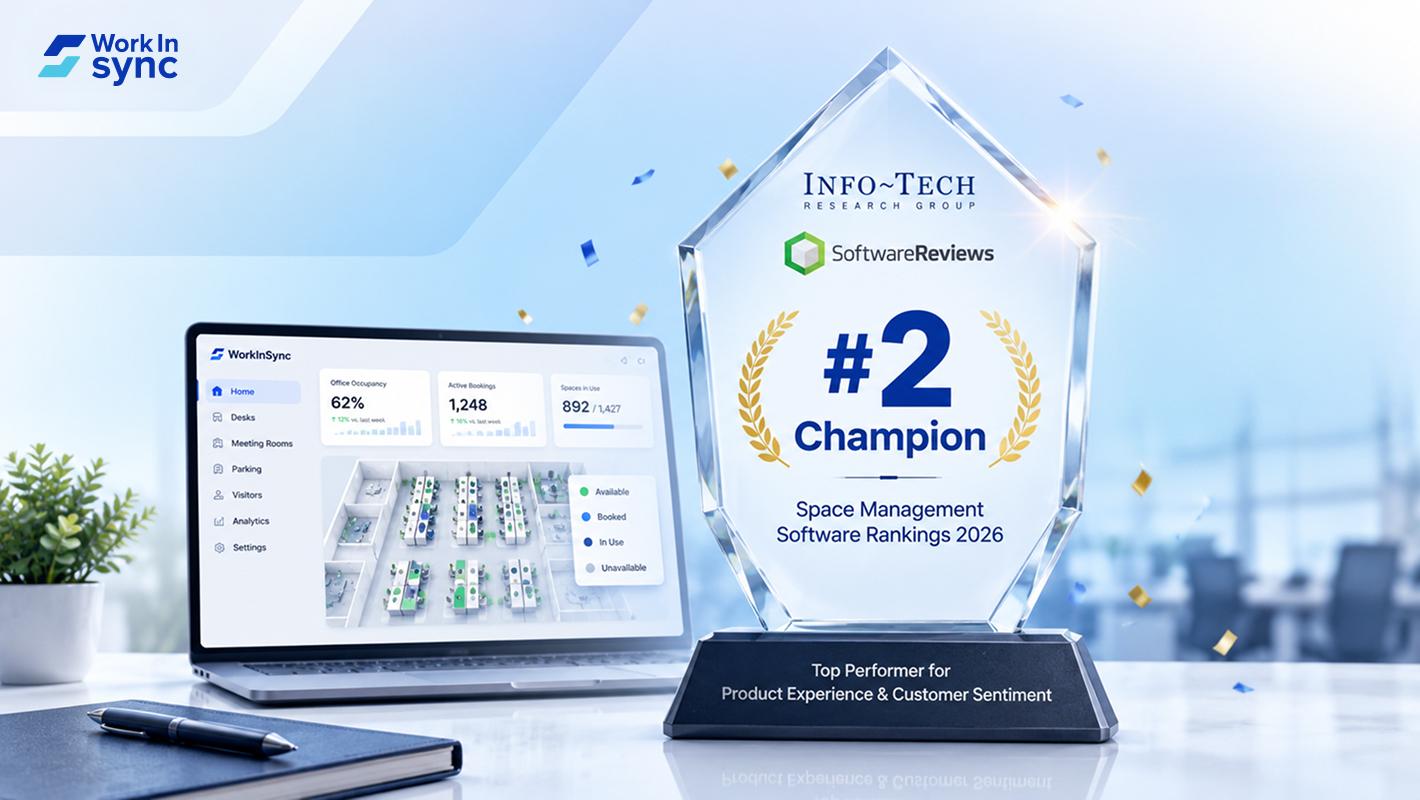
WorkInSync has been recognized by Info-Tech Research Group as a Champion in the 2026 Data Quadrant for Space Management, ranking #2, and as a Champion in the Emotional Footprint, ranking #2. Both awards are published on SoftwareReviews, Info-Tech's ratings platform, where rankings are built entirely from user feedback.

Sai Riddi
|
2 Min Read
Read More
 Desk Booking Software
5 June 2026
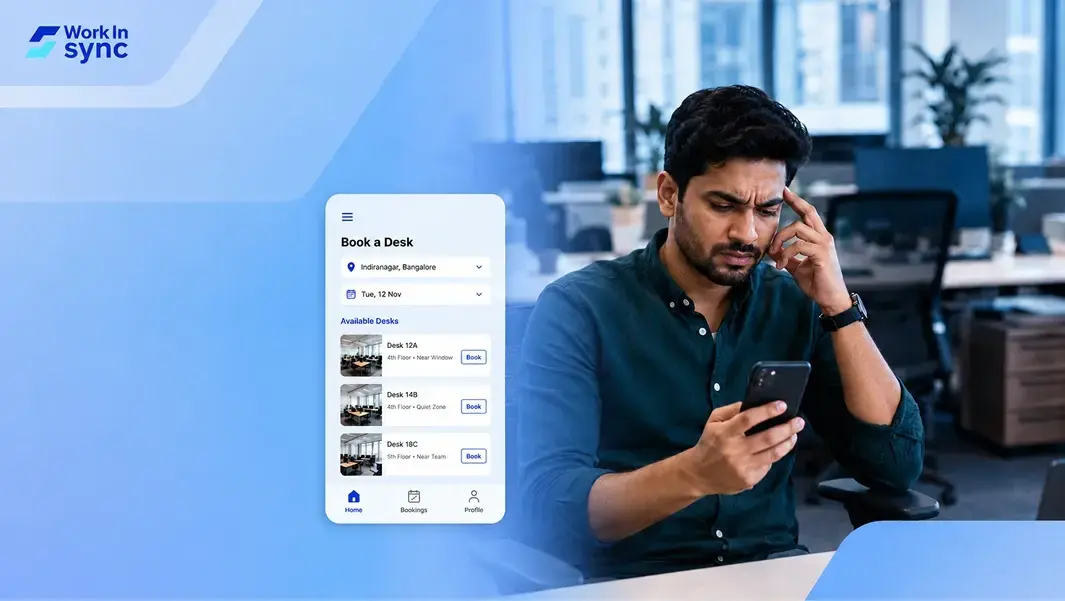
Let’s not pretend otherwise. Somewhere in your organization, a well-meaning IT or facilities team rolled out a desk booking system. There was a demo. Someone said “seamless.” There may have been a slide with the word “frictionless” on it. Leadership nodded. Procurement signed off. And then employees quietly went back to texting each other on […]

Ujjwal Trivedi
|
6 Min Read
Read More