
 Workplace Management
24 September 2026
Best Workplace Management Software in 2026: 6 Tools Compared
Compare six workplace management platforms. See what each is suited for and how to choose the right fit in 2026.

Deesha
|
4 Min Read
Read More
Key Takeaways
The hybrid workplace goes beyond splitting time between office and home, it emphasizes flexibility, autonomy, and tailored work models.
Google introduced a three-principle framework: part-week office attendance, flexibility in base location with adjusted compensation, and limited remote work with manager approval.
CavinKare permanently shut its corporate office, adopting a full remote model for most employees and holding monthly offsite meetings to maintain team connection.
Citigroup categorized roles into hybrid, resident, and remote, based on operational needs, and introduced Zoom-free Fridays to reduce virtual fatigue.
These examples from tech, FMCG, and banking industries reflect how hybrid strategies are evolving across sectors and affirm that the future of work is already underway.

Vandana currently heads the HR department for the Havas Group in India. In this blog, she looks at three companies that have implemented the hybrid workplace and follows their approach, ultimately analyzing the future of our workplaces.
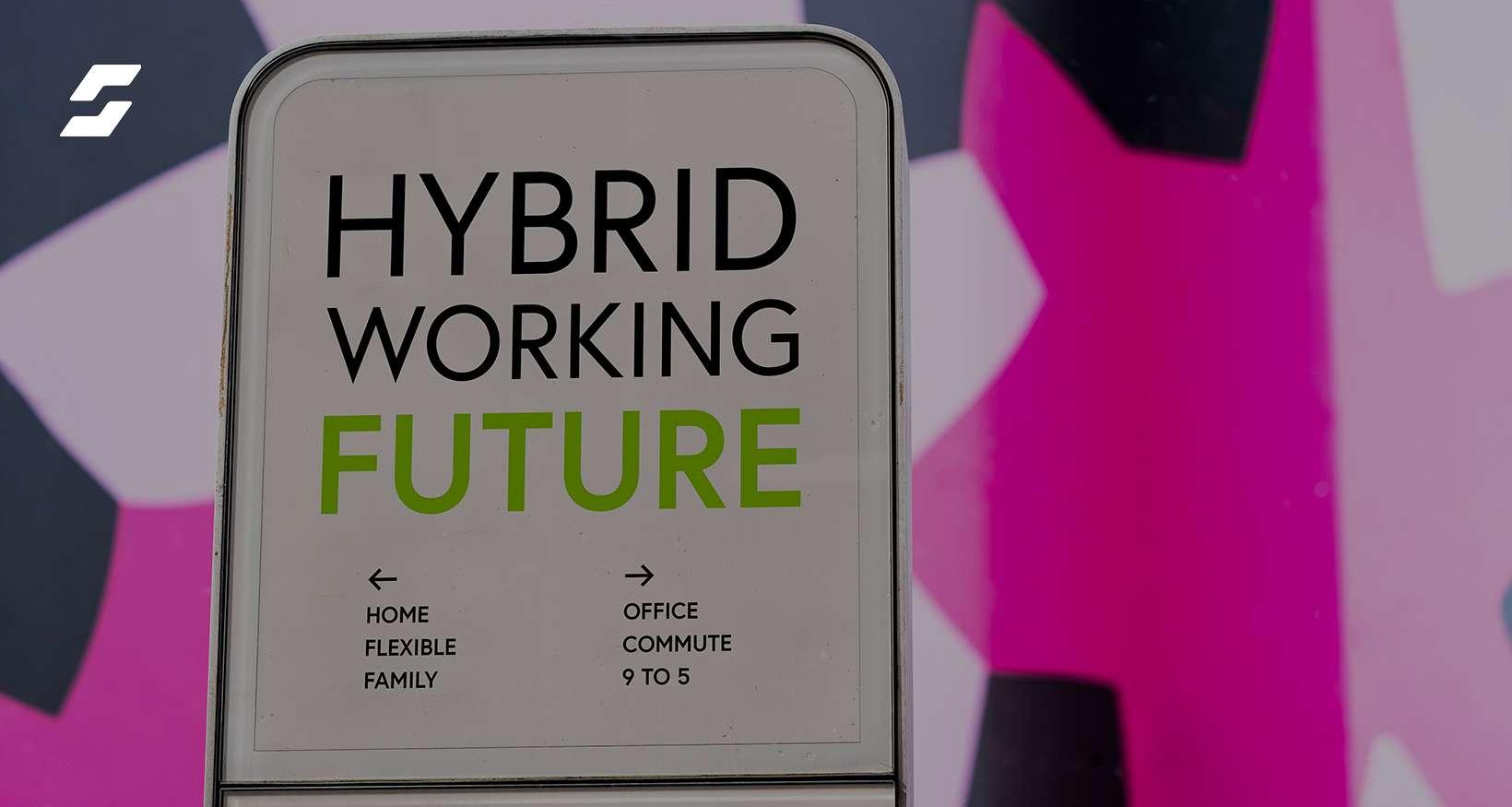
When we think of hybrid workplaces, the general assumption is that on some days, you would be going to work, and on some days, you would be working from home, but the concept of a hybrid workplace is much more than that.
The hybrid work environment hinges on adopting the best of on-site and remote work. It picks up the benefits of the existing models and molds them into a structure of flexibility and choice.
In a hybrid workplace, most employees work on-site for 5 to 19 days, and the rest work remotely. Now the choice of days here lies with the employees.
Organizations are remodeling their structures and ecosystem to adapt to the sweeping changes that are coming our way.
Also Read: Understanding New Work Models
In the pre-pandemic world, buzzwords like “going digital” or “remote working” indicated good-to-have practices across the globe. When the pandemic struck, organizations were scrambling to implement these, permanently adding these buzzwords to our dictionary.
To signify the magnitude of change, seasoned professionals across the industries with 20-25 years of experience, people I know and have worked with, had their first Work from Home experience during the first lockdown.
So what does this all mean? Where are we headed with the hybrid workforce?
To understand this better, we will look at three organizations from different industries with an approach that suits them.
Google has been a hallmark of people’s practices for many years now. We have all heard stories of the fantastic work culture and progressive traditions. Still, we’re equally intrigued about their response to such a situation that the pandemic has given rise to.
Google announced that they would implement the three fundamental principles on which the hybrid workplace is modeled (of course, the product areas and functions play a crucial role in defining the model of an individual’s work mode)
The first principle is providing flexibility during the workweek. Employees may come to the workplace three days of the workweek and work from home for the remaining two days.
The second principle touches upon allowing flexibility on the base location of an employee with movement across offices based on the work requirement or better collaboration with the team across the Google offices. It also gives an option for a different office or completely remote work based on the role; however, it comes with a caveat of revised compensation on the new base location.
The third principle primarily offers a blend of the first two approaches, with employees working away from their base location for up to 4 weeks of the year based on the manager’s approval. Also, it would focus on cutting down internal meetings to improve focus.
Sundar Pichai communicated all these changes in an internal memo to its employees, and he signed off by stating, “The future of work is flexibility. The changes above are a starting point to help us do our very best work and have fun doing it.”
Recommended Reading: Hybrid workplace is the hardest choice

Our second organization is CavinKare, which revolutionized the sachet phenomenon in India. They have decided to shut down their corporate office and lease out their 40,000 sq ft real estate.
They have migrated their entire team of nearly 300 employees to a full time Work from Home model permanently. It was announced that the employees working in the R&D department and factories would be coming into work.
To ensure seamless interaction with the remote employees, the company has decided to host a meeting once every month at an offsite location.
The company’s chairman and managing director, CK Ranganathan, quoted, “Over the last three months, however, we have seen productivity go up and travel time saved. In all, this totals to an employee putting in an extra 55 days per year.”
Our third example is of the banking giant Citigroup. The organization has mapped a hybrid work model based on the roles and clubbed it under hybrid, resident, and remote heads.
Most of the roles globally will be designated under the hybrid workplace category. Employees would be required to work from the office for a minimum of three days a week and the rest from home.
The job roles falling under the resident category can’t be performed in the remote model setting. The primary roles involved in this setting include the ones working in data centers and bank branches.
Remote roles will allow employees to perform their functions from outside a Citi location.
In addition to this, employees would be having Zoom-Free Fridays wherein there would be no internal video calls.
Bonus Read: How to make hybrid workplace fair
When we look at these new ways of flexible working with organizations from different industries, it is evident that the new way of working is already here. Our examples of Google, CalvinKare, and Citi, which belong to the Tech, FMCG, and banking industries, respectively, have significantly changed the way we work.
Their adoption of the hybrid workplace stands testimony to the changing future of our workplace. And their swift adoption shows that the future is indeed here.
Subscribe to our blogs to stay on top of the latest developments in the hybrid workplace.
 Workplace Management
24 September 2026
Compare six workplace management platforms. See what each is suited for and how to choose the right fit in 2026.
Deesha
|
4 Min Read
Read More
 Announcement
13 August 2026
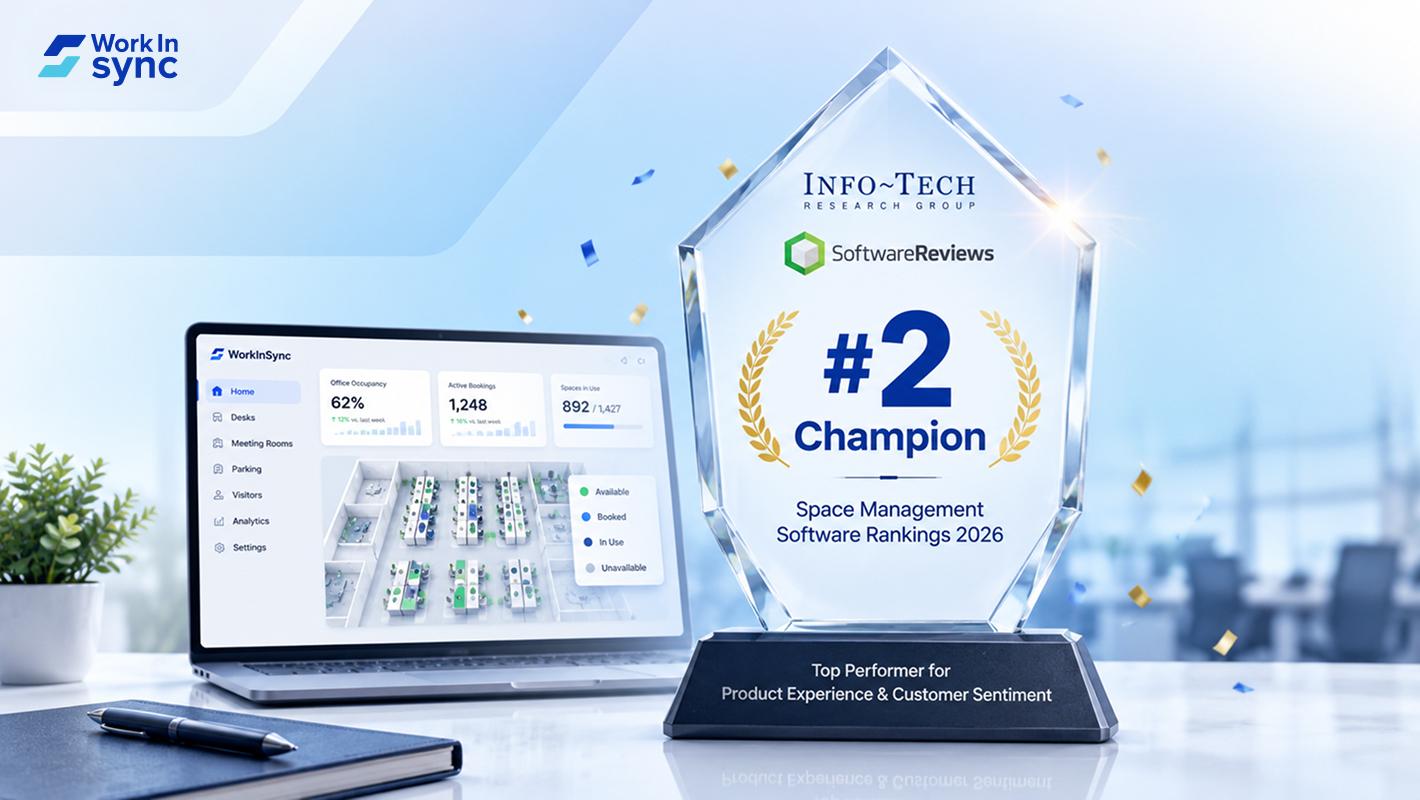
WorkInSync has been recognized by Info-Tech Research Group as a Champion in the 2026 Data Quadrant for Space Management, ranking #2, and as a Champion in the Emotional Footprint, ranking #2. Both awards are published on SoftwareReviews, Info-Tech's ratings platform, where rankings are built entirely from user feedback.

Sai Riddi
|
2 Min Read
Read More
 Desk Booking Software
5 June 2026
Let’s not pretend otherwise. Somewhere in your organization, a well-meaning IT or facilities team rolled out a desk booking system. There was a demo. Someone said “seamless.” There may have been a slide with the word “frictionless” on it. Leadership nodded. Procurement signed off. And then employees quietly went back to texting each other on […]

Ujjwal Trivedi
|
6 Min Read
Read More