
 Workplace Management
24 September 2026
Best Workplace Management Software in 2026: 6 Tools Compared
Compare six workplace management platforms. See what each is suited for and how to choose the right fit in 2026.

Deesha
|
4 Min Read
Read More

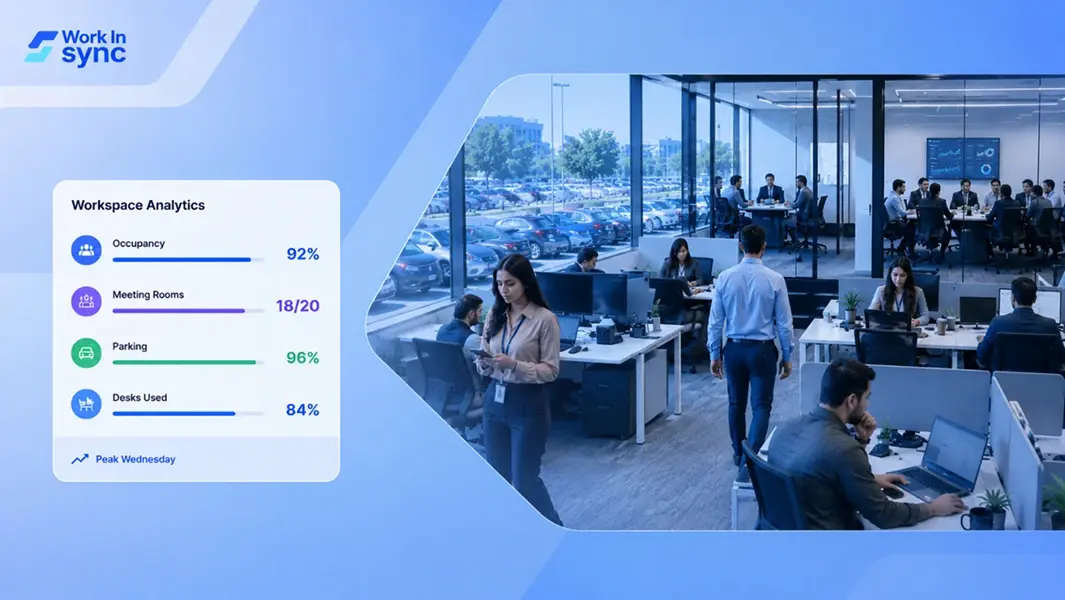
Office occupancy has returned to pre-pandemic levels in most hybrid workplaces, but the distribution tells a different story. Tuesday through Thursday now see 2-3 times the foot traffic of Mondays and Fridays. This creates midweek bottlenecks that leave desks, meeting rooms, and parking spots overcrowded, while the rest of the week sits underutilized.
The gap between what gets booked and what actually gets used has widened significantly. Booking-to-occupancy ratios dropping from 0.85 in 2023 to 0.71 in 2025, meaning nearly 30% of reserved spaces go unused. Badge swipes tell you who showed up, but they don’t reveal how your space is actually being used or why Wednesdays feel chaotic while Fridays feel empty.
Your workplace decisions need more than headcount data. Combining booking systems, sensor data, and occupancy analytics reveals the behavioral patterns driving the Tuesday-Thursday crunch and gives you the actionable insights to manage it without guesswork.
An employee arrives at the office on Wednesday morning at 8:45 AM, only to find the parking lot already full. By the time they reach their floor, every available desk is taken, meeting rooms are booked solid. But if they come back on Monday or Friday, they could hear a pin drop.
This is the reality of hybrid workplaces in 2026. Most organisations now see their office footfall compressed into a tight Tuesday-to-Thursday window, with some companies mandating Tuesday and Thursday as compulsory in-office days. What was meant to offer flexibility has instead created a new problem: offices are simultaneously overcrowded mid-week and sitting empty at the week’s edges.
The numbers tell the story:
Peak utilisation occurs between 9 AM and 11 AM on Tuesdays through Thursdays
Monday and Friday attendance often drops by 60-70% compared to Wednesday
Meeting room conflicts spike during the 2 PM afternoon rush on core days
The instinct would be to respond with stricter attendance policies or rotating schedules. But that approach misses what’s already in front of you: the data your booking systems generate every single day.
If you’re a workplace manager, facility manager, or real estate lead, you don’t need more mandates. You need better visibility into actual usage patterns and the ability to act on them. The occupancy gap isn’t a behaviour problem. It’s a data problem waiting to be solved.
Why the Logjam Happens And Why Gut Feel Won’t Fix It
The Tuesday-Thursday crunch isn’t random. It’s driven by social gravity – employees book desks when their teammates do, creating clustering effects that compound week after week.
Meeting culture anchors people to the same mid-week days when decision-makers are most available. Meanwhile, Monday and Friday carry a persistent reputation as “quiet days” for remote work, whether or not your actual office culture supports that pattern.
The real cost of this imbalance:
Wasted real estate spend on space that sits empty 40% of the week
Poor employee experience on peak days (no desks, crowded amenities, noise)
Underused cafeterias, collaboration zones, and facilities on Monday and Friday
Inflated facilities budgets maintaining capacity you only use 2-3 days per week
You can’t fix what you can’t measure. Manual headcounts miss the nuance of which teams cluster, which zones overflow, and when booking behavior shifts.
If you use a workplace management platform like WorkInSync for a desk booking system, then it already captures this data for you. Every reservation, cancellation, and check-in creates a record of actual space usage. Without tapping into that system-level data, you’re making real estate decisions based on anecdotal observation, and leaving money on the table.
The gap between perception and reality is often wider than you think. The question isn’t whether the crunch exists, but what the data reveals about why it persists and where intervention creates the most impact.
Desk booking data reveals which zones and floors employees reserve, how often they cancel, and whether teams cluster together or spread out. It shows booking no-show patterns that indicate whether employees commit early or make last-minute decisions. Parking data captures arrival time distributions and bay utilization by day.
These two data streams provide different signals:
Desk bookings = declared intent to occupy space
Parking reservations = stronger commitment to physically arrive
Combined view = accuracy of attendance predictions
Platforms like WorkInSync are integrated workplace management softwares, designed for hybrid workplaces to solve the siloed data problem. Parking management software that connects with desk booking systems lets you correlate both signals in real time, making pattern recognition more actionable than analyzing each dataset separately.
The phantom booking problem can be predicted ahead when desk reservations spike but parking stays flat, signaling likely no-shows. Team-level clustering reveals whether departments coordinate their office days or arrive randomly.
You can also track cancellation rates against parking confirmations. High desk cancellations with parking bookings could suggest last-minute space changes. Low parking demand despite high desk bookings could also indicate overestimated parking capacity.
Turning Data into Policy: Practical Levers for Facility Managers
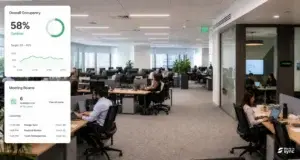
Booking data reveals the problem, but only practical interventions close the gap. Here are five levers you can pull to manage the Tuesday-Thursday peaks.
Staggered day nudges use historical booking trends to send targeted prompts. If your data shows Wednesday is overcrowded, your desk booking software can notify specific teams to consider shifting their anchor day to Monday or Friday. The nudge is light but informed.
Dynamic parking and desk caps can also help by setting a ceiling on how many teams can reserve slots and desks on a given day. Consult business units and based on interdependability, allocate desks to only a certain number of teams on a day so that there’s no over-booking, no spillover into other teams’ share. The result is an office that stays manageable on Tuesday through Thursday without anyone having to negotiate for a space.
Neighbourhood zoning uses desk clustering data to redesign floor plans. When you know which teams book near each other most often, you can create designated zones that reduce the daily scramble and give people predictable home bases.
Incentive-based redistribution offers perks for Monday and Friday bookings. Try priority parking, top booked desks, or flexible hours, so you can target the perks that correlate with actual attendance shifts, not guesswork.
Manager dashboards give team leads visibility into their teams’ booking patterns. Platforms like WorkInSync provide role-based access dashboards: you see org-wide occupancy trends while team leads see only their team’s data. This turns redistribution into a team conversation rather than a top-down mandate.
The goal is making the right choice, the easy choice. You’re not penalising work habits that hybrid schedules created, you’re removing friction so space works for everyone.
The midweek office crunch isn’t a symptom of poor culture or resistance to policy. It’s a visibility problem in hybrid workplaces that booking data can solve.
Facility managers who close this loop early are already seeing results. They’re using actual occupancy patterns to adjust room access, shift meeting blocks, and guide policy tweaks that smooth demand across the week.
If you’re evaluating how to bring desk, parking, and occupancy data under one roof, platforms like WorkInSync are built exactly for this. They give facility managers a unified view of how space is booked, how it’s actually used, and where the gaps are. The insight is already there in your data. The right tools just make it easier to act on.
Workplace Management24 September 2026
Compare six workplace management platforms. See what each is suited for and how to choose the right fit in 2026.
Deesha
|
4 Min Read
Read More
 Announcement
13 August 2026
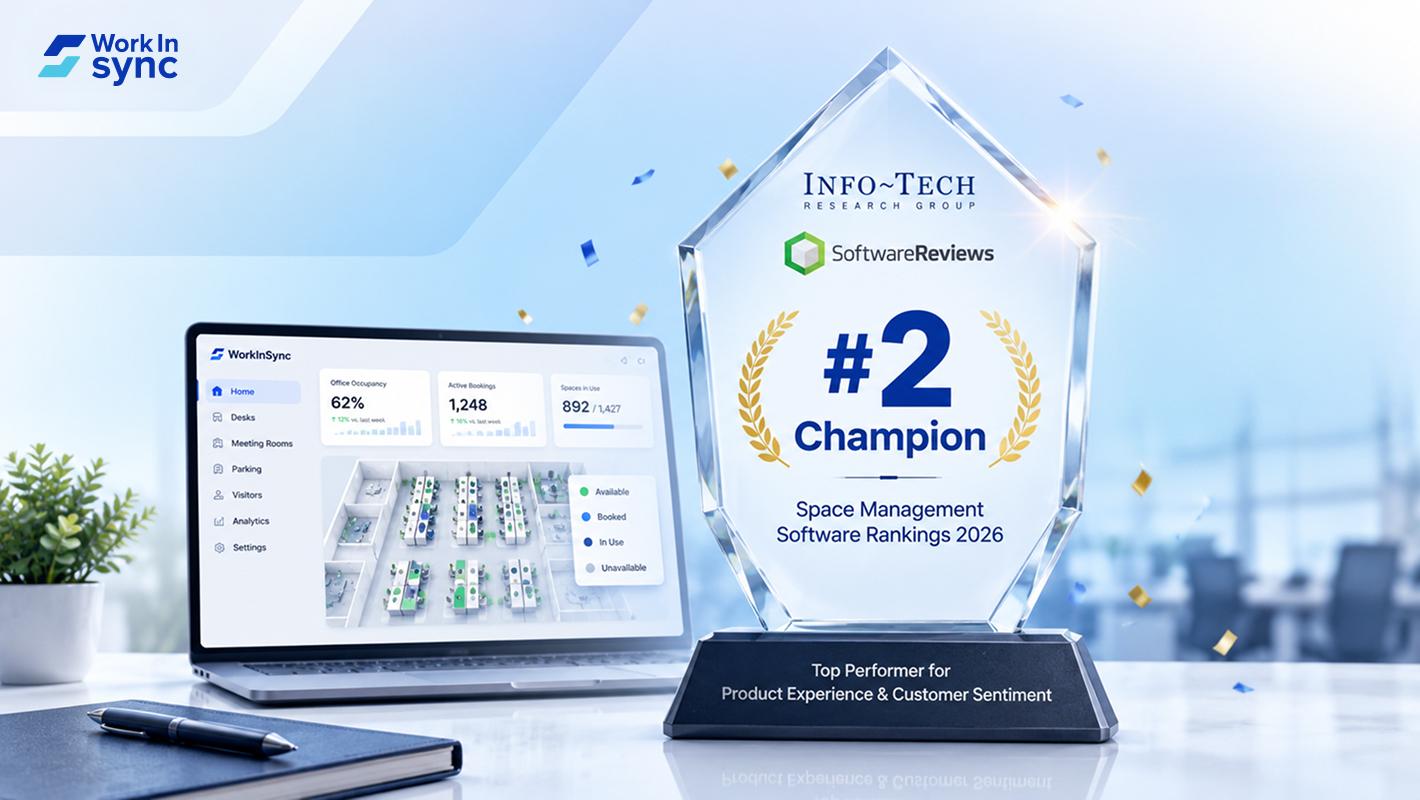
WorkInSync has been recognized by Info-Tech Research Group as a Champion in the 2026 Data Quadrant for Space Management, ranking #2, and as a Champion in the Emotional Footprint, ranking #2. Both awards are published on SoftwareReviews, Info-Tech's ratings platform, where rankings are built entirely from user feedback.

Sai Riddi
|
2 Min Read
Read More
 Desk Booking Software
5 June 2026
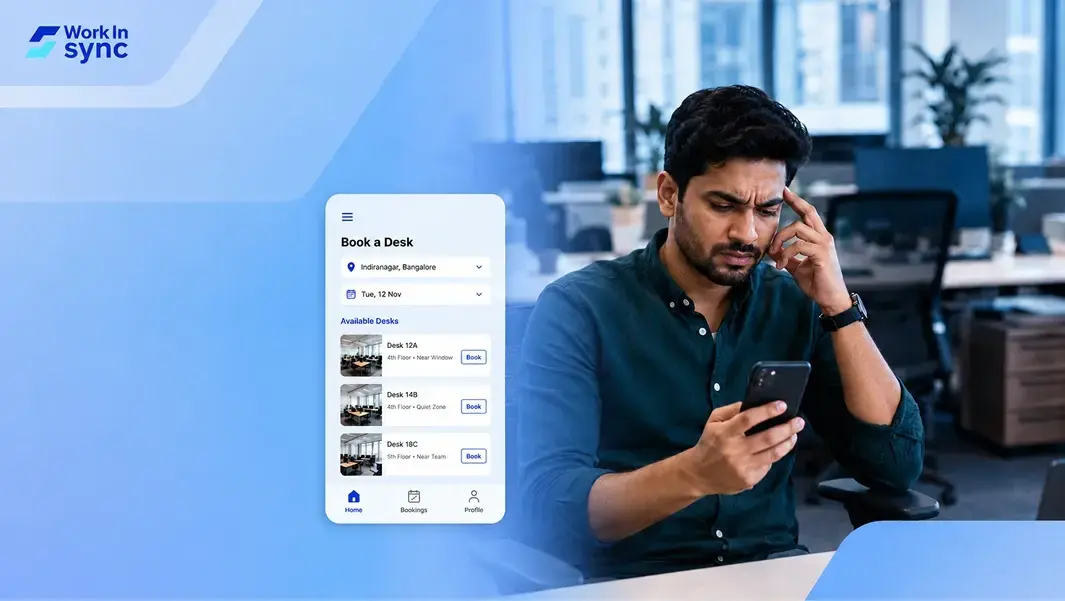
Let’s not pretend otherwise. Somewhere in your organization, a well-meaning IT or facilities team rolled out a desk booking system. There was a demo. Someone said “seamless.” There may have been a slide with the word “frictionless” on it. Leadership nodded. Procurement signed off. And then employees quietly went back to texting each other on […]

Ujjwal Trivedi
|
6 Min Read
Read More