
 Workplace Management
24 September 2026
Best Workplace Management Software in 2026: 6 Tools Compared
Compare six workplace management platforms. See what each is suited for and how to choose the right fit in 2026.

Deesha
|
4 Min Read
Read More

Key Takeaways
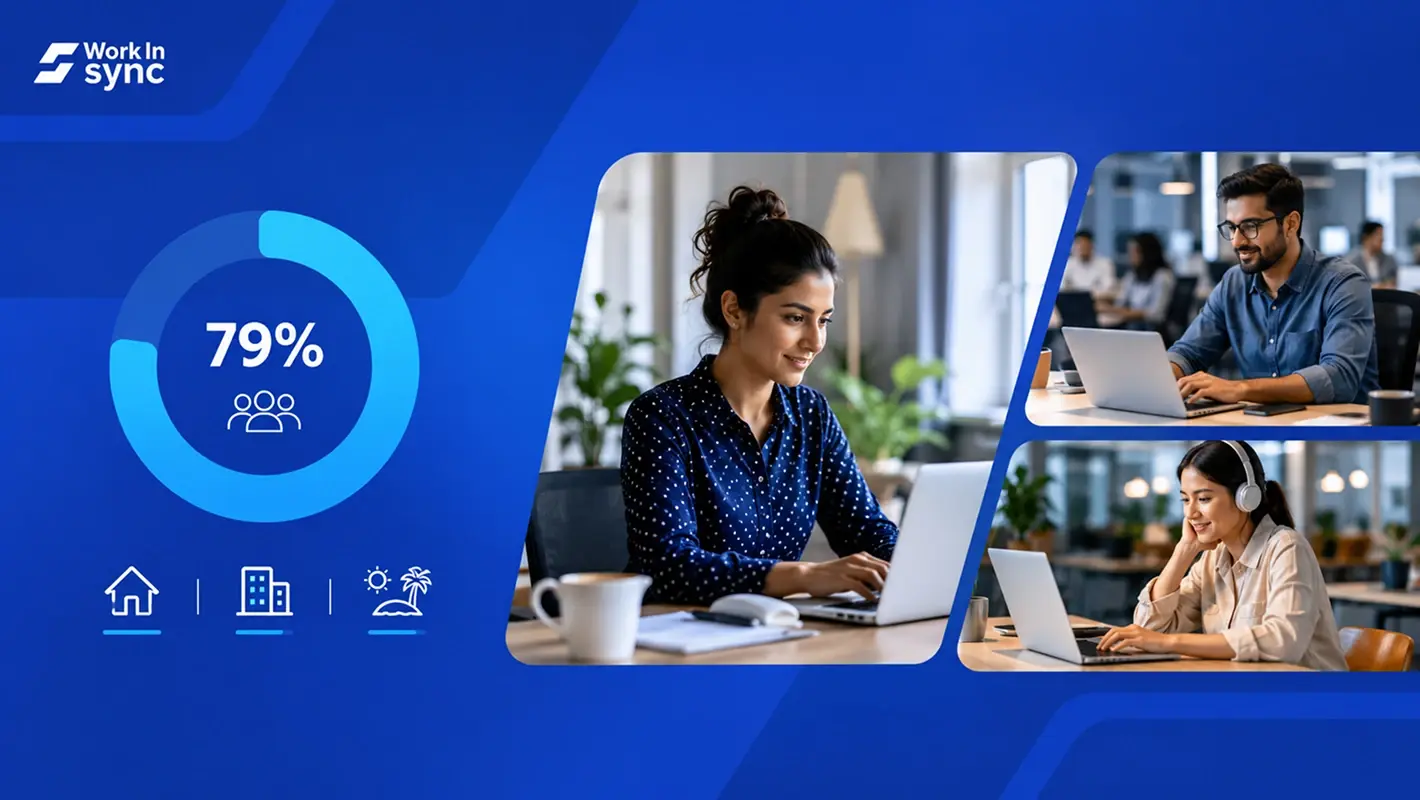
Surveys show 79% of employees want hybrid work, with many ready to quit for more flexibility.
The shift came after 18+ months of remote work, proving productivity and well-being could improve outside the office.
Choice & Flexibility: Workers value control over where, when, and how they work, including cafés, co-working spaces, or “workcations.”
Intentional Collaboration: Hybrid setups allow deep-focus remote work while making in-person brainstorming sessions more purposeful.
Well-being Benefits: Reduced commutes mean more time for family, hobbies, side projects, and better work-life balance.
For managers, structure is key: define attendance frequency, rules, and synchronous/asynchronous workflows.
Connection needs intentional effort through informal gatherings, one-on-one calls, and cross-team groups.
While leaders worry about productivity and culture, employee sentiment clearly points to a hybrid future of work.
A hybrid workplace is essential and has been recognized all over the world as the future of work. 79% of employees are all up for hybrid workplaces. The reasons are varied and surprising.
Hybrid workplaces have become a mainstay of the post-pandemic reality. And there is startling evidence to back the claim.
According to JLL’s Workers Preference Barometer for India, 79% wanted to work remotely at least once a week. And the sentiment is the same across the globe.
According to a survey by Zippia, 54% of the employees are ready to quit their current job for a more flexible one. Meanwhile, 55% of workers say they prefer to work remotely for at least three days a week.
But how did the dramatic shift happen?
At first, employees had to go remote without much choice. However, the 18-month-long experiment turned out to be a real eye-opener. People discovered they could work from home just as efficiently as from the office – some even better. Family, health, and overall well-being became non-negotiable for workers everywhere.
According to the “Employees are ready for hybrid work, are you?” study by Cisco, around 60% of employees recorded enhanced productivity. And six in ten employees felt their quality of life had improved. So, the traditional setup of 9 to 5, five days a week, was difficult to rally for.
This was the point of no return for employees. The hybrid setup provided the perfect solution, and a rise in its popularity was noticed.
But despite the evidence, not all corporations were on the same page as their workers. However, those who did not meet employee preferences and forced a return to the office faced significant backlash. Big names like Apple, Amazon, and Tesla experienced it first-hand.
The future of work belongs to a diverse and distributed team. And it begins with a hybrid workplace.
Also Read: How Much Does it Cost to Setup a Hybrid Workplace?
The chatter in the industry suggests a hybrid stronghold. This is directly correlated to employee sentiments. Let us look at the most popular reasons employees seek a hybrid work model.
Hybrid workplaces allow employees to choose where, when, and how they do the work. Instead of a fixed schedule, they want the flexibility to work during their peak productive hours. The notion of working from anywhere has also gathered momentum.
That is another reason why workers are pushing for a hybrid return to work. Besides onsite work and work from home, hybrid workplaces extend the possibility of working from a third space like a café, satellite office, or co-working space. The idea is reflected in rising trends like a workcation, where people work while traveling.
From the employer’s standpoint, too, hybrid workplaces are a hit. Organizations are witnessing an increase in productivity by giving workers a reasonable degree of agency and choice.

Teamwork and collaboration are vital – but at the expense of constant interruptions and distracting work? Perhaps not.
According to a survey by Team Stage, 98% of people say that they get interrupted at least 3 or 4 times a day. For every interruption, it takes around 25 minutes for one to find the flow again. This is a significant drawback of onsite work.
However, virtual meetings failed to provide an excellent alternative to face-to-face meetings. Over the two years of virtual meets, many people have complained about Zoom fatigue and eventual burnout.
This is where hybrid workplaces offer the right balance. As hybrid workers are distributed, they are more intentional with their time.
When teammates want to collaborate in person, they can block a day on their calendar and visit the office together to brainstorm. The flow of ideas in a natural, screen-less setting is the best.
Similarly, they can work remotely when they want deep focus. So each meeting is well-thought-out, and collaborations are deliberate and meaningful.
The preferences of post-pandemic employees have changed dramatically. Today, they want well-being benefits and flexibility more than a pay raise. This is why they are turning to hybrid workplaces so readily.
Since hybrid workplaces are not office or time-bound, employees can tend to work and personal commitments. The reduced commute times give them more free time for family, side hustles, and hobbies. All the while saving a significant amount of money. This is what the experts mean when they talk about work-life balance.
Employees find more satisfaction in their roles and feel happier. Consequently, managers can notice improved mental, physical, emotional, and financial well-being.
Recommended Reading: 5 Actions to Build Employee Experience

While the concept of a hybrid workplace is straightforward to understand, it is not without challenges, especially from the manager’s POV.
Navigating through a hybrid workplace is challenging. Here are two of the most pressing hybrid workplace challenges managers face today.
Yes, hybrid workplaces are known for being flexible, but they still need structure to thrive. Will the work happen synchronously or asynchronously? How many times will the employees come to the office? You will need to answer questions like these and define some ground rules.
Whether you want workers in-office twice a week or thrice a week, make sure that every aspect of your hybrid approach is defined. Structured flexibility can be advantageous, especially when trying a new concept like hybrid.
Relationship building will not happen naturally when teammates work from different time zones and locations. Since there are fewer “water cooler” moments between hybrid workplace employees, team building must be intentional.
So, organize informal gatherings and one-on-one calls. Start interdepartmental groups to foster relationship building. At the same time, be mindful of introverted workers and how they like to connect with others.
Once you have a solid internal network, your workers will feel just as engaged in the hybrid setup as the traditional one.
Despite the clear benefits of hybrid working, not all senior leaders have shown enthusiasm. Many are concerned over productivity and company culture. But worker preferences are loud and clear.
Even as the pandemic wanes, employees want to continue working in a hybrid workplace or call it quits.
The future of work is hybrid.
Transitioning to a hybrid work model? Make the process smoother with WorkInSync. This hybrid workplace solution comes with many must-have features for a hybrid setup. From desk booking solutions to parking spot management, office management becomes easier with this app.
Subscribe to our blogs to stay updated.
 Workplace Management
24 September 2026
Compare six workplace management platforms. See what each is suited for and how to choose the right fit in 2026.
Deesha
|
4 Min Read
Read More
 Announcement
13 August 2026
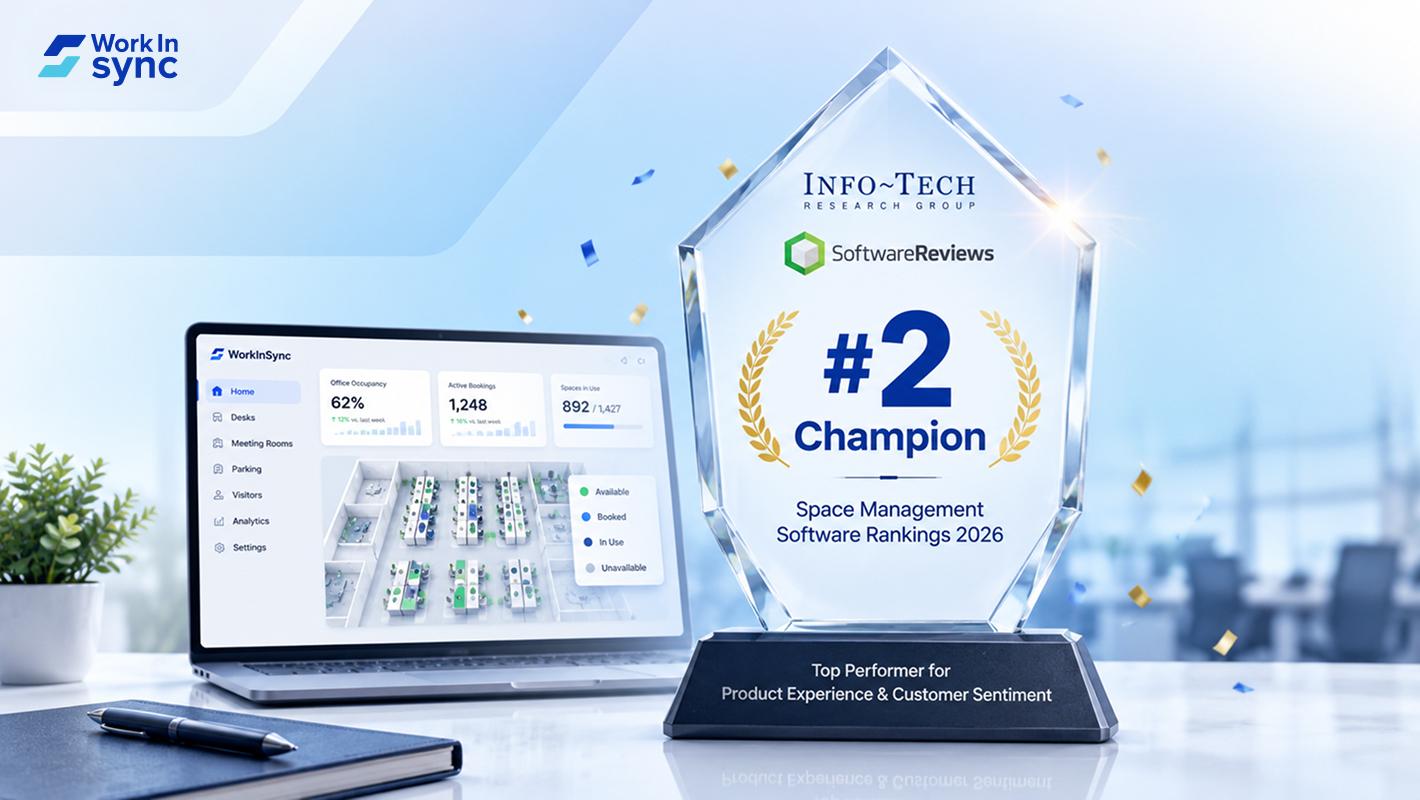
WorkInSync has been recognized by Info-Tech Research Group as a Champion in the 2026 Data Quadrant for Space Management, ranking #2, and as a Champion in the Emotional Footprint, ranking #2. Both awards are published on SoftwareReviews, Info-Tech's ratings platform, where rankings are built entirely from user feedback.

Sai Riddi
|
2 Min Read
Read More
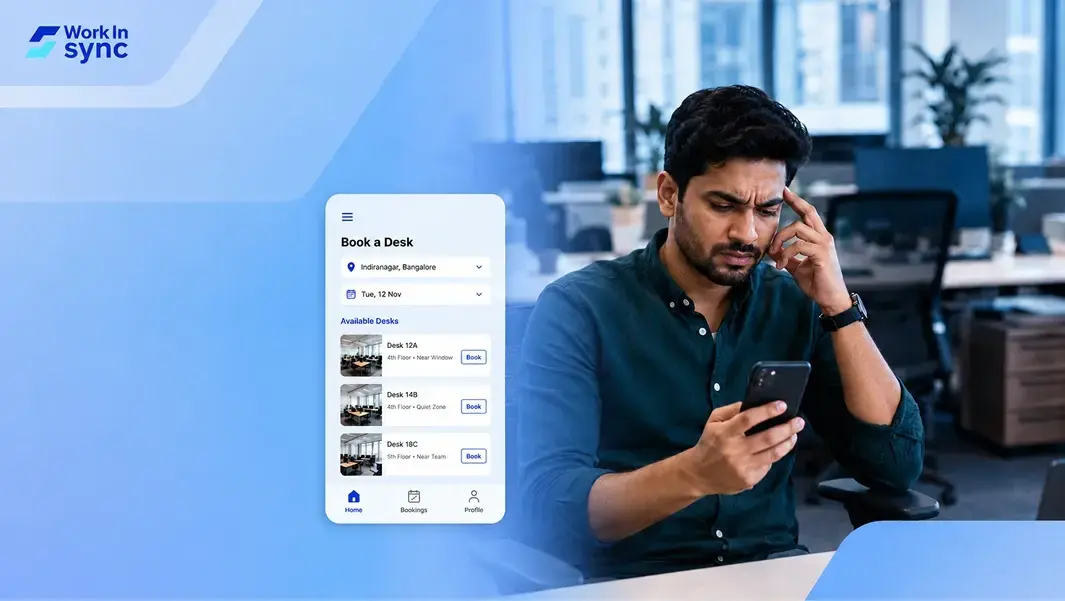 Desk Booking Software
5 June 2026
Let’s not pretend otherwise. Somewhere in your organization, a well-meaning IT or facilities team rolled out a desk booking system. There was a demo. Someone said “seamless.” There may have been a slide with the word “frictionless” on it. Leadership nodded. Procurement signed off. And then employees quietly went back to texting each other on […]

Ujjwal Trivedi
|
6 Min Read
Read More